Is it better to take a cooking class in Rome or Florence?
An honest comparison of cooking classes in Rome and Florence: what each city teaches, what classes cost, and how to pick based on cuisine rather than hype.
Is it better to take a cooking class in Rome or Florence?
Neither city wins outright, because the two teach different regional cuisines. Rome's classes center on the four Roman pastas, pizza and gelato, while Florence's classes lean Tuscan, toward ribollita, fresh pasta with ragù and bistecca fiorentina. Advertised prices also favor Rome, an average of $172 against $201 in Florence, so the capital is usually the cheaper classroom.
The honest answer starts with a fact most comparison articles skip: Italian cooking is regional, and a class in either city is a class in that city's tradition. On 10 December 2025 UNESCO inscribed Italian cuisine on its Intangible Cultural Heritage list, the first time an entire national cuisine received the designation, and the inscription was granted specifically for "Italian cooking, between sustainability and biocultural diversity." That regional diversity is the whole point. A carbonara class in Rome and a ribollita class in Florence are both authentically Italian, and they share almost no recipes.
So the question is not which city is better at teaching. Both have deep talent pools, professional schools and hundreds of listed classes. Rome's class market is the larger of the two by volume: an analysis of 198 advertised Rome classes put the average price at $172 per person, while the same method across 164 Florence classes found an average of $201 per person. Florence runs roughly 17 percent higher on average, which surprises people who assume the tourist-saturated capital would be the pricier one.
What should drive your choice is the menu. If you dream of pulling off a proper cacio e pepe or stretching pizza dough by hand, Rome is the classroom that teaches it. If Tuscan peasant cooking, steak and Chianti-based pairings are what you want to bring home, Florence delivers that instead. The rest of this article breaks down the curricula, the prices and the itinerary logic so you can decide with a clear head.
It also helps to know what a class actually is, because the word covers several formats. Some are demonstration-heavy sessions where a chef cooks and you taste; others are fully hands-on, with every student kneading, rolling and plating. The best-value classes in both cities are the hands-on ones that end with a full sit-down meal of what you prepared, usually with wine poured alongside. Read the listing carefully for the words "hands-on" and "dinner included" if that is the experience you are paying for, and be suspicious of any listing that does not say who teaches or where the class meets.
What do Rome cooking classes actually teach?
Rome classes teach the city's own canon: the four Roman pastas, carbonara, cacio e pepe, gricia and amatriciana, plus pizza, gelato and tiramisu. Formats range from 2.5-hour hands-on sessions near the Pantheon to three-hour home-cooking lessons in Testaccio, with prices from about $34 to $93 per person on the current roster.
The Roman pasta canon is the backbone of the market. Carbonara, cacio e pepe, gricia and amatriciana all belong to the city's trattoria tradition, and amatriciana is the only one of the four with a confirmed EU registration, the Amatriciana Tradizionale TSG, whose specification requires guanciale cured at least 30 days and states plainly that the sauce has always been made with pork jowl, never bacon or pancetta. A good Rome class will drill that distinction, along with the technique that matters most: emulsifying pecorino and pasta water into a sauce without scrambling the eggs. Pecorino Romano itself is a PDO cheese, made exclusively from sheep's milk, which gives instructors a protected ingredient to teach with.
Pizza and gelato are the second pillar. Several Roman schools combine both in one session, which works well for families and for travelers with limited evenings. The roster's own examples show the spread: the Pizza and Gelato Making Class in the Heart of Rome, run by Inrome Cooking near Corso del Rinascimento, packs both into 2 hours 30 minutes, while Cooking Italy's Pizza and Tiramisù or Gelato Class with Fine Wine runs 2.5 to 3 hours from $33.68 per person and holds a 4.8 rating from 1,246 reviews. For pasta specialists, the Top Pasta Making class by the Pantheon, operated by Pastamania from a cooking school on Via della Gatta, costs $68.52 per person, runs 3 hours and carries a 4.9 rating from 3,493 reviews, with wine, dessert and limoncello folded into the session.
There is also a quieter, more domestic strand of the Roman market worth knowing about: home-cooking classes in Testaccio, the old slaughterhouse district where the quinto quarto tradition of cooking offal was born. CURIOSEETY's Home Cooking in Testaccio class teaches cacio e pepe, amatriciana and carbonara in a home setting, priced per group with the price varying by group size, and it holds a 4.9 rating from 106 reviews. That format suits cooks who want recipes they can actually reproduce in a home kitchen rather than a restaurant-style performance. Our guide to cooking classes across Rome covers the full range of formats, and the pasta making classes compared page goes deeper on the pasta canon specifically.
The neighborhood matters more than newcomers expect. Testaccio is where Rome's working-class food culture grew up, next to the slaughterhouse that operated from 1888 until July 1975, and a class there comes with a story about quinto quarto cooking that no Pantheon-adjacent school can tell. The Pantheon and Navona-area schools, on the other hand, trade depth of setting for convenience: you walk out of class straight into the evening passeggiata. Neither is wrong. Choose Testaccio for the food history, choose the center for the logistics, and check the meeting point on the listing before you book either.
If your trip is Rome-only and you want one booking that covers the city's greatest hits, pizza plus gelato in a single evening is the pragmatic pick.
What do Florence cooking classes teach instead?
Florence classes teach Tuscan food: ribollita, pappa al pomodoro, fresh egg pasta with meat ragù, bistecca fiorentina and wine pairings from Chianti. The city's advertised average of $201 per person runs higher than Rome's, and its class market, 164 analyzed listings, is smaller but equally professional.
Tuscan cooking is countryside cooking that moved to town. Where Rome's canon is pasta-and-cheese precision, the Tuscan repertoire is built on bread, beans, olive oil and slow meat. Ribollita, the twice-boiled bread and vegetable soup, and pappa al pomodoro, bread thickened with tomato, are the dishes Florentine instructors teach as the region's soul, and neither has a Roman equivalent. Fresh egg pasta, typically tagliatelle or pappardelle served with a duck or wild boar ragù, replaces Rome's durum-wheat shapes. Bistecca fiorentina, a thick-cut T-bone from Chianina cattle, is often demonstrated rather than cooked by students, since a 1-kilogram steak over a live grill is not a beginner's project.
The wine education also differs. Florence classes lean on Tuscany's own denominations, Chianti Classico, Brunello di Montalcino and Vernaccia di San Gimignano, and many sessions build the pairing lesson into the meal you sit down to eat. Rome's classes pour Lazio wines instead, Frascati and Cesanese, and the Lazio scene has real momentum: Gambero Rosso's Vini d'Italia 2026 guide awarded 11 Tre Bicchieri to Lazio wines, and the region's 2025 harvest came in at 764,000 hectolitres, up 5 percent on 2024. Neither wine region is an afterthought, but they are different grapes with different stories.
Florence also markets itself hard as the historic home of gelato, and some classes build a gelato module around that claim. Rome's gelato scene is no weaker in quality, and Italy's artisanal gelato sector turned over 3.1 billion euros in 2025, up 3.5 percent, with global artisanal sales at 16.5 billion euros. If gelato technique is your main goal, both cities can teach it; if Tuscan bread soups and Chianti are your goal, only Florence can.
One more Tuscan distinction worth knowing before you book: the pasta itself is different. Roman pastas are durum-wheat shapes, spaghetti, bucatini and rigatoni, designed to hold onto sharp pecorino sauces. Tuscan fresh pasta is egg dough, rolled thin and cut wide, built for slow braised meat sauces. If the skill you want to carry home is stretching and cutting egg pasta by hand, Florence is the better classroom for that specific technique. If it is sauce work, the emulsification and timing that make or break Roman pastas, Rome teaches that and Florence mostly does not.
How do Rome and Florence class prices compare?
Rome classes average $172 per person across 198 advertised listings and Florence averages $201 across 164, so Rome runs about $29 cheaper on average. Budget options exist in both cities: Rome's roster starts near $34 per person for a pizza and tiramisu class, while premium and private sessions in either city climb well past $150.
Averages only tell part of the story, because the two markets are shaped differently. Rome's volume skews toward short, high-volume group classes clustered around the historic center, which drags the average down. Florence's market has a stronger tilt toward small-group and market-to-table formats, many of them tied to the city's central food hall, which pushes the average up. What the averages do establish is that neither city is a bargain basement and neither is a ripoff: both sit in the same broad band, and the format you pick matters more than the city you pick it in.
Here is how the two markets stack up side by side, using the verified roster figures for Rome and the advertised averages for both cities.
| Factor | Rome | Florence |
|---|---|---|
| Average advertised price | $172 per person | $201 per person |
| Listings analyzed | 198 classes | 164 classes |
| Signature dishes | Carbonara, cacio e pepe, gricia, amatriciana, pizza, gelato | Ribollita, pappa al pomodoro, tagliatelle with ragù, bistecca fiorentina |
| Typical format | 2.5 to 3 hour group class near the center | Small-group and market-to-table sessions |
| Wine poured in class | Lazio: Frascati, Cesanese | Tuscany: Chianti Classico, Brunello |
| Budget entry point | From about $34 per person | Higher on average, fewer sub-$50 listings |
For concrete Rome price anchors, the roster runs from Cooking Italy's $33.68 pizza and tiramisu session at the bottom, through the $60.39 family-friendly pasta and tiramisu class by Carpe Diem Tours and the $63.87 fresh pasta class with wine and gelato from Walks of Italy, up to the $68.52 Pantheon pasta class and the per-group Testaccio home-cooking lesson. That is a genuine spread of well over $30 between the cheapest and a mid-range option, all within one city. Our breakdown of average cooking class costs in Rome looks at where that money actually goes.
A word on what the price buys. The cheap end of the market is a group of fifteen to twenty people around one long counter, one dough between two or three of you, and a glass of house wine at the end. The premium end buys smaller groups, more individual cooking time and better wine on the table. Neither is a scam, but they are different products, and the listing photos usually reveal which is which. If the price looks too good for a city where restaurant inflation ran above 3 percent nationally in 2025, read what is actually included before assuming you found a deal.
Which city fits your itinerary better?
Choose the city where you will spend more nights, because a class eats an evening and the best ones sell out ahead of peak season. If your trip splits evenly, Rome suits food travelers who want pasta technique and pizza, while Florence suits travelers whose main interest is Tuscan country cooking and Chianti.
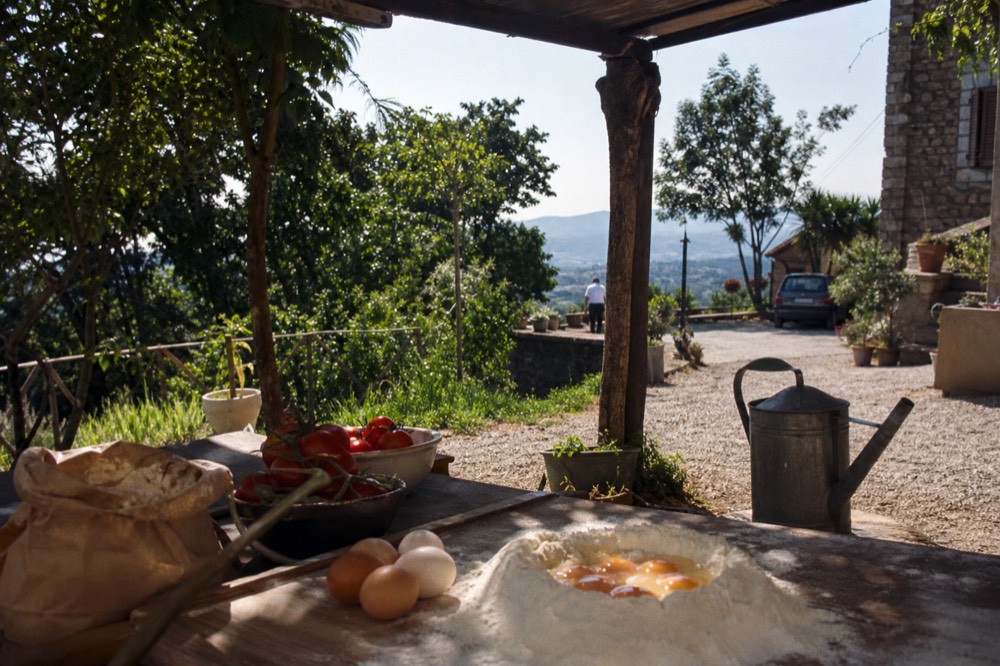
Itinerary logic beats cuisine loyalty for most travelers. Rome received 22.965 million arrivals in 2025, and Florence recorded 13.3 million tourist presences the same year, which means both class markets run hot in spring, summer and the December window. A class is a fixed three-hour block in the early evening, usually starting between 5 and 6 pm, so it competes directly with your dinner plans and your last museum slot. Booking it in whichever city holds two or more of your nights gives you schedule slack if a session is full or if you want to repeat a dish at a restaurant afterward and compare.
There is also a practical argument for Rome that has nothing to do with food: the city simply holds more of Italy's story, and its classes sit within walking distance of the Pantheon, Campo de' Fiori and Piazza Navona. The Pantheon pasta class meets on Via della Gatta, a short stroll from the temple itself, and the pizza and gelato class meets on Corso del Rinascimento, facing Piazza Navona. You are not trading sightseeing for cooking; you are doing both in one evening. Florence classes offer the same overlap with the Duomo and Mercato Centrale area, but the city's sights are coverable in fewer days, which is exactly why some travelers take their class in Rome and spend Florence on galleries.
Families should weigh Rome slightly ahead, too. The family-friendly pasta and tiramisu format, a 2-in-1 class designed for mixed ages, is a Rome roster staple at $60.39 per person, and pizza-and-gelato sessions are naturally kid-proof in a way that a bistecca demonstration is not. Travelers with dietary restrictions should also check the vegan and gluten-free options in advance; Rome's roster includes a dedicated vegan street food walk, and several pasta schools can swap in gluten-free dough if you flag it when booking, as we cover in the gluten free eating guide.
Timing within the week matters as well. Sunday is the weakest day for class availability in both cities, since many schools run reduced schedules and some close entirely, and August thins the market further as instructors take their own holidays. If your itinerary lands you somewhere on a Sunday or in mid-August, book further ahead than you otherwise would, or plan the class for the first full evening of your stay, when cancellation options are still open to you.
Rome or Florence: the honest verdict
Take the class in Rome if you want to master Roman pastas, pizza or gelato and pay a bit less on average; take it in Florence if Tuscan bread soups, ragù and Chianti are the food you love. If your itinerary includes both cities and you only have one evening, Rome's larger, cheaper class market gives you more formats and more fallback options.
The boosterish version of this comparison, that one city's food is simply superior, is not supported by anything. UNESCO did not rank Italy's cities when it inscribed the national cuisine; it recognized a tradition built on regional diversity, and that diversity is precisely what makes the two class markets different rather than better and worse. A traveler who learns cacio e pepe in Rome and ribollita in Florence has learned two genuinely distinct chapters of the same cuisine.
Money and logistics tilt modestly toward Rome: a $29 lower average price, 34 more analyzed listings, and class venues embedded in the historic center. Cuisine tilts the choice on merit: if your heart is set on Tuscan food, no Rome class will substitute for it, and paying the Florence premium is the correct call. The worst outcome is booking whichever class your hotel recommends without asking what it cooks. Check the menu, check the format, check the meeting point, and pick the city whose table you actually want to reproduce at home.
One final framing that helps most travelers: think about the meal you will cook for friends six months after the trip. If the answer is a plate of glossy carbonara or a homemade pizza night, that skill comes from a Roman classroom. If the answer is a pot of ribollita or pappardelle with slow ragù, that comes from Florence. The class is a souvenir you can use for the rest of your life, and the right city is simply the one whose food you will actually keep cooking. This site, Rome Food Tours, covers the Rome side of that decision in depth, from evening food walks to full class comparisons.
Rome and Florence cooking classes differ mainly in cuisine and price: Rome averages $172 per person across 198 listings and teaches Roman pastas, pizza and gelato, while Florence averages $201 across 164 listings and teaches Tuscan dishes like ribollita and ragù. The questions below cover the comparisons travelers ask most before booking either one.
Common questions about cooking classes in Rome or Florence
Is it better to take a cooking class in Rome or Florence?
Neither is objectively better. Rome teaches the Roman pasta canon, pizza and gelato at an average advertised price of $172 per person; Florence teaches Tuscan dishes like ribollita and tagliatelle with ragù at an average of $201. Pick by the cuisine you want to bring home, and by which city holds more of your nights.
Are cooking classes in Florence more expensive than Rome?
On average, yes. An analysis of 164 Florence classes put the average advertised price at $201 per person, against $172 across 198 Rome classes, a gap of about 17 percent. Both cities still offer budget options, and Rome's roster includes sessions from $33.68 per person.
Can you learn carbonara in a Florence class?
Usually not. Carbonara belongs to Rome's trattoria canon, and Florentine schools focus on Tuscan dishes such as ribollita, pappa al pomodoro and fresh egg pasta with ragù. If carbonara, cacio e pepe or amatriciana are the goal, book a Rome class; the Testaccio home-cooking format teaches all three.
How long does a cooking class in Rome or Florence take?
Most group classes in both cities run 2.5 to 3 hours, typically in the early evening, and end with you eating what you cooked. Rome's roster runs from 2.5-hour pizza and tiramisu sessions to 3-hour pasta classes and a 4-hour market-and-pasta combination in Testaccio.
Is a cooking class worth it if I only have one free evening?
It can be, because the class replaces dinner rather than adding to it: you eat the meal you prepared, usually with wine included. In Rome, a pizza and gelato class near Piazza Navona or a pasta class by the Pantheon both fit a single evening and sit within walking distance of the main sights.