why was guanciale banned in the us?
The USDA import rules, the African swine fever outbreak and the September 2026 recall that explain why real guanciale has been so hard to find in America, and where to eat it in Rome instead.
why was guanciale banned in the us?
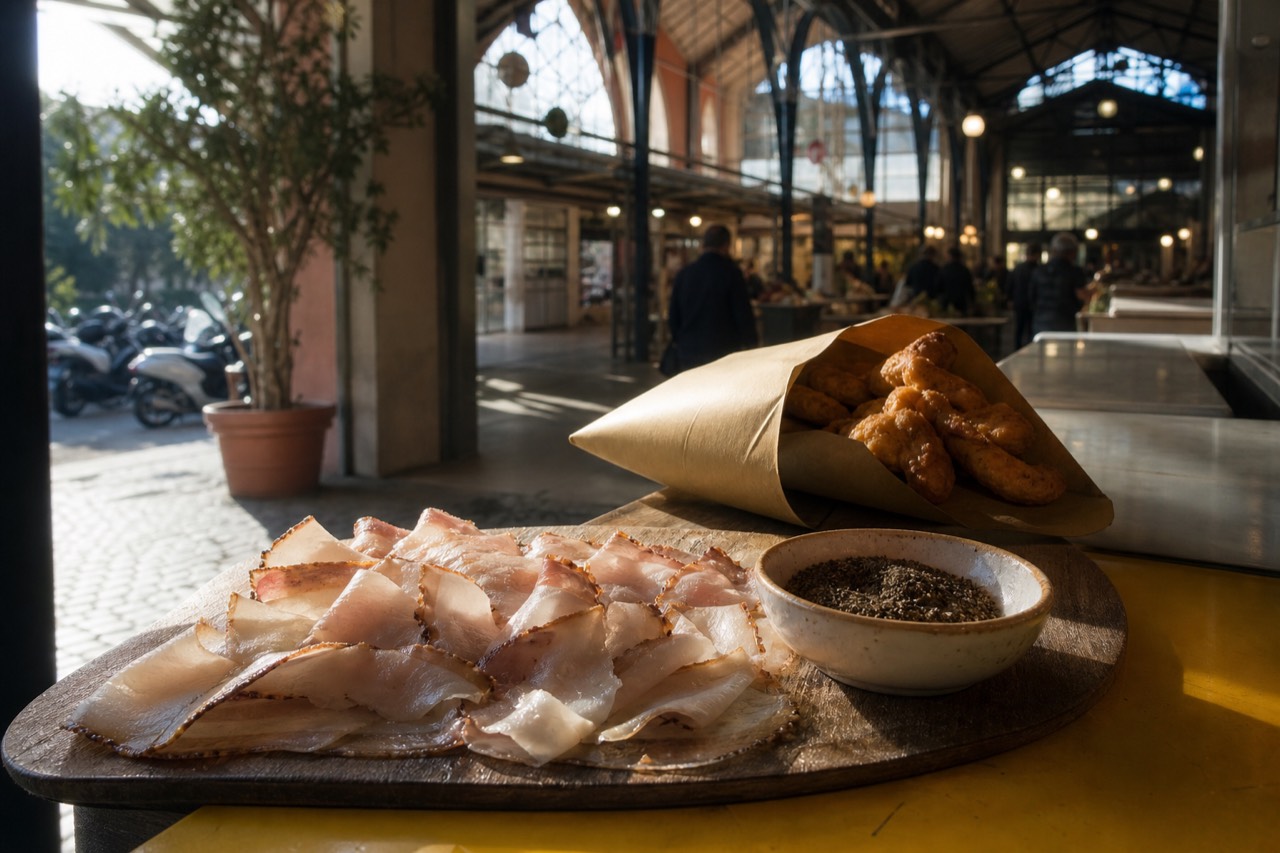
Guanciale was never banned by name. What kept it out of American shops was USDA import rules requiring cured pork to come from a plant certified under a USDA-recognized inspection system, and for most of the modern era no Italian producer of guanciale held that certification. Disease barriers, first trichinae concerns and later African swine fever, did the rest. The rules made news again in September 2026, when a USDA recall hit 1,513 pounds of imported guanciale.
The short version is that guanciale fell into a gap. Prosciutto di Parma and Prosciutto di San Daniele, both protected PDO hams with large industrial consortia behind them, invested years in the certification process and eventually gained access to the American market. Guanciale is a smaller, more artisanal product, made from the jowl of the pig rather than the leg, and its producers mostly never went through the same process. So while the product was never illegal to eat, importing it legally was, for a long time, close to impossible.
That is why American recipes for carbonara spent decades calling for pancetta, or worse, bacon. Italian cooks regard this as a genuine substitution, not a harmless one, and the EU's registered specification for Amatriciana Tradizionale TSG states plainly that the sauce "has always been made with pork jowl, never bacon or pork belly (pancetta)". The specification, registered by Commission Implementing Regulation (EU) 2020/395, pins the sauce to 18 to 30 per cent guanciale, cured at least 30 days and cut in a triangle from the throat, with the fat part greater than the lean part.
The story has three moving parts, and each one is documented. The first is the inspection framework itself, which is the structural reason. The second is African swine fever, an animal disease that hardens borders against pork from affected regions, and which flared in Lazio in August 2026. The third is the recall, the moment the whole apparatus became visible to ordinary shoppers. This article walks through all three, then gets to the practical point: if you want the real thing, Rome is where you eat it.
What the USDA import rules actually say
The United States requires that all imported meat and poultry products come from establishments operating under an inspection system the USDA has judged equivalent to its own, and that each specific product and plant be eligible for export. A cured pork product from a non-certified plant cannot enter legally, no matter how good it is. That framework, not any objection to guanciale as a food, is what American cooks kept running into.
The USDA's Food Safety and Inspection Service, FSIS, is the agency that runs this system. It maintains the list of foreign establishments eligible to ship meat to the United States, audits foreign inspection systems, and issues recalls when something already in the country turns out to be unsafe. Its authority over imported pork is total: if a plant is not on the list, its product does not come in.
For an Italian producer, the path runs through the European Union's own health certification and then through a plant-by-plant eligibility process with the American authorities. For big products with big consortia, like Parma ham, that process was worth the cost. For guanciale, a product made in relatively small batches by butchers and small salumifici, the paperwork, audits and plant-level compliance were often more than any single producer could carry. The result was an accidental ban: nobody outlawed the jowl, but almost nobody could legally ship it.
There is a useful comparison in the cheese aisle. Pecorino Romano DOP, the other half of every carbonara, has never had this problem: the 2024/2025 production campaign totaled 39 million kg, with 60% exported and the United States alone taking 131,000 quintals. The consortium behind the cheese built the export infrastructure decades ago, so the product that is hardest to find in America is not the pecorino but the pork jowl it is paired with. A dish that is half legal and half contraband, in effect, is what American carbonara has long been.
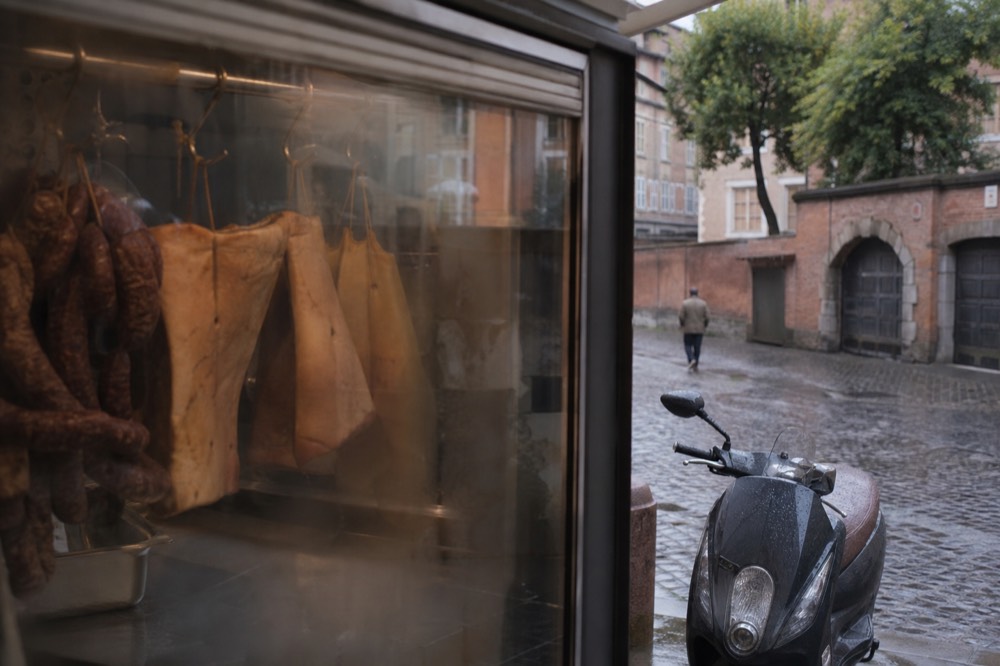
The framework also explains why the situation changes over time. When a producer does complete the process, guanciale does appear in American shops, often at a price that reflects the compliance cost. And when something goes wrong after import, the same agency that let it in pulls it back. That is exactly what happened in September 2026.
| What shaped American access to guanciale | How it works | Effect on guanciale |
|---|---|---|
| Plant eligibility lists | Imported meat must come from establishments certified eligible by FSIS | Most artisanal producers never certified, so no legal import channel |
| Inspection system equivalence | The exporting country's inspection regime must be judged equivalent to the US system | Italy's system qualifies overall, but product-by-product and plant-by-plant approval is still required |
| Animal disease barriers | Regions with outbreaks of diseases like African swine fever face pork import restrictions | The August 2026 Lazio outbreak put the region's pork under fresh scrutiny |
| Recall authority | FSIS recalls products already on the market that may be unsafe | 1,513 pounds of imported Italian guanciale recalled in September 2026 |
How guanciale is made, and why the rules bite harder for it
Guanciale is dry-cured pork jowl rubbed with salt and pepper, cured at least a month and often longer in traditional production. The TSG specification for amatriciana requires guanciale cured at least 30 days, cut as a triangle from the throat with more fat than lean. As a whole-muscle cured product from a fatty cut, it lands precisely where the USDA framework is hardest to satisfy.
The jowl, the pig's cheek and throat, has a fat-to-lean ratio that no other cut matches. When it cures, the fat stays sweet and soft while the lean firms up, and when a triangle of it hits a hot pan, the fat renders into a cooking medium that carries flavor through the whole sauce. That is why the four classic Roman pastas, carbonara, cacio e pepe, gricia and amatriciana, all lean on it: guanciale is not just an ingredient in them, it is the fat they are cooked in.
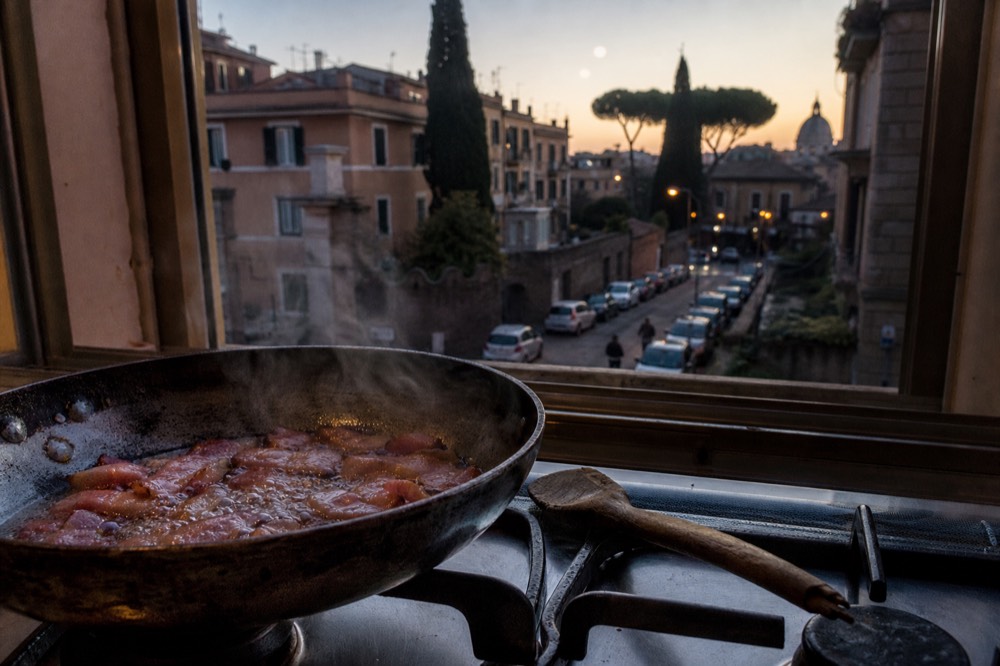
The EU specification for Amatriciana Tradizionale TSG, published at OJ C 393 and registered in March 2020, is unusually specific about the meat. It sets the sauce at 18 to 30 per cent guanciale, requires curing of at least 30 days, and describes the cut: a triangle from the throat, fat greater than lean. It also states that the sauce has always been made with pork jowl and never with bacon or pancetta. You can read the registering regulation directly on EUR-Lex at the implementing regulation page.
Notably, guanciale itself has no protected designation. A search of the European Commission's eAmbrosia register, the database of all PDO and PGI products, returns nothing for it. What is protected is the finished sauce, and it is the sauce's specification that pins down how the guanciale in it must be cured and used. Pancetta, cured pork belly, is the substitute most American recipes settled for, and it works structurally, but it renders differently and never delivers the same soft fat.
If you want to see how the rendered fat actually behaves in the pan, a hands-on class beats any article. The Home Cooking in Testaccio class, run by CURIOSEETY from Via Galvani 4, teaches cacio e pepe, amatriciana and carbonara in a home kitchen in the neighborhood where the slaughterhouse workers invented the quinto quarto tradition. At $93.47 per group for 3 hours, with a 4.9 rating from 106 reviews, it is also one of the more affordable ways to spend an evening learning the technique.
African swine fever and the 2026 Lazio outbreak
African swine fever is a highly contagious viral disease of pigs that does not infect humans but devastates herds and shuts down pork trade from affected regions. On 27 August 2026 the disease was confirmed in wild boar in Riano, in Lazio, the region around Rome, and the European Commission immediately established an infected zone under Implementing Decision 2026/1973. For anyone tracking the movement of Roman pork products toward American shelves, it was the worst possible timing.
The disease is the reason pork import rules are among the strictest in the food trade. A single confirmed case in a region triggers movement restrictions, surveillance zones and import blocks that can last years, because the virus survives in processed and cured meat for months. Curing, salting and drying do not reliably inactivate it. That is why a cured product like guanciale is treated with the same caution as fresh pork when an outbreak is anywhere near the supply chain.
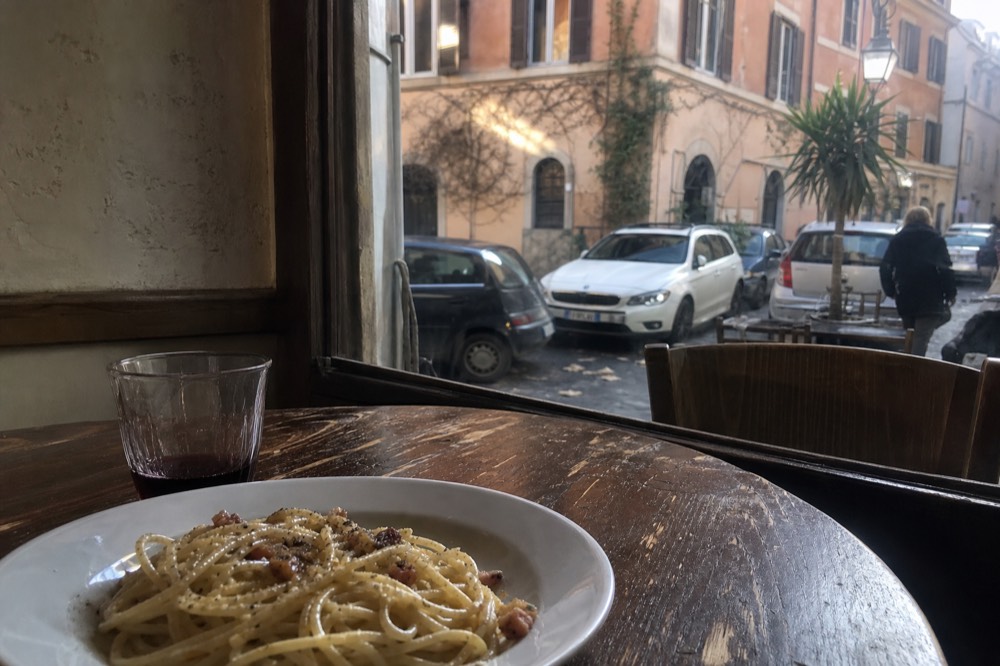
The Lazio outbreak was confirmed in wild porcine animals, and the Commission's implementing decision, published on EUR-Lex at Implementing Decision 2026/1973, establishes the infected zone and the associated measures. Wild boar are the classic vector: the virus moves through populations that no fence controls, and commercial herds then fall under precautionary restrictions even when they are healthy.
For the American guanciale situation, the outbreak matters in two ways. First, it hardens the border: even producers who had completed certification face new veterinary hurdles for anything sourced near the zone. Second, it is a reminder that the rules exist for a reason. The system that frustrates a home cook trying to make authentic carbonara is the same system that keeps a devastating livestock disease out of the North American pig population.
The September 2026 recall
On 6 September 2026, FSIS announced a recall of approximately 1,513 pounds of imported ready-to-eat Italian guanciale products from Est. 1937L Bome SRL, distributed through Prime Line Distributors and Ferrarini USA, because of possible Listeria monocytogenes contamination. It was a small recall by volume but a symbolic one: the product that spent decades locked out of the American market had finally made it in, and then had to be pulled back.
Listeria is the classic failure mode for ready-to-eat cured meats. Unlike raw pork, which the consumer cooks, a ready-to-eat product is eaten as sold, so contamination at any point after processing travels all the way to the plate. FSIS publishes recall notices for exactly this scenario, and the notice for this one is on the agency's site at the FSIS recall page.
The recall does not mean guanciale is dangerous, any more than a lettuce recall means salad is dangerous. It means one shipment from one establishment, on one production run, tested as possibly contaminated. The Italian producers who did complete the USDA process are operating under inspection, which is precisely how the problem was caught. The pre-certification era, when the product simply could not enter at all, offered no such visibility.
It is worth being honest about what a curious reader should take from all this. The "ban" was real in its effects: for most of the time most Americans could not legally buy real guanciale, and many still cannot easily find it. But it was never a judgment about the food. It was inspection economics, then animal disease, then an ordinary food-safety event that happened to make headlines because of the product's reputation.
Where to eat guanciale in Rome instead
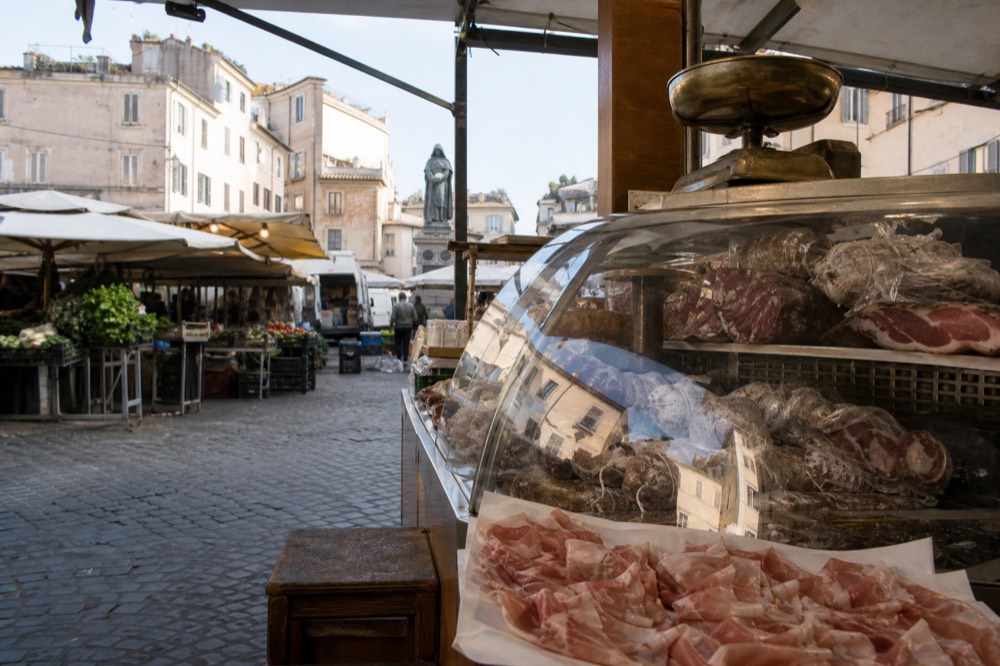
The practical answer for an American visitor is to eat guanciale where it is made, and Rome is the natural place: the four classic pastas that use it are on trattoria menus across the city every day, from Testaccio to Trastevere to the Jewish quarter. A food tour or a cooking class gets you the rendered fat at its best, hot from the pan, which is something no imported vacuum pack ever delivers.
Start with the dishes, because the jowl is only half the story. Carbonara, gricia, amatriciana and cacio e pepe are the four pillars, and amatriciana is the one with the EU-registered specification, a fact covered in detail in Rome's signature dish explained. The sauce arrived in Rome through 19th-century migration from Amatrice, where people who moved to the city worked in catering and carried the recipe with them, which is why a mountain-town sauce became a Roman institution.
Testaccio is the deepest place to eat it. The neighborhood grew around the slaughterhouse, built between 1888 and 1891 and closed in July 1975, and the workers' tradition of cooking the quinto quarto, the fifth quarter, the offal and offcuts the wealthy did not want, still shapes its trattorias. Roma Capitale's own tourism portal documents this history, and the Testaccio food tours guide covers where to walk and taste in the district today.
For the full experience of the fat in the pan, the Home Cooking in Testaccio class stands out. It runs 3 hours at $93.47 per group, holds 4.9 from 106 reviews, and teaches all three guanciale-based pastas, cacio e pepe, amatriciana and carbonara, in a home kitchen in the neighborhood that invented the tradition. You can find it among the options in the Rome cooking classes guide, or check the operator's live listing for current dates.
If your group includes children or you want a lighter evening, the Pizza and Gelato Making Class in the Heart of Rome, run by Inrome Cooking from Corso del Rinascimento 65, covers pizza and gelato in a 2-hour-30-minute session at $117.13 per group, rated 4.9 from 339 reviews. It does not center guanciale, but it sits in the same family of hands-on Roman kitchen experiences and pairs well with a trattoria dinner where the pastas do the jowl justice.
The simplest plan of all: book one seated dinner in Testaccio or Trastevere, order gricia, which is guanciale and pecorino with no tomato and no egg to soften anything, and you will understand in one plate why Americans have spent decades trying to smuggle this cut past the border. This site, Rome Food Tours, exists largely because some things are worth crossing an ocean for.
These are the questions readers ask most about guanciale and the American import rules, answered from the primary sources cited above: the FSIS recall notice, the EU implementing decisions, the Amatriciana Tradizionale TSG specification and the USDA inspection framework. Each answer keeps to what the documents actually say, including where the record is silent, and points back to the practical takeaway that Rome is the easiest place to taste the real thing.
Common questions about guanciale and US import rules
why was guanciale banned in the us?
It was never banned by name. USDA import rules require cured pork to come from plants certified under a recognized inspection system, and for most of the modern era no Italian producer of guanciale held that certification for the American market. African swine fever barriers and, in September 2026, a Listeria-related recall of 1,513 pounds of imported guanciale kept the product in and out of the news.
Can you buy real guanciale in the United States now?
Sometimes. A small number of Italian and American producers have completed the certification process, and imported guanciale does appear in specialty shops, though the September 2026 recall of a shipment from Est. 1937L Bome SRL shows the supply is thin and closely watched. Availability varies by state and by store, and prices run high.
Is pancetta a valid substitute for guanciale?
It is the most common substitute, but the EU specification for Amatriciana Tradizionale TSG states the sauce has always been made with pork jowl and never with bacon or pancetta. Pancetta comes from the belly, renders differently, and lacks the soft, sweet fat of the jowl. It works in a pinch; it is simply not the same dish.
What is the difference between guanciale and bacon?
Guanciale is cured pork jowl, the cheek and throat, dry-cured with salt and pepper for at least 30 days in the tradition the amatriciana specification records. Bacon is pork belly, usually brined and smoked. The jowl carries a higher proportion of soft fat, which is why it renders into a cooking fat rather than just a topping.
Does the African swine fever outbreak in Lazio affect eating pork in Rome?
No. The disease does not infect humans, and the August 2026 confirmation in wild boar in Riano triggered livestock movement controls, not restaurant closures. Pork on sale in Rome comes through the normal inspected supply chain. The outbreak matters for exports and for pigs, not for your plate of carbonara.
Which Roman dishes should I order to taste guanciale at its best?
Order gricia for the purest version, just guanciale and Pecorino Romano. Carbonara adds egg, amatriciana adds tomato, and both rely on the rendered jowl fat for their body. All three appear on trattoria menus across Testaccio and Trastevere daily, and a cooking class in Testaccio teaches you to make them yourself.