Can I wear jeans to dinner in Italy?
A plain answer on jeans at Italian dinner tables, what Romans actually wear, and what to pack for restaurants and cooking classes in Rome.
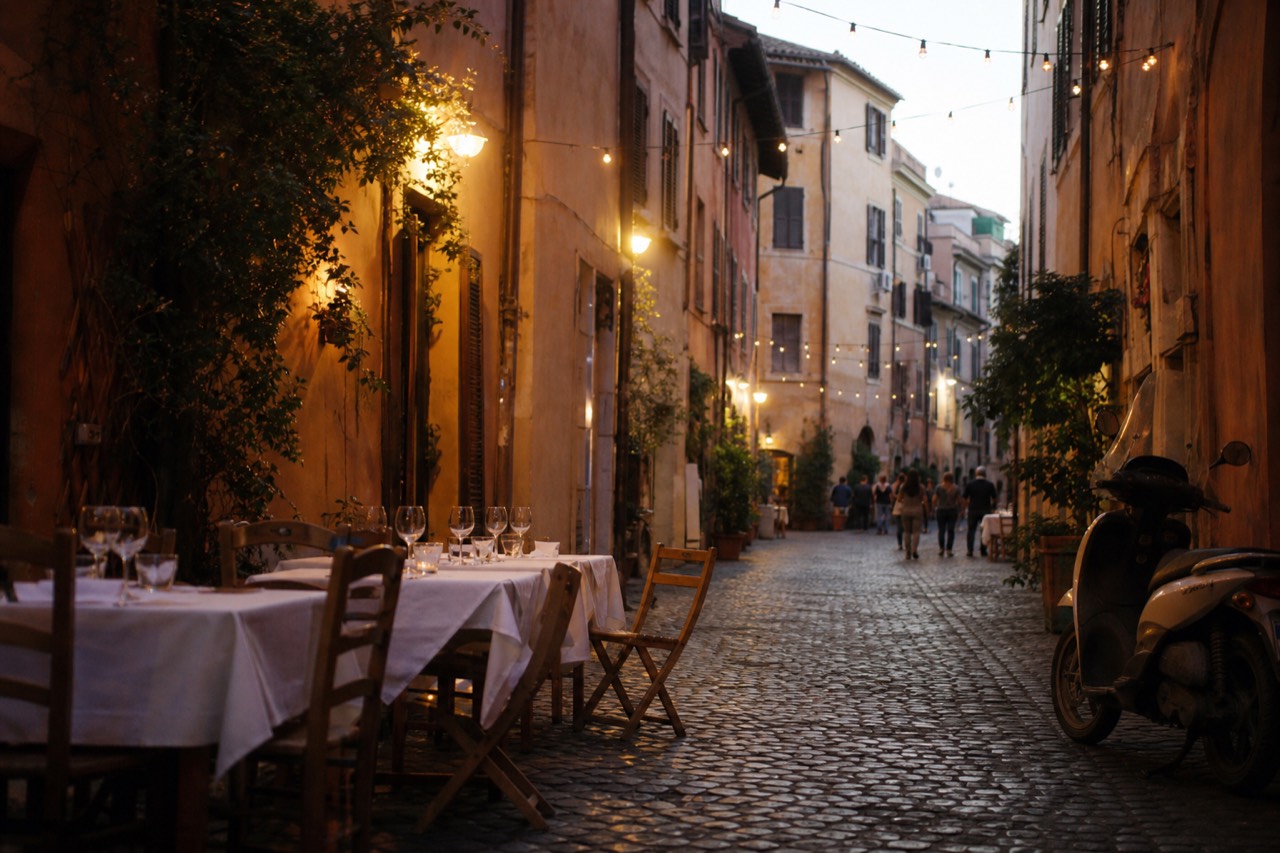
Can I wear jeans to dinner in Italy?
Yes, you can wear jeans to dinner in Italy. There is no law, no restaurant regulation and no social custom that bans denim from Italian dining rooms, and at the trattorias, pizzerias and enotecas where most visitors eat in Rome, jeans are completely normal. The exceptions are a small number of formal, white-tablecloth restaurants where jackets and smarter trousers are expected, and even there the rule is about polish, not the ban of a specific fabric.
The anxiety behind this question is understandable. Italy is the country that gave the world fashion houses, and every guidebook seems to hint at an unwritten dress code waiting to embarrass the unprepared traveler. The reality on the ground is far more relaxed than the reputation, especially in Rome, where the dining culture runs from paper-wrapped pizza al taglio to tasting menus, often within a few blocks of each other.
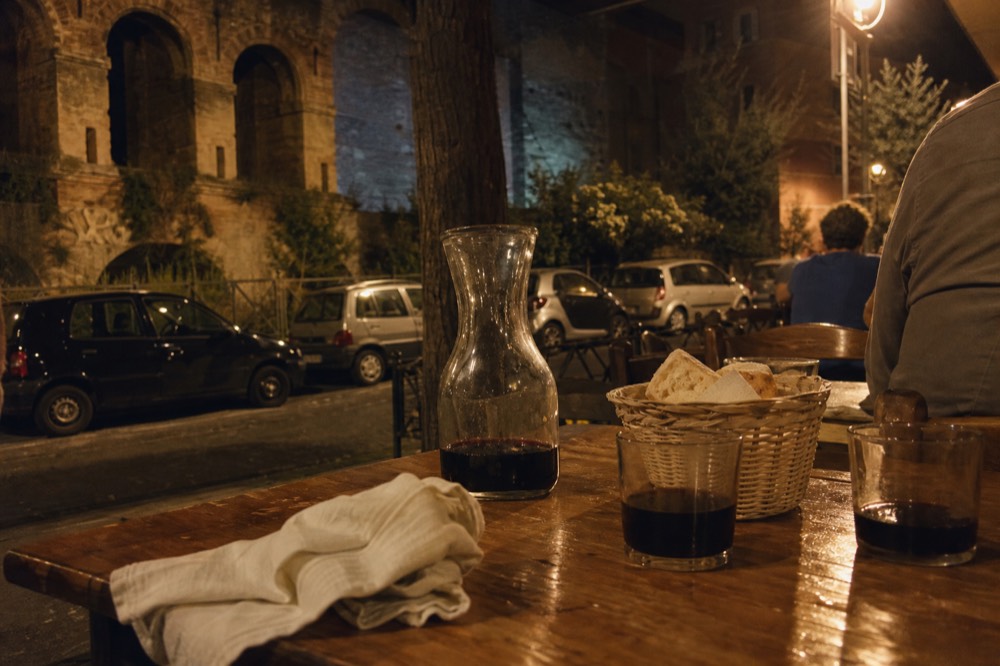
What actually separates a well-dressed diner from a scruffy one in Italy is not the presence of jeans. It is the whole package. Dark, clean, well-fitting jeans with a collared shirt or a simple blouse read as put-together. Ripped, faded, sagging jeans paired with a tank top and flip-flops read as beachwear, and that combination is what draws the occasional disapproving glance, not the denim itself. Italians tend to dress with care, which is different from dressing formally. The distinction matters, and it is the key to packing for a food-focused trip.
There is also a cultural backdrop worth knowing. On 10 December 2025, UNESCO inscribed Italian cuisine on its Intangible Cultural Heritage list, the first time an entire national gastronomic tradition received the designation, as Reuters reported at the time. Italians take their food culture seriously, and that seriousness extends to the ritual of the evening meal. Dressing reasonably well for dinner is read as respect for the occasion, the same way arriving on time for your reservation is. Nobody will turn you away in jeans. Showing up looking like you just came from the gym, at a place where the owner has spent forty years perfecting carbonara, feels off to locals in a way that is hard to articulate but easy to sense.
This site, Rome Food Tours, exists to make the eating side of a Rome trip feel effortless, and clothing anxiety is one of the easiest problems to eliminate before you fly. If your Rome trip centers on food, a cooking class is one of the few dining-adjacent activities where the dress question answers itself: wear whatever you can move and cook in. The options below cover both a hands-on class and guided eating experiences.
What do Italians actually wear to dinner?
Romans dining out in the evening typically wear smart-casual clothes: for men, chinos or dark jeans with a shirt, knitwear or a casual jacket, and for women, jeans, skirts or dresses with a blouse or elegant top. Sneakers are now widely accepted if they are clean and simple. What you will rarely see is athletic wear, beachwear or heavily distressed clothing at a sit-down dinner.
The best way to answer this is to look at what people actually wear, and the honest answer is that evening wear in Rome skews neat rather than formal. On any given night in Trastevere or Monti you will see locals in dark denim, a button-down and a light jacket, or women in tailored jeans with a silk top and loafers. You will also see tourists in shorts and hiking sandals, and nobody will say anything, because Italians are generally too polite to comment. But the local standard is visible if you look for it, and matching it costs almost no effort.
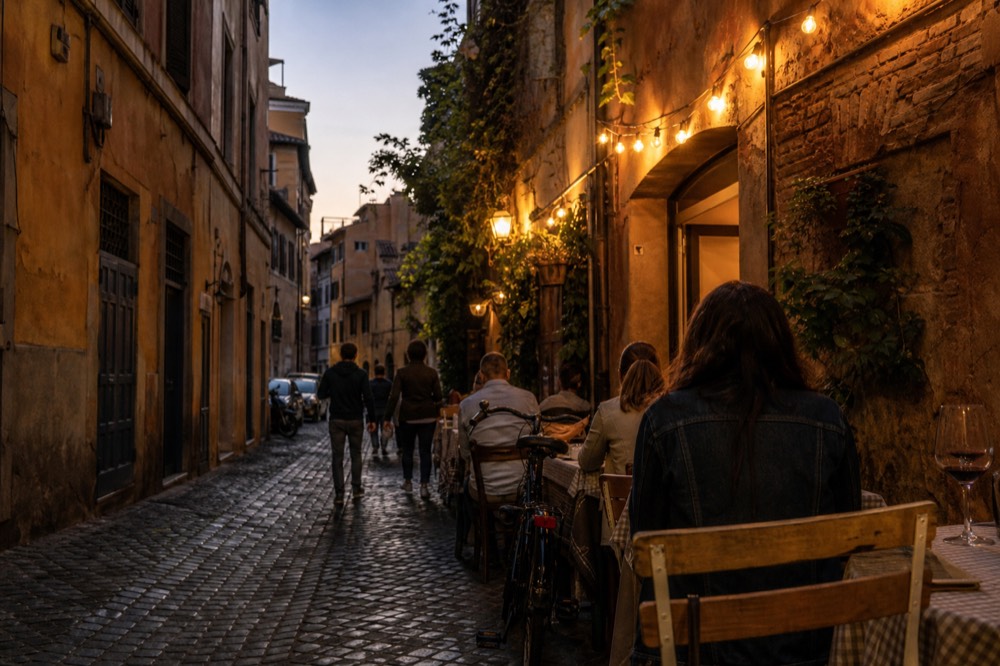
A few practical notes on the Rome context specifically. The city is a walking city, cobblestones punish impractical shoes, and evening temperatures in summer stay warm well past sunset, so breathable fabrics and comfortable footwear are genuinely functional choices, not compromises. In spring and autumn a light layer helps because outdoor tables can get cool once the sun drops. None of this conflicts with looking put-together. A pair of clean dark jeans, comfortable leather shoes and a light jacket solves every variable at once, which is exactly why so many Romans default to that combination.
One thing you should never worry about at the table is a surprise cover charge for dressing however you like. Lazio regional law n. 21/2006, article 16, prohibits restaurants from applying a separate coperto charge, and its coordinated text also requires any service charge to be clearly shown on the price list before you order. Your bill has nothing to do with your outfit.
The table below sums up what works where, as a planning guide rather than a set of hard rules.
| Venue type | Jeans welcome? | What to pair with them | What to avoid |
|---|---|---|---|
| Neighborhood trattoria | Yes, universally | Anything clean and casual | Beachwear, swim cover-ups |
| Pizzeria | Yes, universally | T-shirt is fine | Very little will raise eyebrows |
| Casual enoteca or wine bar | Yes | Smart top, decent shoes | Gym clothes |
| Rooftop or hotel restaurant | Dark jeans usually fine | Jacket or elegant top | Distressed denim, flip-flops |
| Formal fine dining | Sometimes, dark and plain only | Blazer, dress shoes | Rips, logos, sneakers |
Is there a dress code at Rome restaurants?
Almost no Rome restaurant publishes a dress code, and jeans are acceptable at effectively every casual and mid-range place in the city. A small group of luxury hotel restaurants and a handful of celebrated fine-dining rooms expect smart attire, where plain dark jeans may pass but ripped or washed-out denim will not. When in doubt, the restaurant's own website shows dining room photos that settle the question in seconds.
The practical test is simple: look at the room. Rome's dining scene is overwhelmingly casual. The trattoria around the corner from your apartment, the pizzeria with the line out the door, the gelateria you visit twice a day, none of these places has any expectation beyond basic decency. The places that do care are rare, expensive and obvious: they have maître d's, tasting menus and photographs of jacket-wearing guests on their websites.
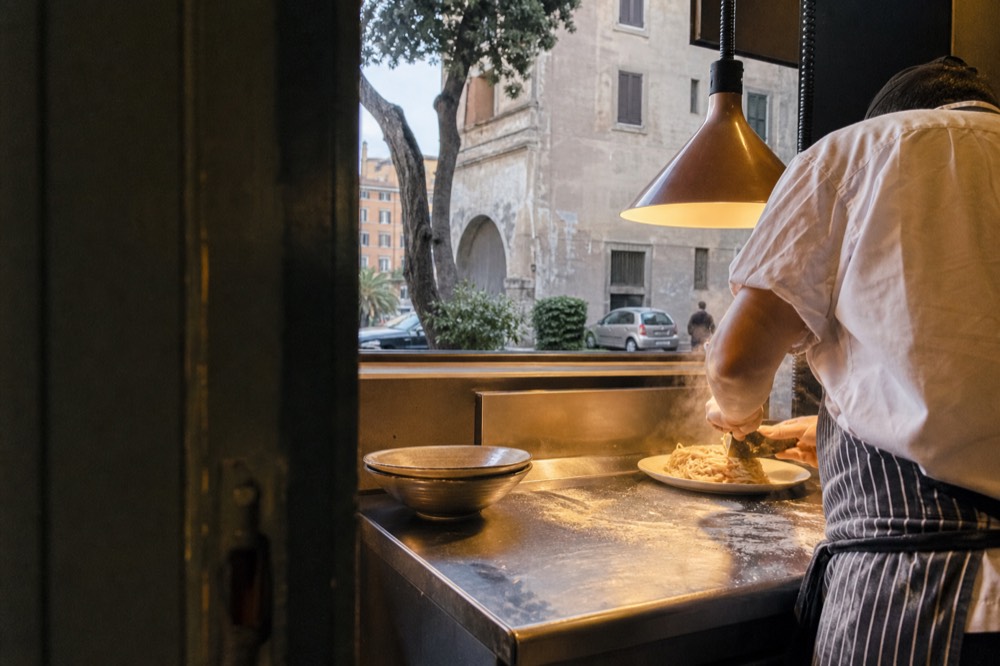
For visitors combining restaurant dinners with a cooking experience, the good news is that classes are the most forgiving environment of all. You will be standing, kneading, flour-dusted and near a hot oven, so jeans and a t-shirt are not just acceptable but sensible. The Pasta Making Class by the Pantheon, $68.52 per person, 4.9 from 3,493 reviews over three hours, hands you an apron and a glass of wine and puts you to work at a cooking school steps from the Pantheon. Nobody there cares what your trousers are made of.
If you are moving from a daytime class to an evening reservation, the transition is easy: the same dark jeans work in both settings. Swap a cooking t-shirt for a collared shirt or a nicer top, add a light jacket, and you are dressed for a mid-range Roman dinner without repacking anything. This is one of the quiet advantages of building a food trip around hands-on experiences rather than only seated meals: your wardrobe requirements collapse into a single column, and everything you packed for the class also works for the table.
What should you wear to a cooking class in Rome?
Wear comfortable, casual clothes you do not mind getting flour or sauce on: jeans, a t-shirt and closed, flat shoes are ideal, and most schools provide aprons. Skip loose sleeves, dangling jewelry and open sandals, tie back long hair, and check whether the venue has air conditioning, since some Rome kitchens run warm. That is the entire dress code.
Cooking classes are the one corner of the Rome food world where the dress question has a genuinely practical answer rather than a social one. You are on your feet for two to three hours, working dough at a counter, moving between stations, and standing near ovens. Comfort and safety outrank style, and every reputable school will tell you the same thing when you ask.
This is where jeans earn their place in your suitcase. They protect your legs better than shorts near a hot oven, they clean up reasonably well, and they carry you straight from the class to dinner afterward without a wardrobe change. For a deeper dive into class-specific clothing advice, from shoe choice to what to do about long sleeves, see our guide on what to wear to a cooking class.
The Pizza and Gelato Making Class in the heart of Rome is a good example of how casual these sessions are: $117.13 per group with the price varying by group size, 4.9 from 339 reviews, about two and a half hours at the Inrome Cooking school near Corso del Rinascimento. You ring a doorbell, get an apron, and start working dough. Jeans are standard issue among the people in the room.
What about fine dining and special occasions?
At Rome's luxury hotel restaurants and top fine-dining rooms, plain dark jeans with a blazer or elegant top are usually tolerated, but the safest choice is chinos, tailored trousers, a dress or a skirt. These venues are the only place in Italy where jeans carry any risk at all, and even there the risk is a subtle chill from the host, not a refusal at the door.
The upper tier of Roman dining is small but real. A handful of hotel rooftop restaurants and celebrated tasting-menu rooms maintain an atmosphere their guests actively choose and pay for, and dressing for that atmosphere is part of the experience the way it would be at a comparable restaurant in New York or London. If your trip includes one of these dinners, the planning range is simple: budget your outfit the same way you budget the tasting menu.
For everyone else, and that is the vast majority of visitors, the rule of thumb is that if you found the restaurant by walking past it, you can walk into it in jeans. The gap between Rome's casual majority and its formal minority is wide, and no first-time visitor accidentally lands in the formal minority. You will know if you are going, because you will have booked it weeks in advance and read the menu in three languages.
A note on tipping, since it is the other table-manner anxiety Americans carry to Italy: service is included in the sense that a large tip on top of the bill is not expected, and rounding up a few euros on a normal dinner is the local habit. The 2026 operator survey that found Americans the world's most generous tippers, reported by Euronews, cuts both ways: Italian staff do not expect American-style tipping, but they are certainly not offended by it. Our page on Roman dinner hours covers the other half of fitting in, which is showing up at the right time, since Romans eat late and a 7pm reservation marks you as a visitor faster than any pair of jeans.
How should you pack for a food-focused Rome trip?
Pack around one versatile evening outfit rather than many: dark jeans or chinos, two or three interchangeable tops, a light jacket and one pair of comfortable, presentable shoes will cover every restaurant, cooking class and market walk in a typical Rome trip. Add one dressier option only if you have booked a fine-dining reservation.
The packing logic follows directly from everything above. Since jeans are acceptable everywhere except the top tier, one good pair does the work of several outfits. Since cooking classes want the same clothes as casual dinners, you do not need separate wardrobes for activities and evenings. And since Rome's streets are hard on shoes, your one pair of presentable shoes needs to be genuinely walkable, which makes clean leather sneakers, loafers or low boots the practical choice over anything delicate.
Here is how a compact food-trip wardrobe maps onto the activities themselves.
| Activity | Outfit that works | Extras worth bringing |
|---|---|---|
| Market morning walk | Jeans, t-shirt, sneakers | Small bag for purchases |
| Street food lunch crawl | Same as market walk | Napkins, water bottle |
| Afternoon cooking class | Jeans, t-shirt, flat closed shoes | Hair tie, no loose sleeves |
| Casual trattoria dinner | Dark jeans, collared shirt or blouse | Light jacket in cooler months |
| Wine bar evening | Same as trattoria dinner | Nothing extra needed |
| Fine dining (if booked) | Chinos or dress, blazer | The one dressy pair of shoes |
If your trip mixes walking tours with seated experiences, a guided option that covers ground efficiently can save your feet for the evening. The VIP Golf Cart Food Tour, $191.67 per group with the price varying by group size, 4.9 from 268 reviews over four hours, weaves past pasta and gelato stops through the center by cart, which means comfortable shoes matter less and your dinner outfit stays fresh. It is a format worth considering when the itinerary is full.
The last piece of advice is the simplest: relax about this. The question of whether jeans are acceptable at Italian dinner tables generates enormous pre-trip worry and almost zero real-world consequence. Millions of visitors eat in Rome every year, the city logged nearly 23 million arrivals in 2025, and the overwhelming majority of them wore practical, casual clothes to dinner without incident. Dress neatly, wear clean shoes, and spend your worry budget on which trattoria to book instead. For more on that, our guide to typical trattoria menus is a better use of your attention than your closet.
A few seasonal notes will make the same wardrobe work year-round. Rome's summer heat is real, so if you are visiting between June and August, swap the light jacket for something you can stuff in a bag and lean on breathable tops for market mornings and street food crawls. In the cooler months, the light jacket earns its place, especially for evening wine bar stops where outdoor seating is common. The one dressier outfit, if you pack it at all, only needs to handle a restaurant interior, so weight and bulk matter more than versatility when choosing it.
If a cooking class is on your list, these three options cover the most common formats.
The short answers are consistent across every venue type in Italy: jeans are welcome at casual and mid-range restaurants without exception, dark plain jeans are fine almost everywhere else, and only luxury fine-dining rooms reward dressing beyond denim. Cooking classes are the most forgiving setting of all, since they judge your outfit on practicality rather than appearance. The details below cover the situations travelers ask about most.
One final packing tip: leave room in your bag for the trip home. Between market purchases, olive oil, and other food souvenirs, a food-focused Rome trip tends to add weight to your luggage, and a bag that starts the trip half full is far easier to repack than one that starts at its limit.
Common questions about wearing jeans to dinner in Italy
Can I wear jeans to dinner in Italy?
Yes. Jeans are acceptable at virtually every Italian restaurant, including nearly all casual and mid-range places in Rome. Only a small number of luxury hotel restaurants and fine-dining rooms expect smarter attire, and even there plain dark jeans with a jacket are often tolerated.
Are ripped or distressed jeans acceptable?
At casual pizzerias and trattorias, usually yes without comment. At nicer restaurants, dark plain jeans read far better than heavily ripped or faded denim. If in doubt, save the distressed pair for daytime sightseeing.
Can I wear sneakers to dinner in Italy?
Yes, if they are clean and simple. White leather sneakers and minimal designs are now common on Italian diners of all ages. Athletic running shoes with technical styling are the one category that still reads as gym wear.
What should I wear to a cooking class in Rome?
Casual, comfortable clothes you do not mind getting flour on: jeans, a t-shirt and flat closed shoes. Schools provide aprons. Avoid loose sleeves, dangling jewelry and open sandals, and tie back long hair.
Do fine dining restaurants in Rome have dress codes?
A small number do expect smart attire, though few publish formal rules. Check the restaurant's website photos before you go. Dark trousers, a dress or a skirt with a jacket removes all doubt.
Will a restaurant refuse me entry for my outfit?
Almost certainly not. Refusals over clothing are extremely rare in Italy and essentially unheard of outside luxury venues. The realistic worst case of jeans at a nice restaurant is a slightly cool greeting, nothing more.