what is typically on a trattoria menu?
A plain-English decode of the trattoria menu: antipasto, primo, secondo, contorno and dolce, what a Roman trattoria actually serves, and how it differs from an osteria.
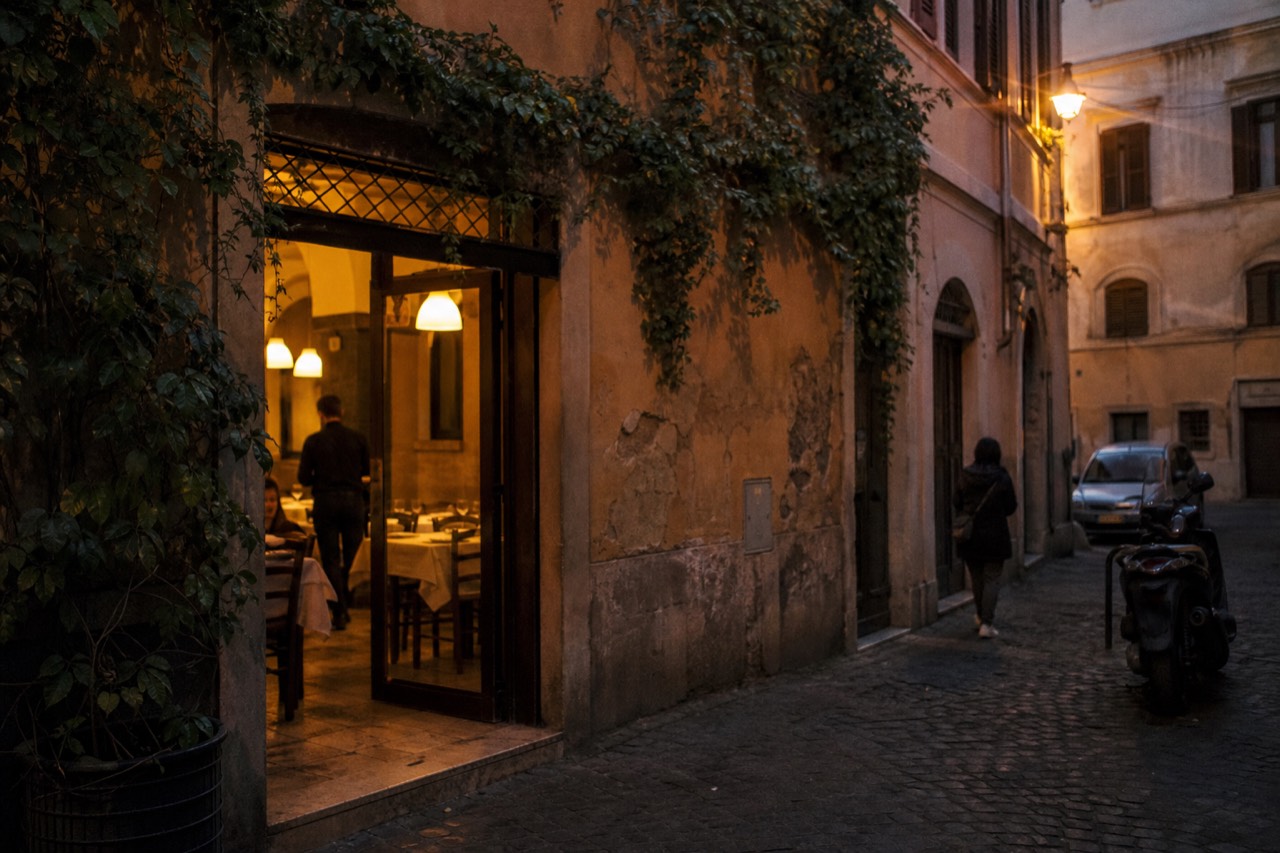
A trattoria menu in Rome is not a list you work through from top to bottom. It is a structure, and the structure has barely changed in a century: a few antipasti to open, a pasta course, a meat or fish course, vegetables on the side, and something sweet to finish. The confusion for visitors is rarely the food itself. It is the ordering logic, which assumes you know that the courses are modular, that sharing is normal, and that the kitchen expects Romans to eat later than almost anyone else in Europe.
This page decodes each section of a typical trattoria menu, explains what a Roman trattoria serves that a generic Italian one does not, and clears up the trattoria versus osteria distinction so you can walk into either and order with confidence. The team behind Rome Food Tours has put it together from the city's own documented food record, from the EU specifications that govern the protected products on these menus, and from the regional laws that decide what a bill can legally contain.
what is typically on a trattoria menu?
A trattoria menu runs in five fixed sections: antipasto (small opening dishes, often cured meats, bruschetta or fried snacks), primo (pasta, rice or soup), secondo (meat or fish, the main protein), contorno (side vegetables ordered separately) and dolce (dessert), followed by coffee. You are not expected to order one dish from every section; mixing two or three courses per person is normal, and the waiter will pace the kitchen around whatever you chose.
The single most important thing to understand is that the secondo does not come with sides. In North American and northern European dining, a main course arrives as a composed plate: protein, starch and vegetable together. In a Roman trattoria the secondo is just the protein. If you want potatoes, greens or a salad with your saltimbocca, you order them from the contorno list and they arrive alongside or just after. First-time visitors who order only a secondo often sit down to a plate of meat and nothing else, and feel shortchanged. Nobody has shortchanged you; you just ordered the way the menu is built.
The second thing is pacing. Courses come out one at a time, in the order you ordered them, and the kitchen holds each one until the previous is finished. This is why a full antipasto-primo-secondo meal in Rome can comfortably run two hours, and why the waiter will not bring the bill until you ask for it. Asking for everything at once, or for the dolce with the coffee, will get you a polite, confused pause. The rhythm is part of the format, and fighting it only makes the meal feel longer.
The third thing is that portions are sized for the structure. A primo is a full plate of pasta but it is meant to be one course among several, not a whole meal. If you plan to stop at one course, the primo is the most filling single choice, and plenty of Romans do exactly that at lunch. There is no minimum order, no expectation that you build a banquet, and no waiter who will think less of you for ordering a single plate and a glass of wine.
How do the five courses actually work?
Antipasto opens the meal with small dishes, usually cold: cured meats, cheeses, marinated vegetables, bruschetta or fried supplì. Primo is the starch course, pasta or soup, and in Rome that means carbonara, cacio e pepe, gricia or amatriciana. Secondo is the protein, most often meat in a Roman trattoria. Contorno is the separately ordered vegetable side, and dolce plus coffee close the meal. Each is priced individually, so two courses per person is a completely normal order.
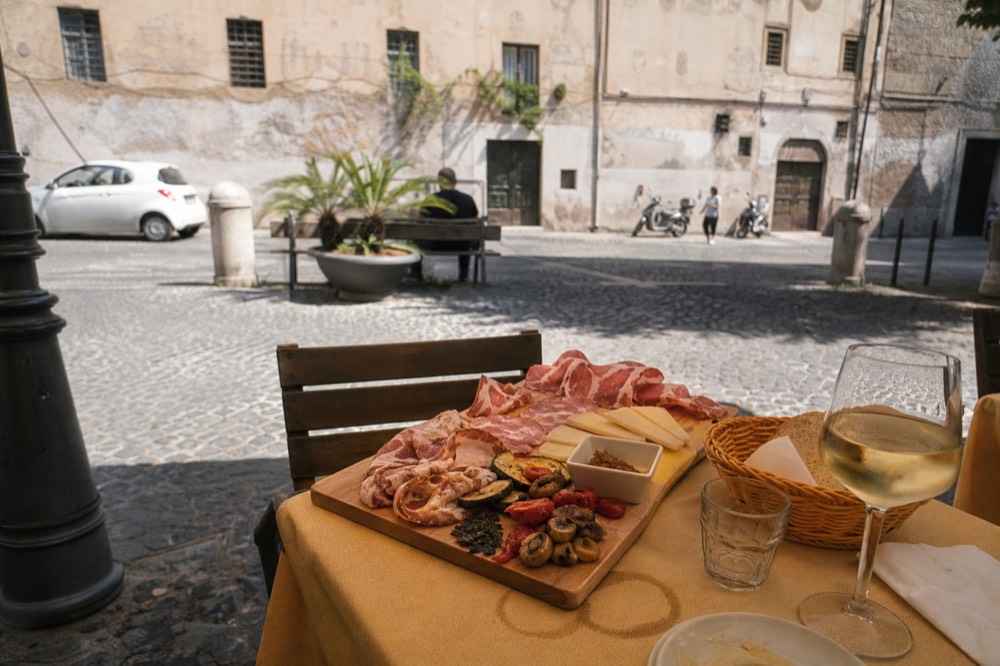
The antipasto list in a Roman trattoria is short and leans Roman. Beyond the national staples, prosciutto and melon, caprese in summer, you will frequently find supplì al telefono, fried rice balls with a molten mozzarella center, fiori di zucca fritti, zucchini flowers stuffed with mozzarella and anchovy, and carciofi alla romana or alla giudia when artichokes are in season. The season matters more than visitors expect: the Carciofo Romanesco del Lazio harvest begins in January and can run into May depending on weather, so a trattoria's artichoke dishes appear and disappear with the calendar rather than sitting on the menu all year.
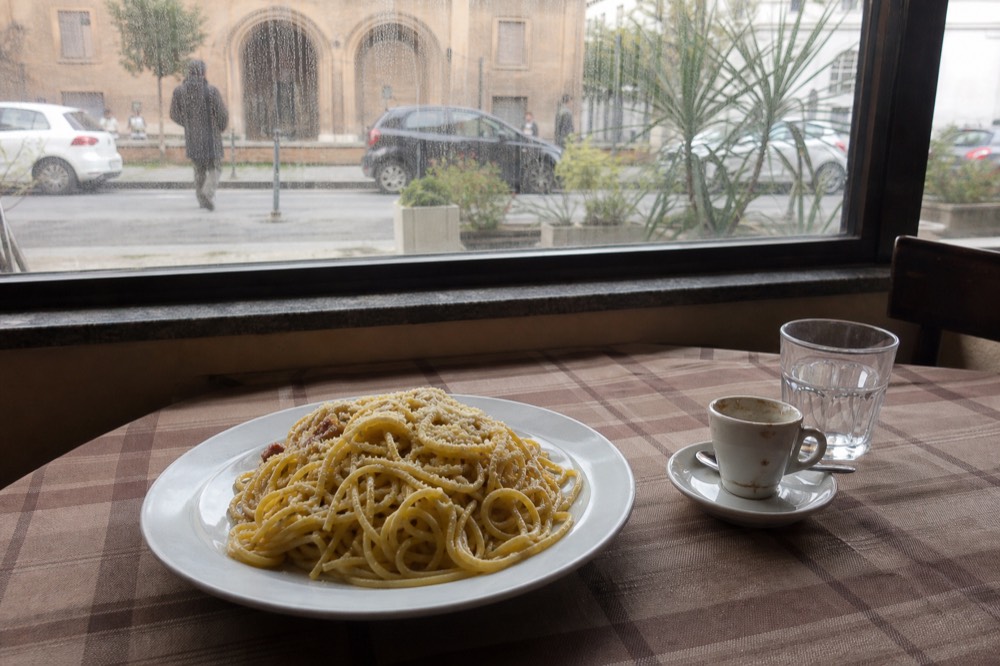
The primo is where a Roman trattoria shows its identity. The four classic Roman pastas, carbonara, cacio e pepe, gricia and amatriciana, are the backbone of the list, and they share a family resemblance: pasta, pecorino, and in three of the four, cured pork jowl. Amatriciana is the only one of the four with a formal EU registration, the Amatriciana Tradizionale TSG, whose specification requires 18 to 30 percent guanciale in the sauce and states plainly that the sauce has always been made with pork jowl, never bacon or pancetta. Carbonara has no protected designation, but it hardly needs one: an AstraRicerche survey ahead of Carbonara Day 2026 found 46.1 percent of Italians name it their favorite pasta dish.
The secondo list in Rome is heavy on offal and cheap cuts, and that is not an accident of fashion. Tripe, oxtail, coratella and pajata belong to what Roma Capitale's own food pages call the "quinto quarto", the fifth quarter of the animal, historically the least prized parts eaten by the poorest families and above all by the workers of the Testaccio slaughterhouse, who topped up their wages with the offcuts. Trippa alla romana, tripe simmered with tomato and finished with pecorino and Roman mint, is by tradition a Saturday lunch dish, and many trattorias in Trastevere and Testaccio still serve it that way. Saltimbocca alla romana, veal with prosciutto and sage, and abbacchio, Roman lamb, round out the list.
The contorno is easy to overlook and easy to fix: patate al forno, spinach ripassate in oil and garlic, chicory, puntarelle with the anchovy dressing, or a plain insalata mista. Order one per two people if you are also having a primo, one per person if the secondo is your main event. The dolce course is usually short: tiramisù, crostata, maybe a panna cotta, and then the espresso, which arrives after the dessert plate is cleared, never alongside it.
A word on pacing, because the structure of the meal is also its rhythm. Courses arrive one at a time, and nobody will hurry you between them, so a full five-course order can stretch comfortably across a couple of hours. If you are short on time or appetite, skipping the antipasto entirely is perfectly acceptable, and plenty of Romans do exactly that on a weeknight. What is less flexible is the ordering itself: the kitchen expects courses in sequence, so asking for your contorno to come with the primo, or your dolce with the coffee, will usually get a polite no.
Pricing follows the same individual logic on the bill. Since each course is charged separately, a primo and a contorno can cost about the same as a single secondo in many trattorias, and a shared antipasto plus two primos is a genuinely economical way to eat well. Portions are meant to be modest by design, so a two-course order should leave room for that final espresso without feeling like a challenge.
Is a trattoria the same as an osteria?
No, a trattoria and an osteria are not the same, though the two overlap considerably in Rome today. Historically, an osteria was a place that served wine with a little food to keep you there, while a trattoria was a family-run eating house with a full kitchen and a fixed menu structure. A menu that is mostly wine with a short list of simple plates still signals osteria, while a menu running antipasto to dolce signals trattoria.
The historical distinction is worth knowing because it explains why osteria menus are short. An osteria's kitchen was traditionally small, so the food was things that needed no cooking or barely any: a board of cheeses and cured meats, bread, a few prepared dishes, maybe one pasta of the day. A trattoria had the staff and the equipment to run a full service. That is still broadly what you find. If you sit down somewhere labelled osteria and the menu is one laminated page with five antipasti and three pastas, that is the format doing what it has always done, not a sign the place is cutting corners.
The pricing logic is the same in both, and it is the thing that surprises people most: in Lazio, a restaurant may not add a separate coperto charge. Article 16 of the regional law governing food service, Legge Regionale 21/2006, states that applying additional costs for the coperto is prohibited, and breaches carry an administrative fine of 2,500 to 7,500 euros. If service is charged, it has to appear on the price list you can see before you order. The law is the rule rather than a guarantee of compliance at every till, so check the bill, but a line labelled "coperto" on a Roman restaurant bill is not something you are simply expected to accept.
If you want to go deeper on the short-list format, the companion piece on common osteria menu items breaks that format down dish by dish.
What should you actually order in a Roman trattoria?
Order two courses per person: a primo from the four Roman pastas plus either an antipasto to share or a secondo with one contorno. If the menu has trippa alla romana on a Saturday, carbonara, cacio e pepe, saltimbocca or abbacchio, order those before anything generic. Skip dishes with photographs on the menu and any tourist menu fisso, and let the waiter pace the meal rather than asking for everything at once.
The reasoning is simple. A trattoria's reputation in Rome rests on the Roman repertoire, and the Roman repertoire is narrow: four pastas, a handful of secondi, artichokes in season, offal for those who want it. A kitchen that does those well has earned its tables. A menu that stretches to lasagne, penne all'arrabbiata, pizza and a "meat and fish grill for two" is cooking for a crowd it does not expect to see twice.
One ordering habit worth borrowing from Romans: the primo is often the meal. A full plate of carbonara is a serious quantity of food, and at lunch plenty of locals order exactly that, a water, and a coffee, and leave. There is no minimum spend and no obligation to construct a three-course structure at one in the afternoon. For the timing that makes this work, the piece on what time Romans eat dinner explains why trattoria kitchens are often only warming up at eight.
If you would rather taste the classic street versions of these flavours before committing a whole evening to them, the 2.5-Hour Street Food Walk, $52.26 per person with a 4.8 rating across 4,201 reviews, runs through the historic center with a local guide and covers the fried and sliced Roman staples. Check availability alongside the street food tour guide if that format appeals.
How much does a trattoria meal cost?
Expect roughly 25 to 45 euros per person for two courses with house wine in a neighbourhood Roman trattoria, and more in the historic center. The price structure is à la carte per course, so the bill scales with how many sections you order from. There is no coperto permitted in Lazio, and water, coffee and any pane charge are the usual small extras. Restaurant services inflation ran at about 3.2 percent nationally in 2025 per FIPE.
| Course | Typical Rome trattoria items | Rough price range |
|---|---|---|
| Antipasto | Supplì, fiori di zucca, cured meat board, bruschetta | 4-10 euros |
| Primo | Carbonara, cacio e pepe, gricia, amatriciana | 9-15 euros |
| Secondo | Saltimbocca, abbacchio, trippa, oxtail | 12-22 euros |
| Contorno | Patate al forno, spinach, puntarelle, salad | 4-7 euros |
| Dolce and coffee | Tiramisù, crostata, espresso | 5-8 euros |
Treat those ranges as planning figures, not promises: trattorias set their own prices, and a place on a prime piazza will charge prime-piazza rates. The espresso line is the one place where Rome remains genuinely kind to the wallet, with the average price in Rome province still under 1.20 euros per the Crc-Assoutenti study on Ministry of Industry price data, well below cities like Bolzano. House wine, either a quartino or a liter carafe, is usually the cheapest drink on the page and often better than the middle of the bottled list.
A word on the extras that appear on Roman bills. Bread may appear as a small pane e coperto or servizio line even though the coperto itself is prohibited, and mineral water is almost always charged, still or sparkling, by the bottle. Cover these small items when you compare a trattoria bill against what you budgeted, and ask for the bill when you want it, because it will not arrive on its own.
Which dishes tell you a trattoria is the real thing?
Look for the Roman four on the pasta list, at least one quinto quarto dish such as trippa or pajata, seasonal artichokes between January and May, a contorno list with puntarelle, and a short menu overall. A trattoria whose menu runs to dozens of dishes across every region of Italy is cooking for turnover, not for the neighbourhood. The shortest menus are usually the strongest signal of a kitchen that knows exactly what it is doing.
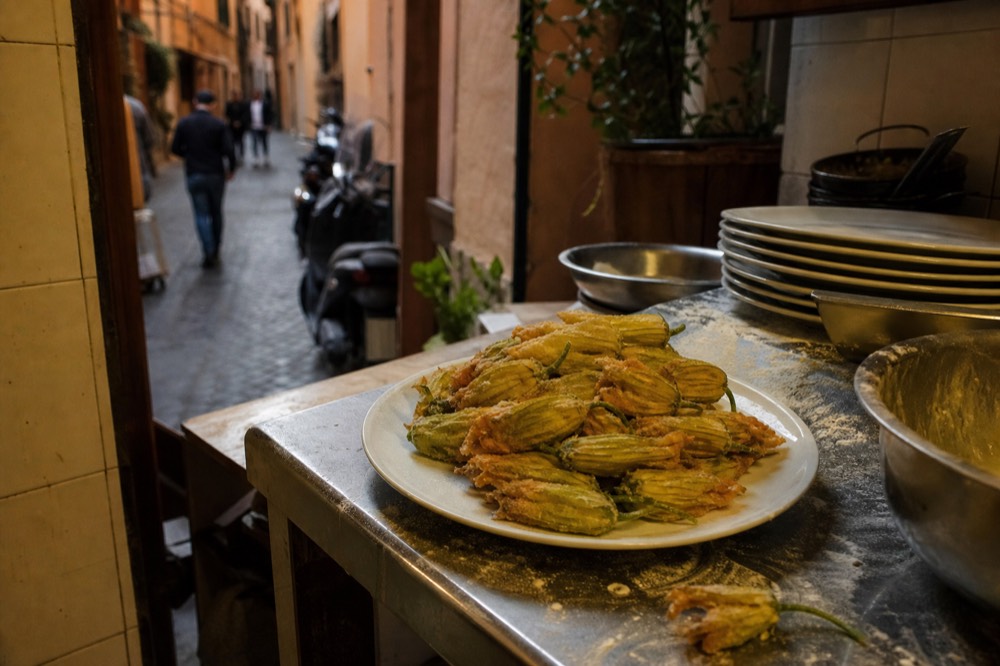
Seasonality is the tell most visitors miss. Artichokes are the clearest case: the Carciofo Romanesco del Lazio PGI harvest starts in January and can run into May, and a trattoria that lists carciofi alla giudia in August is serving them from a freezer chest. The same logic applies to puntarelle and the other market vegetables that appear in Rome's rionali markets, which is why the street food markets guide is worth a read before you shop or order: the market stalls and the trattoria menus move together.
The offal question deserves honesty. Not everyone wants tripe, and no Roman expects a visitor to. But a trattoria that lists it is a trattoria confident in its audience, and the confidence tends to extend to everything else on the page. The history is worth knowing too: the quinto quarto tradition comes straight from the slaughterhouse workers of Testaccio, and it is one of the few Roman food stories documented by the city itself rather than by legend. You can read the fuller version in the Testaccio food tours guide.
One last signal worth watching: where the locals are sitting and what they are eating. A trattoria with a mixed room of families and couples, a waiter who writes nothing down, and a menu that changes when the market does is doing the job the format was invented for. The name on the door matters far less than the length of the menu and the season on the plate.
The five-course structure, the trattoria and osteria distinction, the coperto rule and the classic Roman dishes are the questions readers ask most, and the answers below collect them in one place so you can order on your first night without hesitation.
Common questions about trattoria menus
what is typically on a trattoria menu?
Five sections in a fixed order: antipasto (small opening dishes), primo (pasta, rice or soup), secondo (meat or fish), contorno (separately ordered vegetable sides) and dolce (dessert), followed by coffee. Each is priced individually and you order two or three courses per person, not one from every section.
Do I have to order a dish from every course?
No. Two courses per person is the most common order, often a primo plus either an antipasto or a secondo with a contorno. Plenty of Romans order a single primo at lunch. The menu is modular and the kitchen paces itself around whatever you choose.
What is the difference between a trattoria and an osteria?
Historically an osteria served wine with a little simple food and a trattoria ran a full kitchen with a complete menu. Today the labels overlap, but a short menu of cured meats and a few plates still signals osteria, while a menu running antipasto through dolce with a full secondo list signals trattoria.
Why did my main course arrive with no sides?
Because in Italian menu structure the secondo is only the protein. Vegetables and potatoes are listed separately under contorno and must be ordered separately. This is the single most common surprise for visitors and it is not an error by the kitchen.
What does coperto mean on a Roman bill?
A cover charge. In Lazio, regional law prohibits applying a separate coperto charge, and any service charge must be shown on the price list before you order. If you see a coperto line on a bill in Rome, question it politely.
What are the classic Roman dishes to look for?
The four Roman pastas, carbonara, cacio e pepe, gricia and amatriciana, plus saltimbocca alla romana, abbacchio, trippa alla romana, fried zucchini flowers, supplì, and artichokes between January and May. A short menu built around those dishes is the strongest sign of a serious trattoria.