Rome Street Food: What to Eat, Where to Buy It and How to Order at the Counter
Rome's street food is not a novelty act for tourists. It is how the city has eaten at midday for more than a century, and the counter has its own rules.
Short answer
The four Roman street foods to know are supplì, pizza al taglio sold by weight, trapizzino and maritozzo. A medium gelato cone in central Rome ran up to 4 euros in July 2025, and an espresso at the counter averaged 1.35 euros in December 2025, so a filling street lunch costs very little compared with a sit-down restaurant.
Rome has always eaten standing up. Before the city had a name for street food, it had the forno, the friggitoria and the pizza al taglio counter, and workers queued at all three at midday because a sit-down lunch was not on the schedule. That habit never went away. The Gambero Rosso Street Food 2026 guide, presented in Rome in July 2025, lists 685 street food addresses across Italy including 121 new entries, which tells you the category is expanding, not fading.
This guide covers the four foods that actually define Roman street eating, the counter etiquette that quietly decides whether you get a warm welcome or a cold one, where the stalls cluster, what it all costs, and when it makes sense to let a guide lead. The publisher of this site, Rome Food Tours, built it from official sources and verified listings rather than folklore, and the same standard applies to every claim below.
What counts as street food in Rome?
Street food in Rome means food prepared in front of you, sold over a counter, and eaten within a few steps of where you bought it. It is a lunch and snack tradition rooted in the working city, not a festival concession, and the four pillars are supplì, pizza al taglio, trapizzino and maritozzo. Everything else, from porchetta sandwiches to fried artichokes, borrows from that same counter culture.
The distinction matters because a lot of what gets marketed to visitors as "street food" is really restaurant food moved outdoors. A true Roman street food business is small, specialised and unapologetic about doing one thing. The friggitoria fries. The forno bakes. The pizzetteria cuts. Nobody does all three well, and a counter that tries is usually a sign you have wandered into a tourist strip.
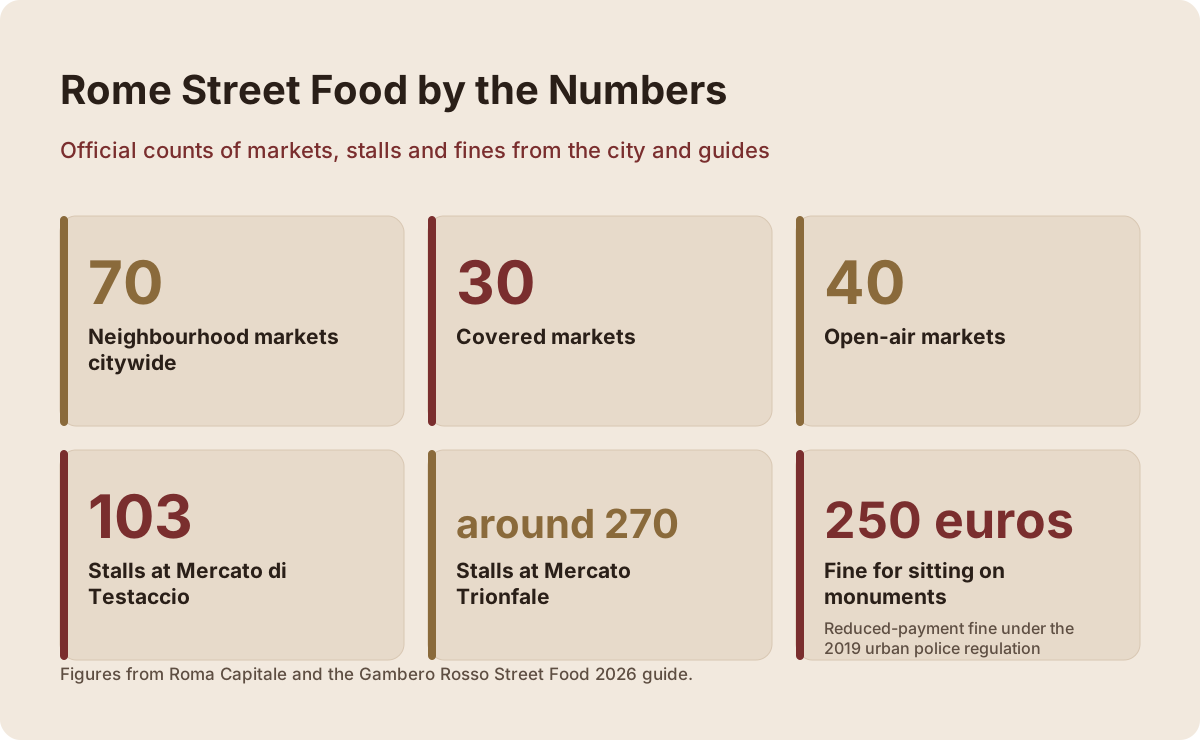
There is also a legal frame around it all. Roma Capitale counts 70 mercati rionali in the city, 30 covered and 40 open-air, and street trading posts now run on ten-year concession terms under national guidelines signed in June 2026. In other words, the stalls you buy from are licensed, regulated businesses, not informal vendors, and the city treats them as permanent infrastructure. That is worth knowing when a guidebook implies you should haggle or worry about hygiene. You should do neither.
The other thing worth knowing is that UNESCO inscribed Italian cuisine on its Intangible Cultural Heritage list on 10 December 2025, the first national cuisine recognised in its entirety. That does not change what a supplì costs, but it does confirm what Romans have always claimed: this food is heritage, not fast food.
The four street foods every visitor should try
Start with supplì, the fried rice ball with mozzarella that is Rome's native snack, then pizza al taglio cut to order and sold by weight, then trapizzino, a pizza-dough pocket stuffed with slow-cooked Roman stews, and finally maritozzo, the cream-filled brioche that has gone from breakfast tradition to all-day dessert. Each one is tied to a specific neighbourhood and time of day, and the order you eat them in is part of the experience.
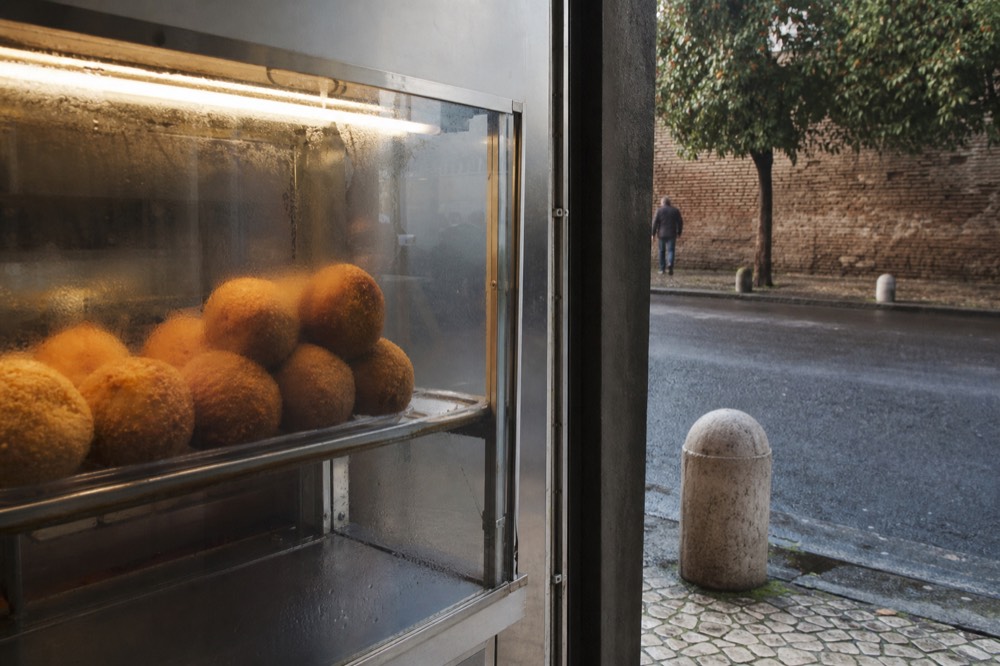
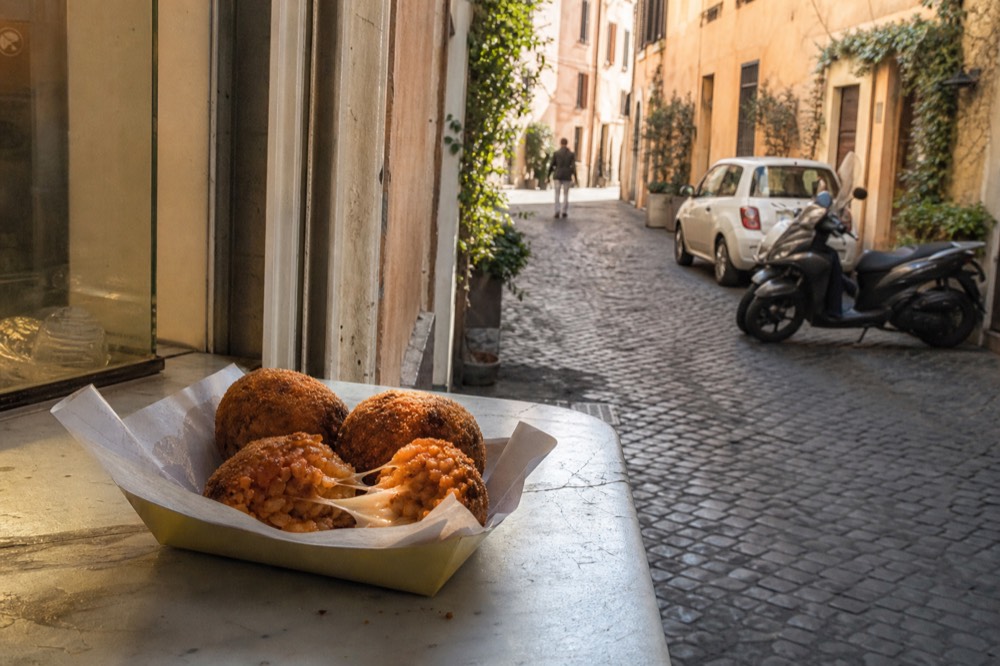
Supplì is the oldest of the four and the most Roman. It is a croquette of rice and tomato with a heart of mozzarella that stretches when you break it, which is where the full name, supplì al telefono, comes from. It is a snack of the city's friggitorie and pizzetterie, fried fresh through the day, and the good ones are made in small batches rather than sitting under a heat lamp.
Trapizzino is the youngest and the cleverest: a triangle of pizza bianca dough, crisp outside and hollow inside, filled with classics like braised oxtail, chicken cacciatora or tripe. It was invented in Rome in the late 2000s and has spread, but the Roman version, eaten warm within a minute of being handed over, is still the one to have. It is the closest thing the modern city has to a new classic.
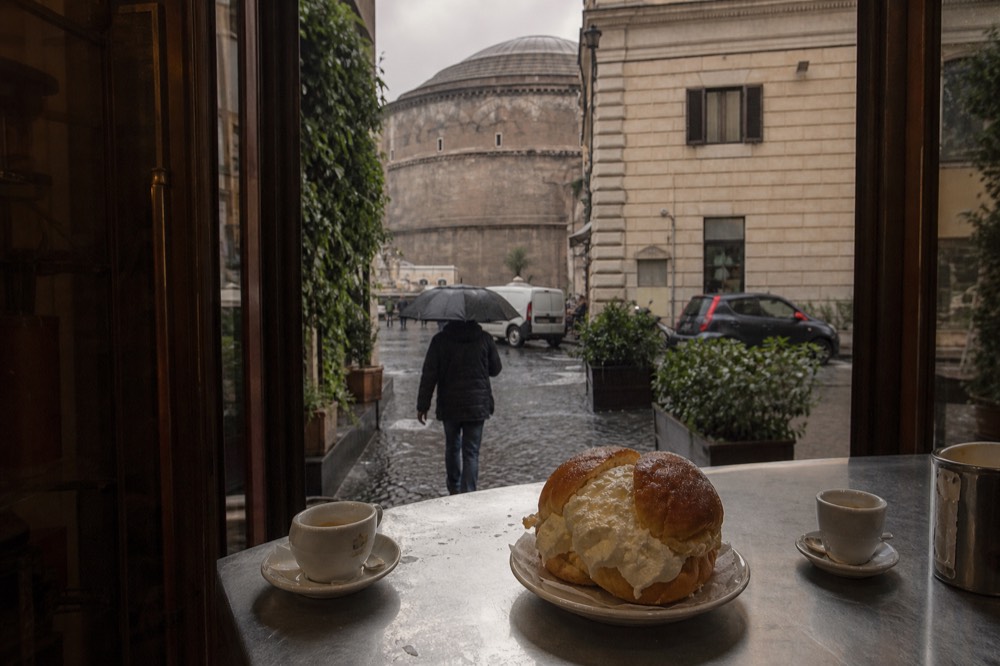
Maritozzo is the sweet one, a soft brioche split and loaded with whipped cream. For decades it was a breakfast item, and in many old bars it still is, eaten standing at the counter with an espresso. A new wave of pastry shops has turned it into an afternoon dessert with pistachio, strawberries and other fillings, which purists grumble about and everyone else eats happily.
| Street food | What it is | When Romans eat it | What to watch for |
|---|---|---|---|
| Supplì | Fried rice croquette with tomato and mozzarella | Midday snack, before dinner | Made in small batches, eaten hot |
| Pizza al taglio | Rectangular pizza cut to order, priced by weight | Lunch, late afternoon | Sold by the etto, cut fresh |
| Trapizzino | Pizza-dough pocket filled with Roman stews | Lunch, evening | Fillings change daily, eat immediately |
| Maritozzo | Cream-filled brioche | Breakfast, now also afternoon | Traditional version is plain cream |
If you want a guided introduction rather than finding these on your own, these three walks cover the ground in different ways and at different price points.
How pizza al taglio is sold by weight
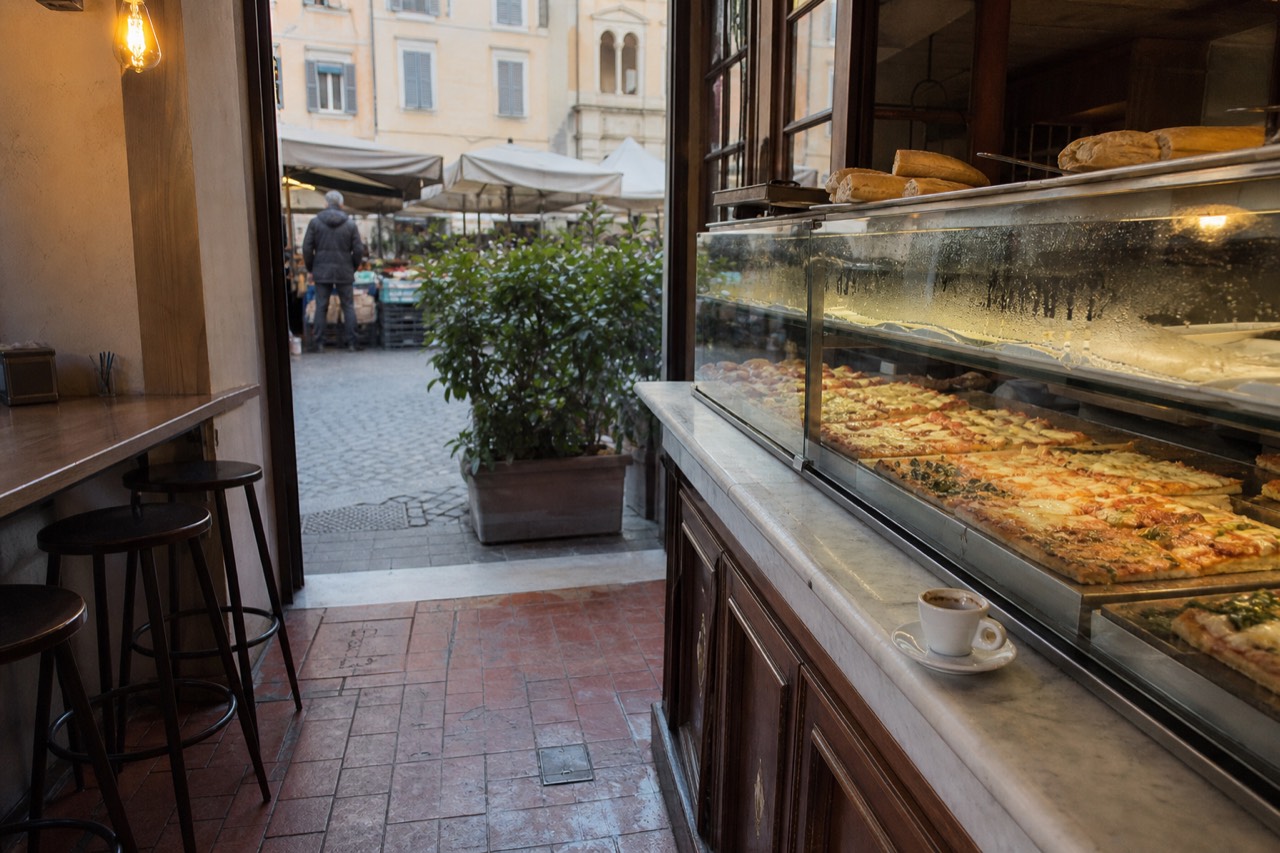
Pizza al taglio is priced by weight, not by the slice, and the unit is the etto, 100 grams. You point at what you want, indicate how big a piece with your hands, and the counter cuts it, weighs it and charges accordingly. Expect to pay for the piece you chose, not a fixed price, and expect the scissors and the scale to be part of the theatre.
This is the single biggest point of confusion for visitors, and it is worth slowing down on. There is no "one slice" price. The counter cuts where you indicate, the piece goes on the scale, and the register reads the grams. If you want a small taste of three different pizzas, say so: a good counter will happily cut you three small pieces rather than three full portions. Asking for "un pezzo cosi" with a hands-apart gesture is completely normal and nobody will blink.
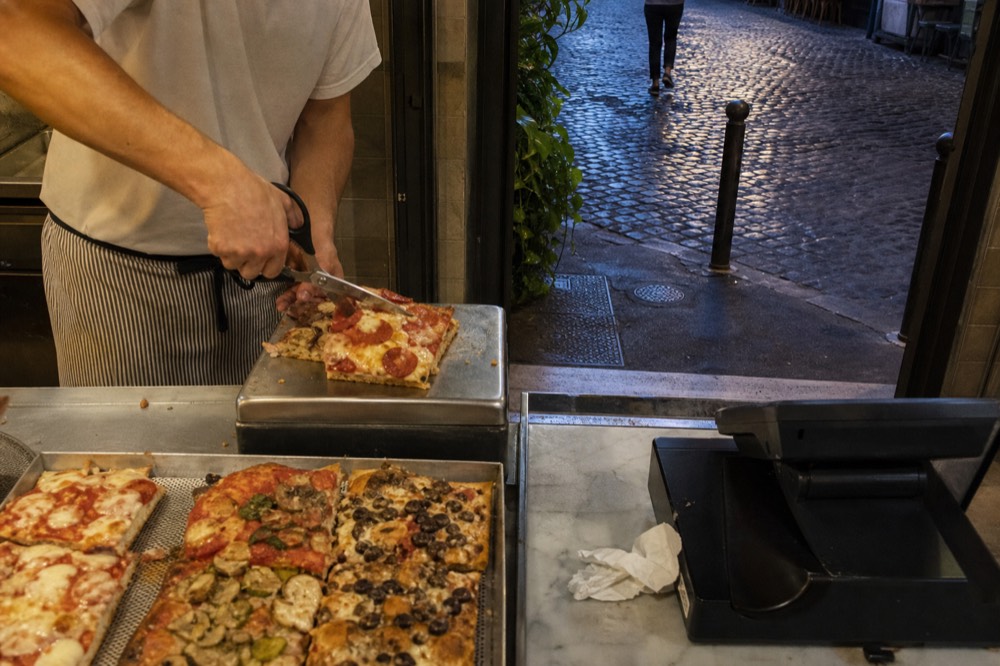
Rome takes this format seriously. In the 50 Top Pizza 2025 guide, Frumentario by Alessandro Santilli ranked first in the world for pizza al taglio, with Pizzarium second, and Rome placed 12 venues in the overall list, as ANSA reported at the guide's launch. That is an extraordinary concentration for one city and one format, and it means you do not need to hunt for a famous name. Almost any busy counter with a line of locals is doing it right.
Two practical notes. Pizza rossa, just tomato and oil on the crust, is the cheapest thing in the shop and the true test of the dough. And pizza bianca without anything on it is the traditional carrier for mortadella or prosciutto, folded and eaten like a sandwich, which is exactly what Roman schoolchildren and office workers have at midday.
Counter etiquette: how to order without annoying anyone
The rules are simple: know what you want before you reach the front, pay first where there is a till, take a receipt to the counter if asked, eat standing or walking away from the shop front, and never sit on a fountain step or monument ledge to eat, which the city's urban police regulation prohibits and fines. None of this is hostile, it is just a busy counter moving fast.
Start with the queue. Roman counters run on a loose first-come system, and the person behind the glass will serve whoever is ready. If you are still deciding, step aside and let others go. Asking for recommendations is fine and often welcomed, but asking at peak lunch hour when there are eight people behind you is not. Go at 11:30 or 15:00 if you want to talk.
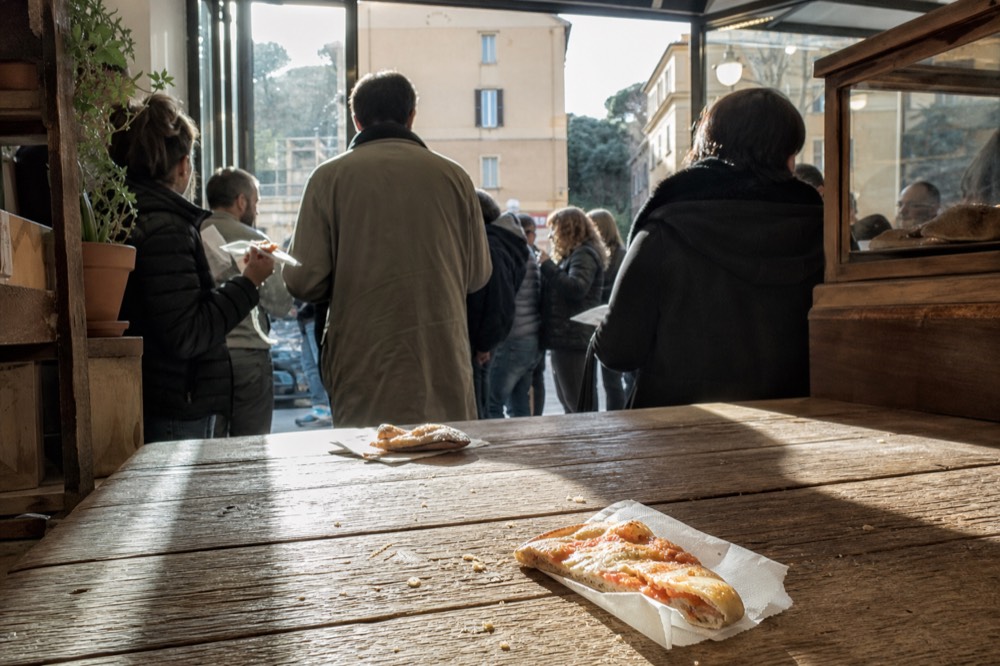
The sitting rule deserves a proper explanation because it is written into law, not just custom. Rome's urban police regulation, approved in 2019, prohibits sitting, including while eating or drinking, on monuments, fountains and their steps, and on public ground outside spaces equipped for eating. The reduced-payment fine for that behaviour is 250 euros, per the city's own sanction tables. Standing and eating is the Roman way for a reason, and there are no exceptions for tourists who did not know.
One more thing that trips people up: the coperto. In Lazio, a restaurant may not add a separate coperto charge, and any service charge has to appear on the price list you can see before you order, with fines from 2,500 to 7,500 euros for breaches under the regional law. A street food counter sidesteps all of this entirely, which is part of its appeal. You pay for the food, you eat it, you leave.
Where street food stalls cluster: markets and neighbourhoods
Rome's street food concentrates in two places: the covered markets, above all Testaccio, Trionfale and the Nuovo Mercato dell'Unità in Prati, and the evening streets of Trastevere and the Jewish Ghetto, where counters and friggitorie stay open late. The official count is 70 neighbourhood markets citywide, and the ones worth planning a visit around are the covered ones with food stalls.
Mercato di Testaccio is the food market most tied to Roman street eating. The market's own site publishes hours of 07:00 to 15:30 Monday to Saturday, and from 6 March 2026 it has opened on Friday evenings until 22:00, a change agreed between the operators and the city. Beneath it sits an excavated ancient Roman warehouse still holding hundreds of amphorae, though visits to the archaeological area are temporarily suspended for refurbishment, so do not plan around them.
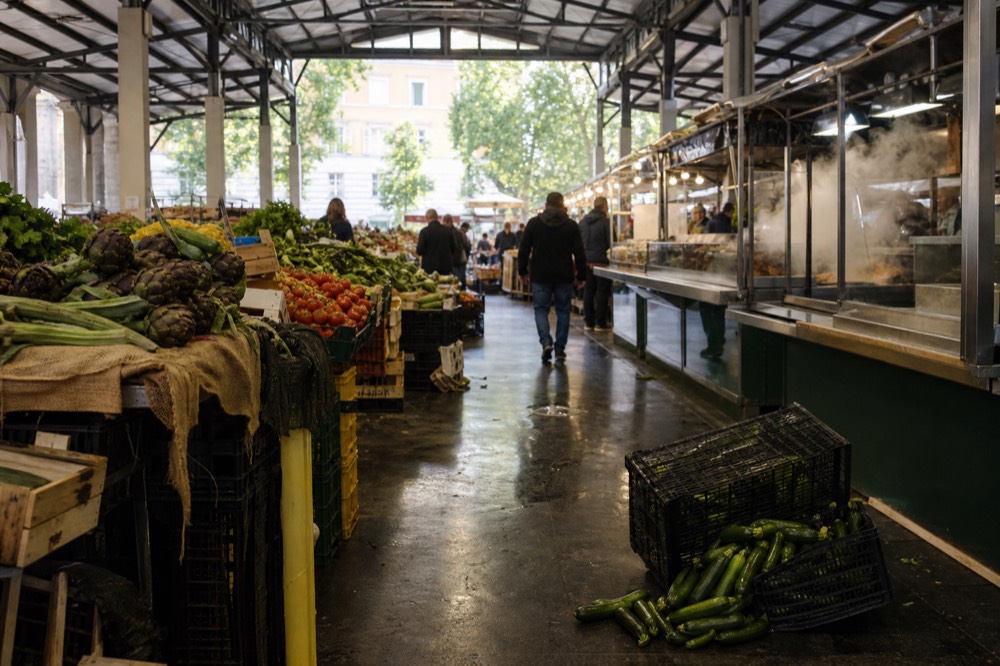
Mercato Trionfale, on the Vatican side of the river, is the giant: around 270 stalls on the city's official count, selling everything from fresh fish and baccala to porchetta, cheeses and honey. The Nuovo Mercato dell'Unità in Prati received its new luminous stall structures in November 2025 with a public reopening scheduled for 2026, so check its status before making a special trip. Roma Capitale's own tourism portal maintains the official overview of the city's neighbourhood markets, which is the best single reference for what each one sells.
| Market | District | Stalls | What to eat there |
|---|---|---|---|
| Mercato di Testaccio | Testaccio | 103 on the official list | Street food stands, fresh pasta, Friday evenings until 22:00 |
| Mercato Trionfale | Prati, Vatican side | Around 270 | Porchetta, cheeses, cured meats, prepared food |
| Mercato Monti | Monti | 17 | Butcher, fishmonger, fresh-pasta workshop |
| Nuovo Mercato dell'Unità | Prati | Reopening phased through 2026 | New luminous stall structures, food focus |
For a guided route through the historic center's counters, the 2.5-hour street food walk that meets under the Giordano Bruno statue in Campo dei Fiori covers the market square and the surrounding lanes, and it is one of the most reviewed walks of its kind in the city.
If you want to go deeper on the markets themselves, the dedicated guide to Rome's street food markets breaks down each hall, its stalls and its official hours, and the free food things to do in Rome guide lists what costs nothing at all, including the first-Sunday free entry at civic museums.
Vegan, vegetarian and gluten-free street food
Vegans are genuinely well served by Roman street food, because so much of it is accidentally plant-based: pizza rossa, pizza bianca with vegetables, supplì can be made without cheese, and a dedicated vegan street food walk operates in the historic center. Coeliacs should be more careful, since fried food is usually cooked in shared oil, but dedicated gluten-free kitchens exist and the national accreditation network lists thousands of venues.
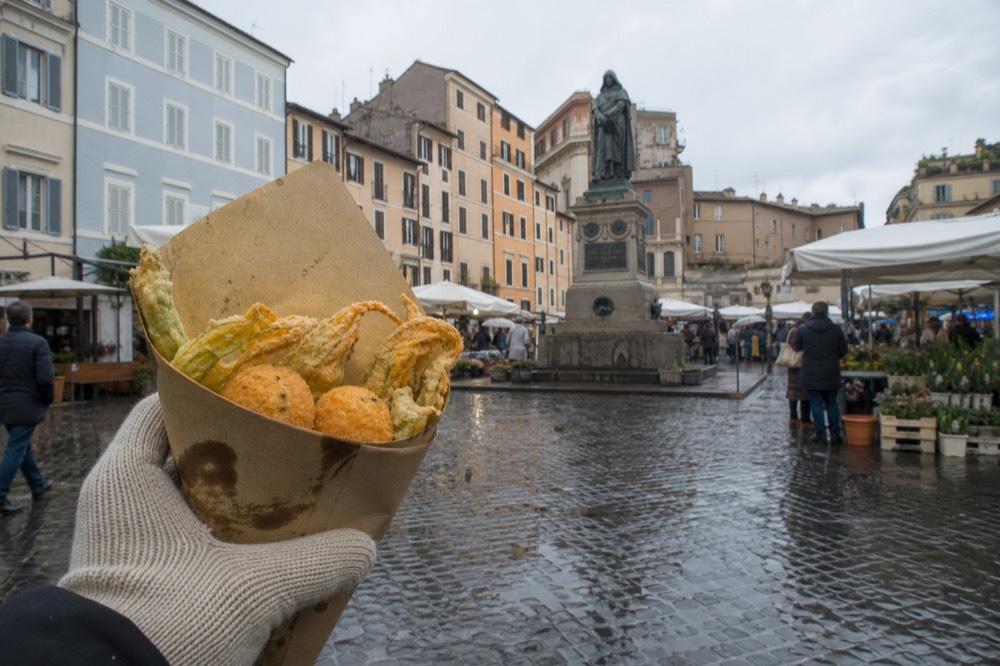
The traditional Roman pantry leans vegetable-heavy to begin with. Artichokes, broad beans, puntarelle and broccoli are the seasonal staples the city's own market pages name, and the Carciofo Romanesco del Lazio PGI harvest runs from January into May, so winter and spring visits coincide with the best produce. Fried courgette flowers, the kind without a cheese filling, are vegan in their traditional form, and several historic friggitorie make them that way.
For gluten-free eating the picture is more nuanced. Italy diagnosed 279,512 coeliacs as of the end of 2024 per the Ministry of Health's annual report to Parliament, and the national celiac association's eating-out guide lists more than 4,200 accredited venues nationwide. Rome has fully gluten-free restaurants, including one in Prati that marked two years of operation in November 2025. At an ordinary street counter, though, shared fryers make cross-contamination the rule rather than the exception, so ask rather than assume.
The vegan walk below exists precisely because finding the plant-based options takes local knowledge. It runs 2.5 hours with a local guide and has a perfect rating from its early reviewers.
What street food costs in Rome
Street food is the cheapest complete meal in the city. An espresso at the counter averaged 1.35 euros in Rome in December 2025 per FIPE data, a medium gelato cone in the center ran up to 4 euros in July 2025, and pizza al taglio by weight means you control the price by choosing the size. A generous walking lunch without a tour costs a fraction of a restaurant sit-down meal.
The by-weight system is your friend here. Because pizza al taglio is priced per etto, a tasting crawl of three counters can cost less than one restaurant main course, provided you keep pointing at small pieces. Supplì and trapizzino are single-price items, and maritozzo prices vary most between the old breakfast bars and the new pastry shops, so the same cream brioche can cost very different amounts two streets apart.
Two costs to plan for that are not food. The city's tourist accommodation tax is charged per person per night, capped at 10 consecutive nights, and collected by the hotel or host rather than included in an online booking price. And restaurant inflation ran at 3.2 percent nationally in 2025 per the FIPE sector report, so menu prices everywhere have drifted up, which makes the counter look even better by comparison.
| Item | Typical cost | Source of the figure |
|---|---|---|
| Espresso at the counter | 1.35 euros average in Rome, December 2025 | FIPE Ristorazione 2026 report |
| Medium gelato cone, center | Up to 4 euros, July 2025 | Reported pricing in central Rome |
| Pizza al taglio | Priced by weight, you choose the size | Standard counter practice |
| Street food walk with a guide | From $51.10 per person | Live listing for the eat-like-a-local tour |
Is a street food tour worth it in Rome?
A street food tour is worth it on a short stay, because the best counters are scattered across four neighbourhoods and finding them unaided costs time. The eat-like-a-local historic center walk costs $51.10 per person, runs 2.5 hours and carries a 4.9 rating from 1,331 reviews, so the price is close to what you would spend buying the same food yourself.
The honest comparison is this. A guided walk bundles five or six stops that a local would vouch for, plus the ordering, the history and the translation of what you are eating, into one flat price. Doing it yourself costs less money but more guesswork, and the failure mode is real: plenty of visitors end up at the wrong counter, order badly, and conclude Rome's street food is overrated when they simply went to the wrong street.
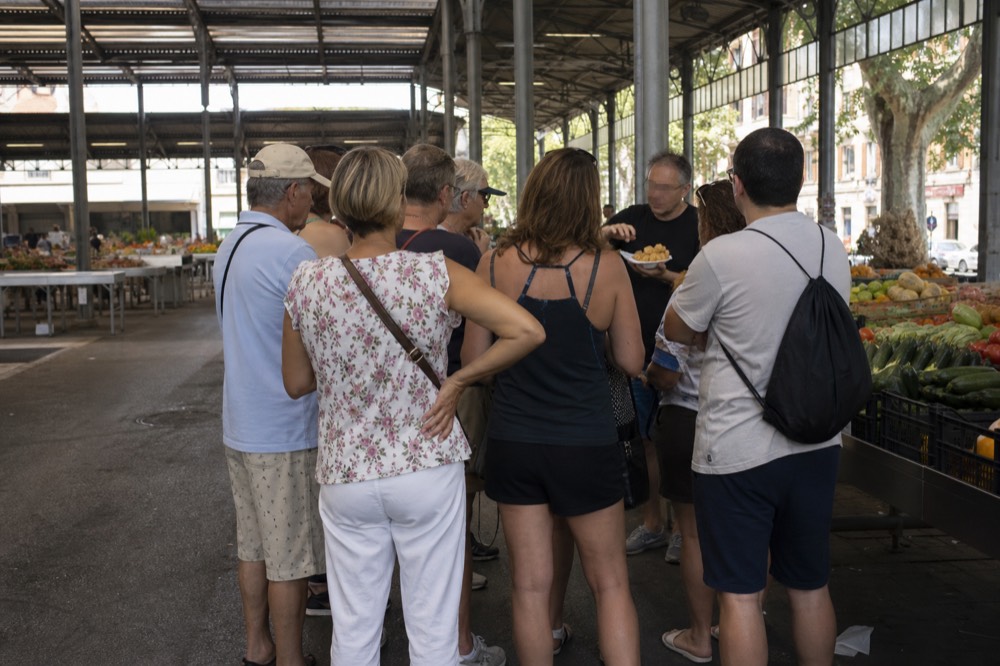
The eat-like-a-local tour in particular is designed for exactly this decision. It meets by the fountain in Piazza di S. Simeone in the historic center, covers the classic street foods in 2.5 hours, and at $51.10 per person with a 4.9 rating across 1,331 reviews it is among the best-reviewed short walks in the city. You can read more on the eat-like-a-local street food tour page or Check availability if the timing suits.
For a fuller comparison of the formats, prices and neighbourhoods, the guide to Trastevere food tours covers the evening side of the city, where the counters stay open latest.
The questions below are the ones visitors ask most about eating at Rome's counters: which snack is the most famous, how the by-weight pizza system works, whether you can eat while walking, what it all costs, and what vegans and coeliacs can safely order. Each answer gives the practical rule and the figure behind it, drawn from the official sources cited in the sections above.
Common questions about Rome street food
What is the most famous street food in Rome?
Supplì, the fried rice croquette with a molten mozzarella center, is the city's native street food and the one Romans claim as their own. Pizza al taglio is the most eaten, but supplì is the one with the oldest working-class pedigree, sold from friggitorie and bakery counters across the center.
How does buying pizza by weight work?
You point at the pizza you want and indicate the size with your hands. The counter cuts it with scissors, weighs it, and charges by the etto, 100 grams. There is no fixed slice price, so two people ordering the same pizza can pay different amounts depending on the pieces they chose.
Can you eat street food while walking in Rome?
Yes, and that is the normal way to do it. What the city prohibits is sitting on monuments, fountain steps and public ground to eat, which carries a 250 euro reduced-payment fine under the urban police regulation. Eat standing or walking, and use the benches and designated seating areas where they exist.
Is Rome street food cheap?
By the standards of a restaurant meal, yes. An espresso at the counter averaged 1.35 euros in Rome in December 2025, a medium gelato cone in the center reached 4 euros in July 2025, and pizza al taglio is priced by weight so you control the total. A filling street lunch costs a fraction of a sit-down dinner.
Can vegans eat well from Roman street food counters?
Yes. Pizza rossa, vegetable-topped slices, fried courgette flowers in their traditional cheese-free form and several supplì variants are plant-based, and a dedicated vegan street food walk operates in the historic center with a local guide. Ask at the counter about shared fryers if cross-contact matters to you.
What is a trapizzino?
A trapizzino is a triangle of crisp pizza bianca dough, hollow inside and stuffed with slow-cooked Roman stews such as braised oxtail or chicken cacciatora. It was invented in Rome in the late 2000s and has become the city's most successful modern street food, best eaten warm within a minute of being handed over.