Free Food Things to Do in Rome: Nasoni, Markets and Pay-What-You-Want Walks
Rome gives away more food culture than almost any city in Europe, if you know where the free part starts: the drinking fountains, the markets, the festival squares and the counter of any bar.
Short answer
Rome's genuinely free food experiences include the nasoni drinking fountains, browsing Testaccio and Trionfale markets, free-entry sagre like the Ariccia porchetta festival, and pay-what-you-want walking tours. The biggest saving is behavioral: an espresso at the counter averaged 1.35 euros in Rome, and Lazio law bans the coperto charge outright.
Rome is one of the few great food cities where the free tier is not a consolation prize. The city runs a network of public drinking fountains that has quenched residents for over a century, its neighborhood markets charge nothing to enter and everything to browse, and the surrounding Lazio towns throw food festivals through the autumn that cost zero at the gate. Even the law is on the visitor's side here: Lazio legislation bans the coperto, the cover charge that pads bills across much of the rest of Italy, and the price difference between standing at a bar counter and sitting at a table is a saving most tourists never notice they are making.
This guide, from Rome Food Tours, walks through every food experience in the city that costs nothing, then closes with the honest case for where a paid tasting earns its price. Nothing here is padded with invented freebies. Where a claim rests on an official source, that source is linked on the claim itself.
What can you actually eat and drink in Rome for free?
Rome's free food experiences fall into four honest categories: the nasoni public drinking fountains, which serve free running water across the city; free browsing at neighborhood food markets; free-entry food festivals and sagre in Lazio; and pay-what-you-want guided walks, where you decide the price at the end. None of these requires a ticket, a booking fee or a minimum spend.
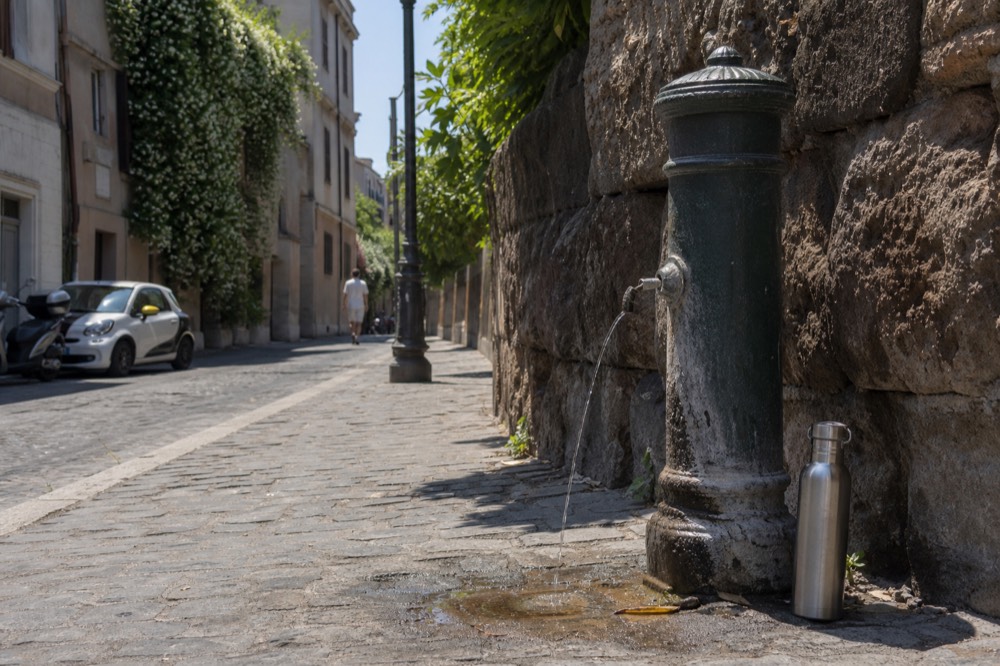
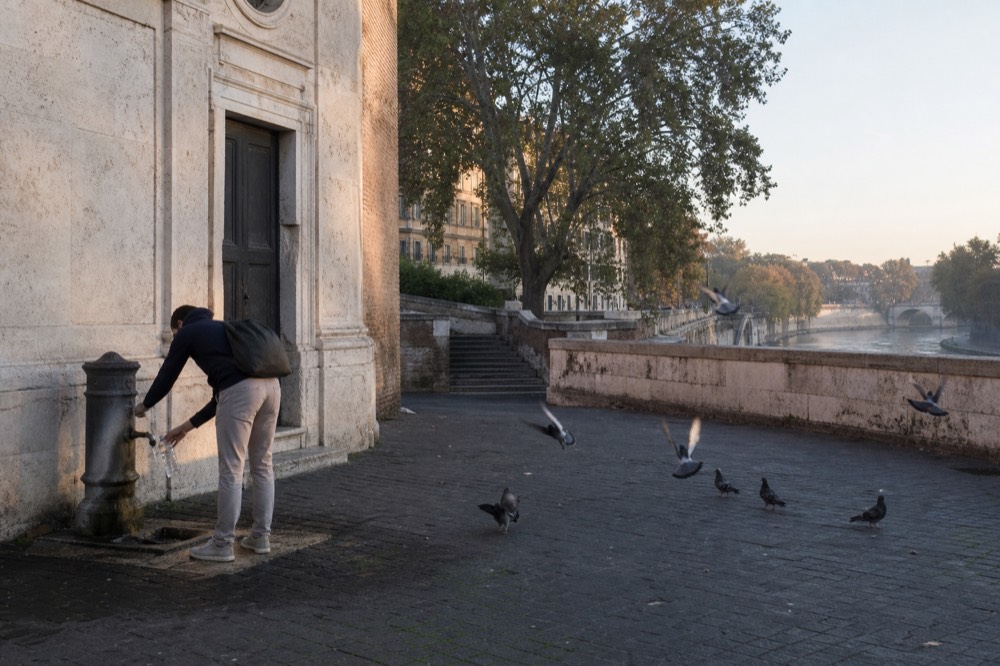
Start with the nasoni, the cast-iron drinking fountains whose curved spouts look like little noses. They are the single most reliable free thing in Rome and the one locals use daily. The city's own urban police regulation, which governs the monumental fountains, explicitly permits drinking from the small hole on many nasoni, the one that shoots a thin arc of water upward: that is the hygienic tap designed for mouths. The big spout at the front is for filling bottles. Tampering with public fountains carries a reduced-payment fine of 200 euros under the city's sanction tables, but ordinary drinking is exactly what they are for, so carry a bottle and refill it all day.
Bakery windows are the second quiet freebie. Rome's forno and pasticceria counters put pizza al taglio, maritozzi and sfogliatelle on open display, and the smell alone is part of the city's public fabric. You are never obligated to buy to look, and in the market neighborhoods the window displays function as a free edible museum of Roman baking. The third category, the markets, deserves its own section below. The fourth, the pay-what-you-want walk, is covered further down with the caveats it needs.
One more free thing deserves a line because it is often mispriced in visitor's heads: water at the table. Restaurants in Rome are expected to serve you, and the carafe culture of tap water survives in many trattorias even as bottled water dominates. Asking for water from the tap is normal, not a tourist gaffe, and the nasoni standard behind it is the same one the city applies to itself.
Why does standing at the counter save so much money in Rome?
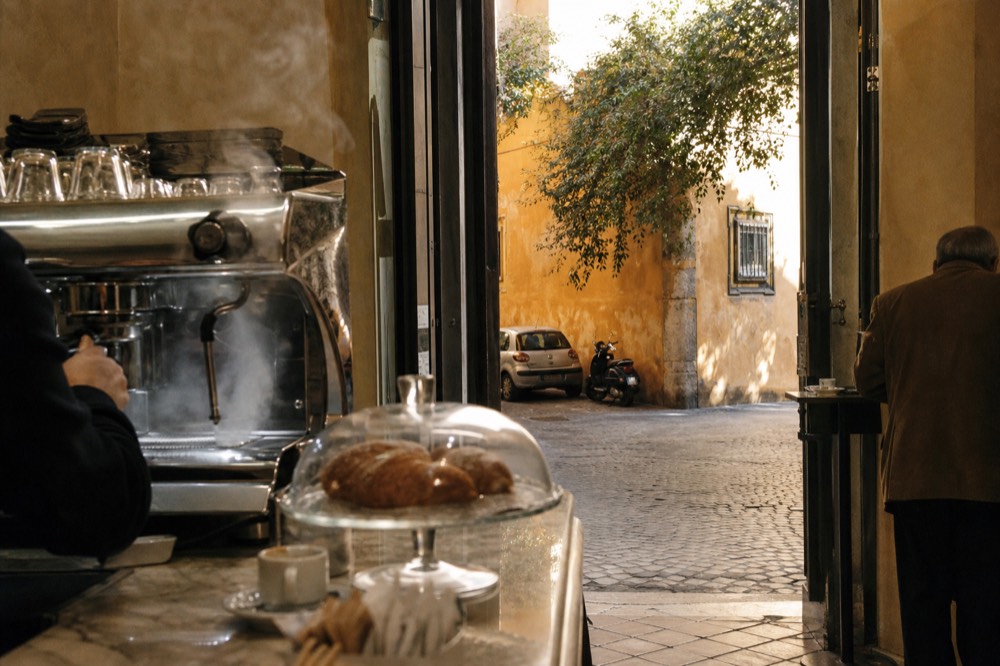
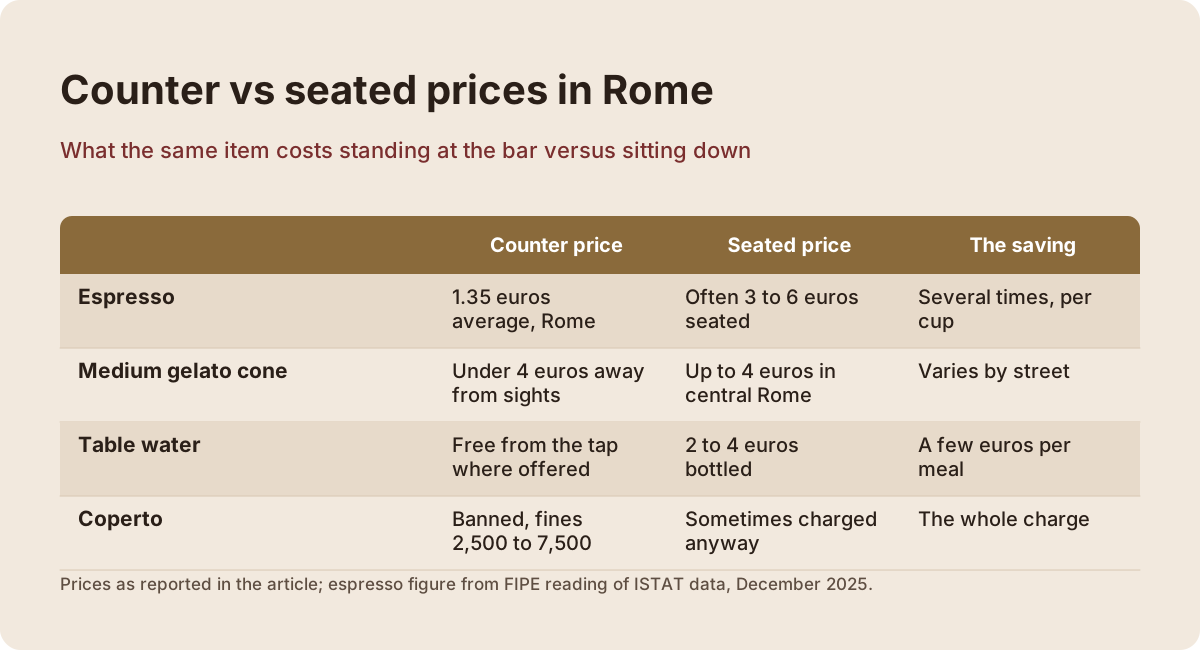
The bar counter and the bar table are two different price lists in Italy, and the gap is wide: an espresso at the counter in Rome averaged 1.35 euros in December 2025 per FIPE's reading of ISTAT data, while the same coffee served seated in the historic center can cost several times that. Lazio law also bans the coperto charge outright, with fines of 2,500 to 7,500 euros for venues that apply it.
This is the single biggest money-saver in the city and it is entirely legal and entirely local. Italians drink their coffee standing at the counter, al banco, and the price they pay reflects that. Sit down at a table, especially on a piazza, and the same cup is served at the table-service rate, which the operator is entitled to charge as long as the price list makes it clear before you order. That disclosure duty is not folklore: it is article 16 of Legge Regionale Lazio 21/2006, which requires prices to be displayed and any table-service component to be shown clearly in advance. The same article states plainly that a separate coperto charge is prohibited, and the penalty band for breaching it runs from 2,500 to 7,500 euros. You can read the coordinated text of the law on the Lazio regional council's own site.
The espresso figure deserves care because two 2026 studies measured different things. FIPE's Ristorazione 2026 report, drawing on ISTAT data, put the average counter espresso in Rome at 1.35 euros in December 2025, and that is the figure we use here. A separate Crc-Assoutenti study on Mimit data put the Rome province average below 1.20 euros across 2026. They cover different areas and periods, so never blend them: cite one, with its source. The FIPE report is published as a PDF by FIPE itself.
Gelato follows the same counter logic with a sharper tourist trap. A medium cone in central Rome reached up to 4 euros in July 2025 per local reporting, and the price tracks the address more than the product. Two streets from the Pantheon, the same size costs less. The rule of thumb is not a promise, it is a planning range: check the price board, which by law must be displayed, before you order.
| Item | Counter or takeaway price | Seated or tourist-zone price | The saving |
|---|---|---|---|
| Espresso | 1.35 euros average, Rome, December 2025 | Often 3 to 6 euros seated in the center | Several times, per cup |
| Medium gelato cone | Under 4 euros away from major sights | Up to 4 euros in central Rome, more near the Pantheon | Varies by street |
| Table water | Free from the tap where offered | 2 to 4 euros bottled | A few euros per meal |
| Coperto | Banned in Lazio, fines 2,500 to 7,500 euros | Sometimes charged anyway, contest it | The whole charge |
The honest caveat is that this rule is a rule about prices, not a guarantee of compliance. A venue that adds a coperto anyway is breaking Lazio law, and pointing that out politely, or simply not paying the disputed line, is your right. The law is the rule, not a promise that every operator follows it.
If your instinct after reading this is that you would rather have someone walk you into the good-value stalls than work it out alone, the paid options are not in conflict with the free ones, they layer on top of them.
The three walks above cover different budgets and formats, from a small-group market walk to a golf-cart tour that trades walking for coverage. All three sit on the operator's live listing, where prices and free-cancellation terms are shown before you commit.
Which Rome food markets are free to browse?
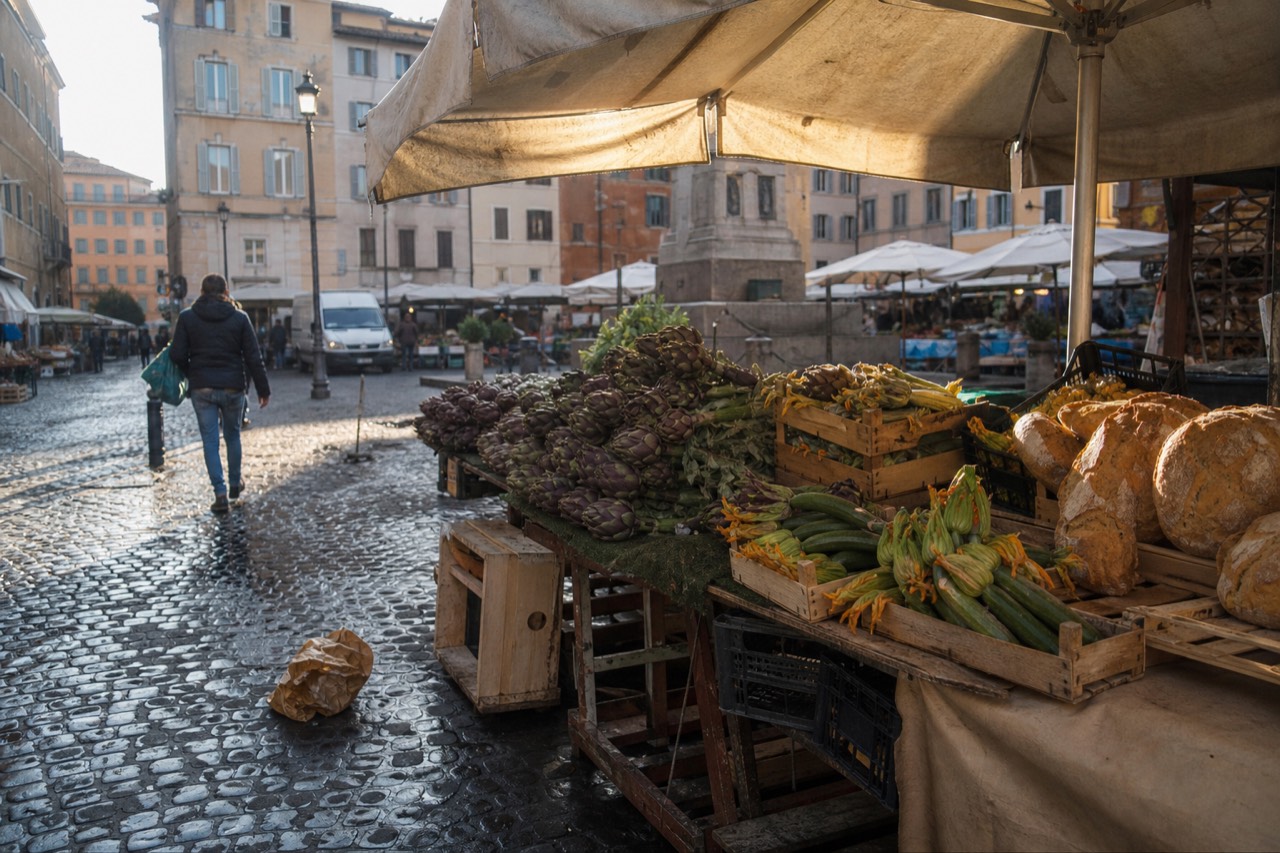
Every mercato rionale in Rome is free to enter and walk through: Testaccio, Trionfale, the Nuovo Mercato Esquilino, Monti and Prati among them. The city officially counts 70 neighborhood markets, 30 covered and 40 open-air, and browsing, photographing and talking to stallholders costs nothing at any of them. You pay only for what you carry out.
Markets are the free food experience most visitors underuse, because they arrive at noon expecting a festival and find a working market winding down. Go early. Testaccio, the food neighborhood most tied to Rome's working-class cooking history, runs a covered market of 103 stalls whose own site publishes hours of roughly 7am to mid-afternoon, Monday to Saturday. Since March 2026 it has also opened on Friday evenings until 22:00, an arrangement agreed between the operators and local institutions, which makes it one of the few Rome markets with a genuine evening browsing window.
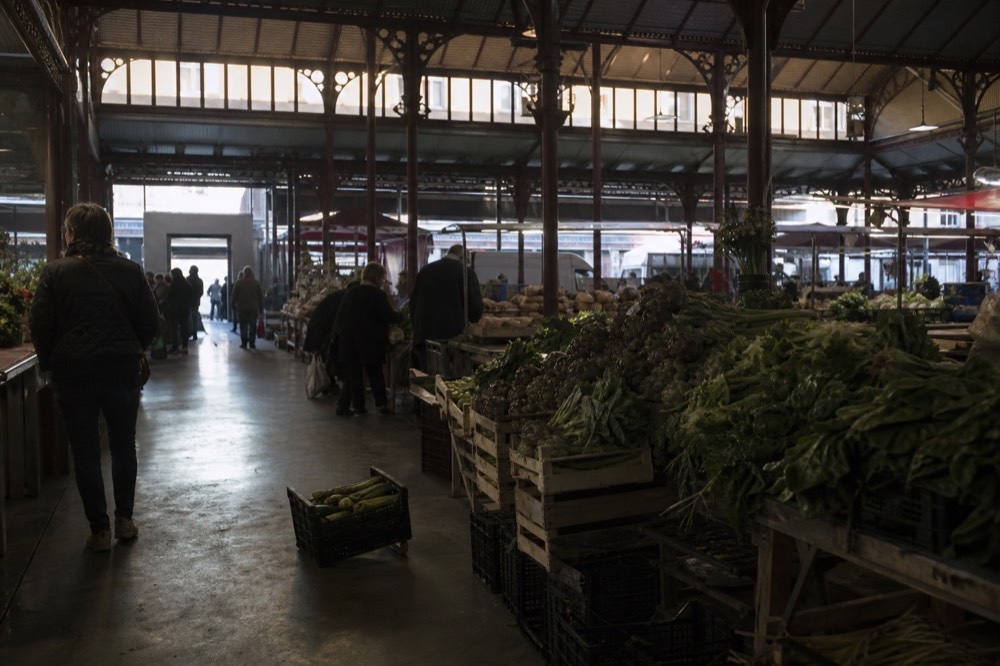
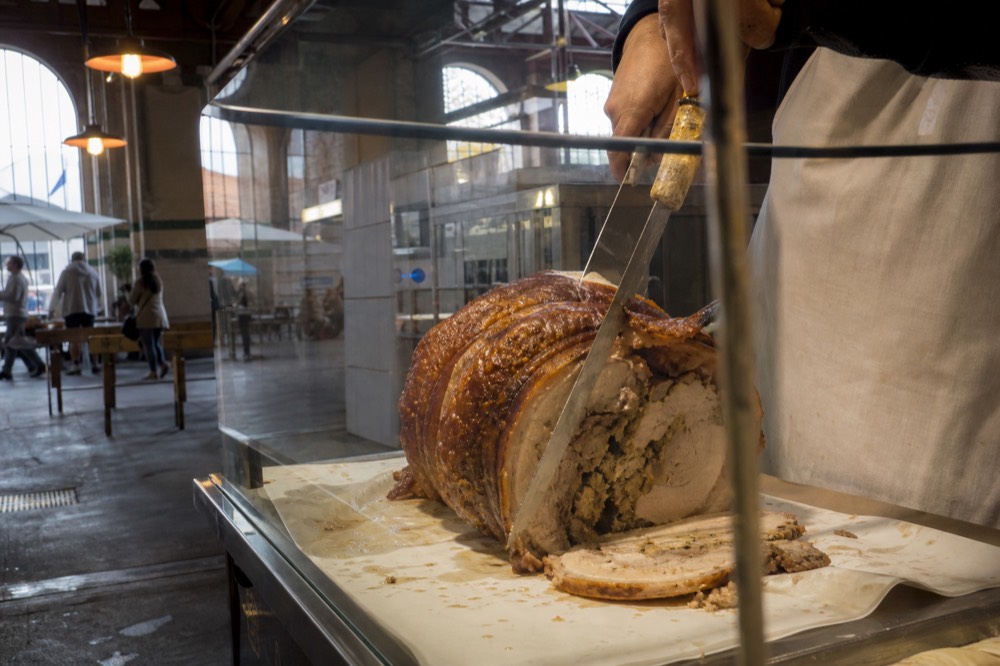
Trionfale, on the Vatican side of the river, is the giant: around 270 stalls on Roma Capitale's own count, with fresh fish, cured meats, porchetta, honey and organic produce. The city's official market list gives it longer hours on Tuesdays and Fridays, into the early evening. Monti is the small historic one, 17 stalls on Via Baccina, and Prati's neoclassical 1928 hall on Piazza dell'Unita runs the longest published day of all, 7:30 to 19:30. The full official list of all 70 markets is maintained on the Roma Capitale tourism portal, which also describes what each one sells.
| Market | Neighborhood | Type | Stalls | Published hours |
|---|---|---|---|---|
| Testaccio | Testaccio | Open-air (plateatico) | 103 | Roughly 7am to mid-afternoon, Mon-Sat; Fridays until 22:00 since March 2026 |
| Trionfale | Prati / Vatican side | Covered | Around 270 | Mon, Wed, Thu, Sat to early afternoon; Tue, Fri into the evening |
| Monti | Monti | Covered | 17 | Mon, Wed, Thu, Sat to mid-afternoon; Tue, Fri into the evening |
| Prati | Prati | Covered | 125 | 7:30 to 19:30, Mon-Sat |
| Nuovo Esquilino | Esquilino | Covered, two buildings | 133 and 54 | Food half to early afternoon weekdays |
Campo de' Fiori deserves its own honest note. It is the most photogenic of the markets and free to browse like all the rest, but it is also the most tourist-loaded, and its official place page publishes no opening hours at all, directing you to check contacts instead. Treat it as a morning spectacle, not a shopping run. The Trastevere market at Piazza San Cosimato is smaller and more local, seasonal with puntarelle, artichokes and broad beans, and open every morning except Sunday per the city's description.
One free Testaccio extra is currently suspended and should not be promised: the ancient Roman warehouse, the horreum, excavated beneath the market, normally offers free guided visits led by the archaeologists who dug it, but the market's own site carries a notice that visits are temporarily suspended for refurbishment. Check the market's site before planning around it.
If you want the market experience with tastings attached rather than browsing alone, the small-group options below do exactly that, in the same halls you can walk for free.
Are free and pay-what-you-want food walking tours in Rome real?
Yes, pay-what-you-want walking tours operate in Rome on a genuine free-to-join basis: you book a spot, walk with a guide, and pay what you choose at the end, including nothing. The catch is scope, not honesty. These walks cover neighborhoods and general sightseeing well, but they rarely include food tastings, because tastings cost the operator money per head.
The free-walk model is real and it works, but set expectations correctly. A pay-what-you-want walk is a tip-funded business, and the guides who run it well earn their money on knowledge and pace. What it is not, in almost every case, is a food tour with stops: no operator can hand out supplì and cheese to a free group and stay solvent. So the honest division of labor is this: use a free walk for the neighborhood's history and layout, then spend your food budget deliberately, either at the counter prices covered above or on a tasting walk where the tastings are the product.
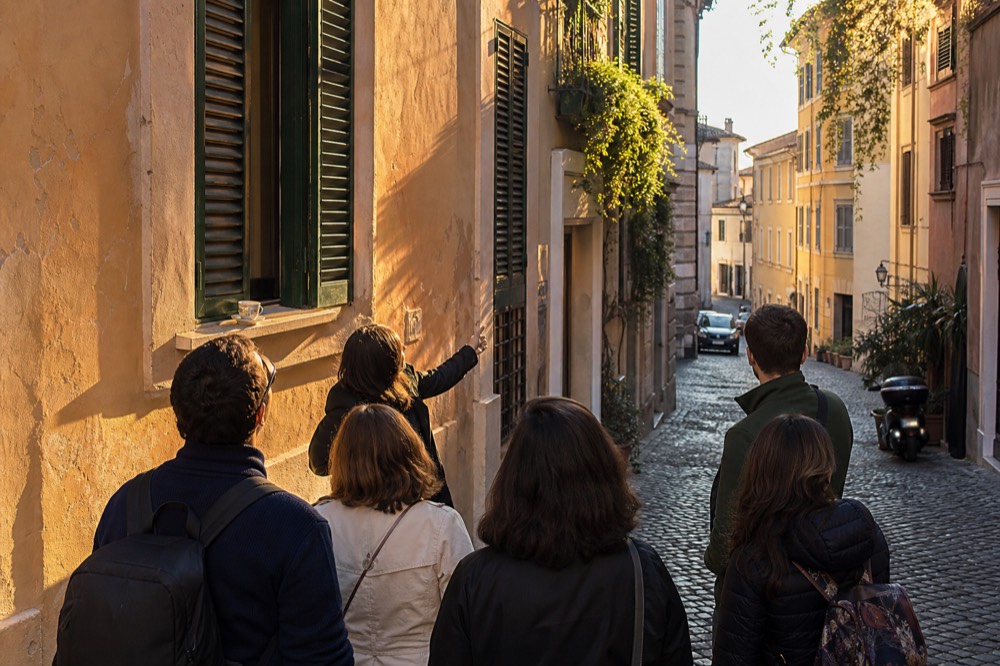
Two Rome walks stand out, and both are worth your time. Both are posted on GuruWalk, an independent platform for free and pay-what-you-want walking tours, and both are run by a local guide who is tipped at the end by each walker according to what they felt the walk was worth, not sold or operated by this site. The Trastevere district free food tour is listed by the guide account NewRomeFreeTour, lasts 2 hours and 30 minutes across 5 stops, and meets at Piazza S. Bartolomeo All'Isola on Tiber Island. Its route covers San Cosimato square and its fresh market, the Basilica of Santa Maria in Trastevere and the Lungotevere, and GuruWalk shows it rated 4.8 from 106 reviews. The same guide account lists a Monti district food walk: 2 hours across 4 stops, meeting by the Roman Forum at Largo Corrado Ricci, passing the Colosseum, the Roman Forum and Trajan's Market, with the group capped at 13. That one is rated 4.62 from 21 reviews on GuruWalk.
A pay-what-you-want walk on GuruWalk gives you the streets, the market and the history, and the guide is paid what each walker decides it was worth at the end. What it does not give you is the food itself: whatever you eat at each stop, you generally buy on your own. That is where a paid tasting tour earns its price. The Twilight Trastevere Tour, 4 Hours runs with a guide over a fixed route for the full four hours, and the tastings and the wine are already included, so the evening is spent eating rather than queueing at counters. The two versions of the night even share a starting point: the free Trastevere walk and this paid tour both meet at Piazza S. Bartolomeo All'Isola, the same square on Tiber Island. Pick the walk if you want the stories and the exercise, and the tour if you want dinner built into the route.
Rome's tour-guide profession is itself regulated in a way that matters to the quality of what you get, free or paid. Under the national framework, licensed guides must pass a state abilitation exam and complete at least 50 hours of authorized professional updating every three years to stay on the national register. The second national exam round opened with applications due in May 2026. A licensed guide on a free walk is held to the same professional standard as one on a premium tour; the difference is what is in the walk, not who is leading it.
For the food-specific version of a cheap walk, a short street-food tour is the closest paid equivalent, and the price floor is lower than most visitors expect.
That street-food walk runs about 2.5 hours and sits at the low end of the paid scale, so it works as a first dip before committing to a longer tasting evening. If you already know you want the market version with a guide who can introduce you to the stallholders, the box below is the one to check.
What free food festivals and sagre can you reach from Rome?
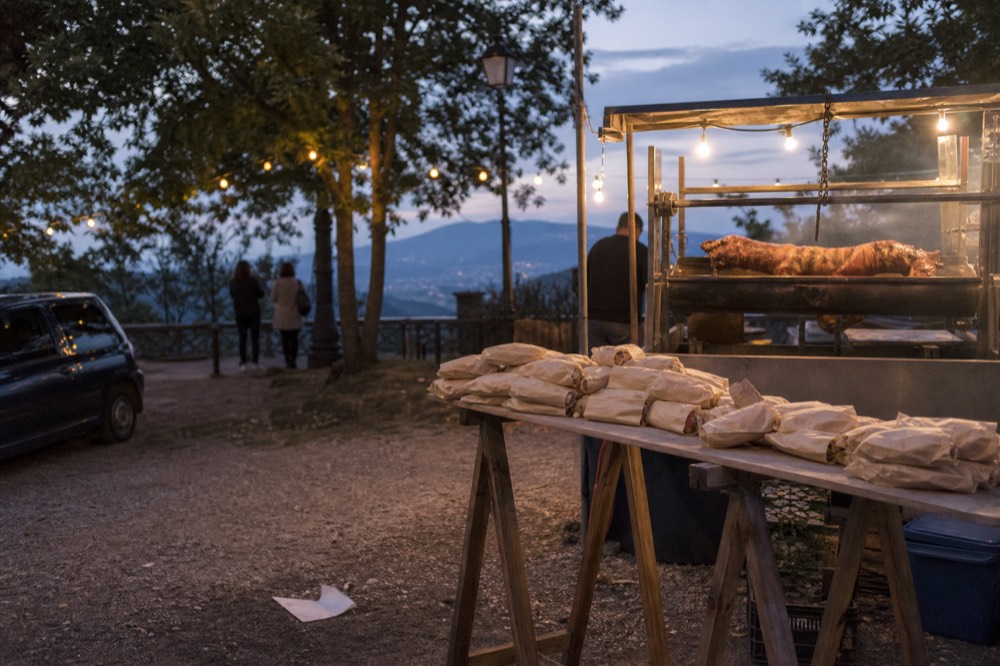
Lazio's autumn sagre are the region's best genuinely free food events: the Sagra della Porchetta di Ariccia runs 4 to 6 September 2026 with free entry and tastings in the historic center, the Sagra del Cesanese in Olevano Romano runs 3 to 6 September 2026 with free entry and guided tastings, and Velletri's Festa del Fungo Porcino runs 3 to 20 September 2026 with free concerts and food stands.
The sagra is the Italian town's food festival, and in the Lazio belt around Rome the entry is free, the setting is the town's own main street or square, and the food is the town's specialty cooked by the people who make it. Ariccia's porchetta festival is the marquee one: porchetta di Ariccia carries its own PGI registration at EU level, and the festival celebrating it takes over the historic center in early September. Olevano Romano's festival honors Cesanese, the local red wine whose new protection consortium was recognized by the Ministry of Agriculture in September 2025. Velletri's porcini festival stretches across more than two weeks of September with free entry throughout.
| Festival | Town | Dates | Entry | What it celebrates |
|---|---|---|---|---|
| Sagra della Porchetta di Ariccia (73rd edition) | Ariccia | 4-6 September 2026 | Free | Porchetta di Ariccia PGI |
| Sagra del Cesanese (51st edition) | Olevano Romano | 3-6 September 2026 | Free, guided tastings | Cesanese wine |
| Festa del Fungo Porcino e Fiera dell'Agricoltura (34th edition) | Velletri | 3-20 September 2026 | Free | Porcini mushrooms and local farming |
The honest footnote is that free entry does not mean free food: tastings and plates at the stands are paid, priced low by city standards, and the saving is the gate, the setting and the absence of any booking layer. Getting there is a regional train or bus ride, so budget the transport when you compare it against a paid tasting in town. For a deeper look at the city's own street-food scene, which runs year-round rather than in festival windows, our Rome street food guide covers the stalls and the neighborhoods stall by stall.
What other free food-adjacent things does Rome offer?
Rome's civic freebies stack up well: civic museums and archaeological areas are free on the first Sunday of each month, the city's archaeological reopenings after restoration are being offered with free visiting windows, and the nasoni network means you never need to buy bottled water. Against that, the Trevi Fountain basin now carries a 2 euro access fee for non-residents, introduced in early February 2026, though the piazza around it stays free.
The first-Sunday rule is the most reliable one in the calendar: Rome's civic museums and archaeological areas open free on the first Sunday of every month, a schedule the city confirms month by month. It is not a food offer, but it pairs naturally with one, since the free mornings cluster around the neighborhoods where the markets and the counter-priced bars are. Plan the museum morning and the market lunch in the same district and the whole day costs less than a single seated tourist lunch.
The restoration wave is a quieter freebie worth tracking. The Pyramid of Cestia reopened to the public in early September 2026 after three years of funded restoration, with free guided visits running through late October. Nine archaeological sites including a first-ever public opening in the via delle Botteghe Oscure area offered free visits in June 2026 after the same program. These windows are announced rather than permanent, so check the city's channels in the week you arrive.
The Trevi fee is the counter-trend and worth knowing before you budget. Access to the fountain's basin area for non-residents carries a 2 euro charge introduced at the start of February 2026, while the piazza itself remains free to enter. It is a small amount, but it signals where the city is heading on crowd management at its most visited sites, and it is one more reason the food neighborhoods, where nothing is gated, are the better free territory.
When is it worth paying for a food tour in Rome?
A paid food tour earns its price when it buys access you cannot get free: seated tastings, market stallholders who stop and talk, wine poured with explanation, and a guide who can move you past the tourist-tier stops in a single evening. If your budget is tight, the free tier above delivers most of the atmosphere; the paid tier delivers the food itself, plus context, at prices from about 52 dollars for a short street-food walk.
The honest upsell is this: everything in this guide is real and free, and none of it includes a plate of cacio e pepe or a glass of Cesanese with someone explaining what is in the glass. The free walk covers streets, the market covers browsing, the sagra covers festival air. The paid tasting tour is the layer where the eating happens, and the cheapest entry points are shorter street-food walks rather than the four-hour dinners. For most visitors the sweet spot is one paid walk in one neighborhood, combined with the counter-price discipline above for every other meal.
The Testaccio options are the natural pairing with this page's free content, since the market browsing is free and the guided version simply adds the tastings. Our Testaccio food tours guide breaks down the full neighborhood roster, and the Rome street food markets guide covers the market halls in depth, including the ones beyond Testaccio.
For a neighborhood rather than a market, a tasting walk that bridges Trastevere and the Jewish Ghetto packs 15 tastings across two of the city's densest food quarters, and the price sits mid-range on the live listing. Check availability on the operator's listing, where the current price, the meeting point and the cancellation terms are shown. If you would rather compare the two Testaccio market walks side by side before deciding, the Testaccio market and pasta tour is the fuller-priced option with a seated pasta finish, and Check availability to see its live price and dates.
The short answers: free walking tours in Rome are real but tip-funded and rarely include food; the nasoni fountains are free and safe to drink from; every one of the city's 70 markets is free to enter; the coperto charge is banned by Lazio law; counter prices run well below table prices; and the September sagre around Rome charge nothing at the gate. Each question below expands on one of these.
Common questions about free food things to do in Rome
Is there a free food tour in Rome?
Yes, free food walks in Rome exist, and they are listed on GuruWalk, an independent platform for pay-what-you-want walking tours. The walking and the guiding cost nothing upfront: each walker decides at the end what to pay the independent guide who runs the tour. The food along the way is normally bought on the spot rather than included, which is what the Monti district listing on GuruWalk states. If you want tastings already in the price, a short paid street-food walk starts from about 52 dollars on the live booking pages.
Can you drink from the nasoni fountains in Rome for free?
Yes. The nasoni are public drinking fountains and drinking from them is free and normal. On fountains that have one, the small hole that shoots a thin upward arc is the design intended for drinking; the main spout is for filling bottles. The city's rules prohibit tampering with public fountains, not drinking from them.
Are Rome food markets free to enter?
Yes, all of them. Rome's 70 neighborhood markets, including Testaccio, Trionfale, Esquilino, Monti and Prati, charge nothing to walk in and browse. You pay only for what you buy. Go in the morning: most stalls wind down by mid-afternoon, though Testaccio has opened Friday evenings until 22:00 since March 2026.
What is the coperto charge and do you have to pay it in Rome?
No. Lazio regional law 21/2006, article 16, prohibits a separate coperto charge in food service establishments, with fines from 2,500 to 7,500 euros for venues that apply it. If a service charge appears instead, the law requires it to be clearly shown on the price list before you order. If a coperto appears on your bill, you can contest it.
Why is coffee cheaper at the counter in Rome?
Italian bars run two price lists: al banco, standing at the counter, and al tavolo, seated at a table. The counter espresso in Rome averaged 1.35 euros in December 2025, while the same coffee seated, especially near a major sight, can cost several times more. Both prices are legal; the saving comes from drinking the way locals do.
Are the food festivals near Rome free to enter?
Yes, the Lazio sagre are free at the gate. The Ariccia porchetta festival, the Olevano Romano Cesanese festival and the Velletri porcini festival all run in September 2026 with free entry. Tastings and plates at the stands are paid, and you should budget the regional train or bus fare to reach them.