what was anthony bourdain's favorite restaurant in rome?
The one Rome restaurant Anthony Bourdain singled out on film, what he ate there, and how to build a day around the same kind of old-school Roman cooking today.
what was anthony bourdain's favorite restaurant in rome?
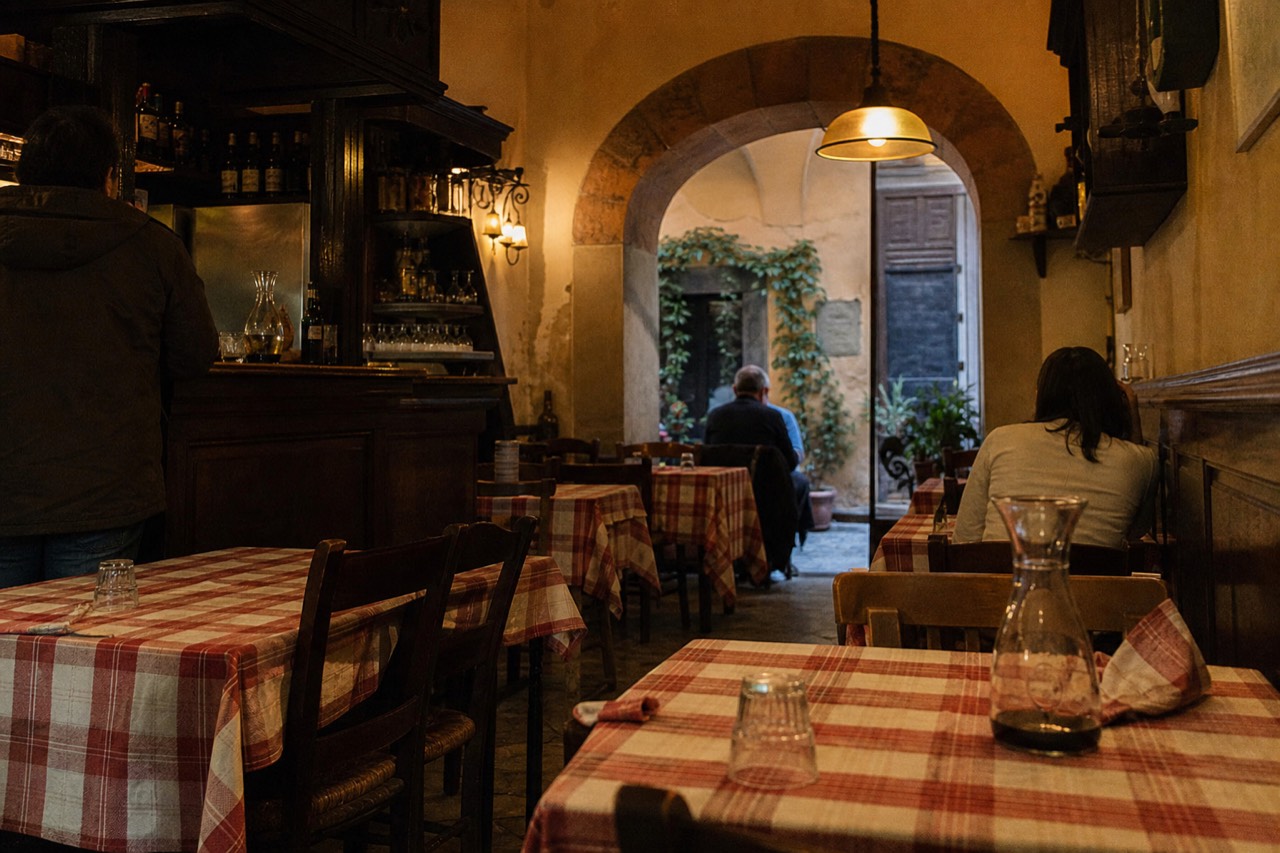
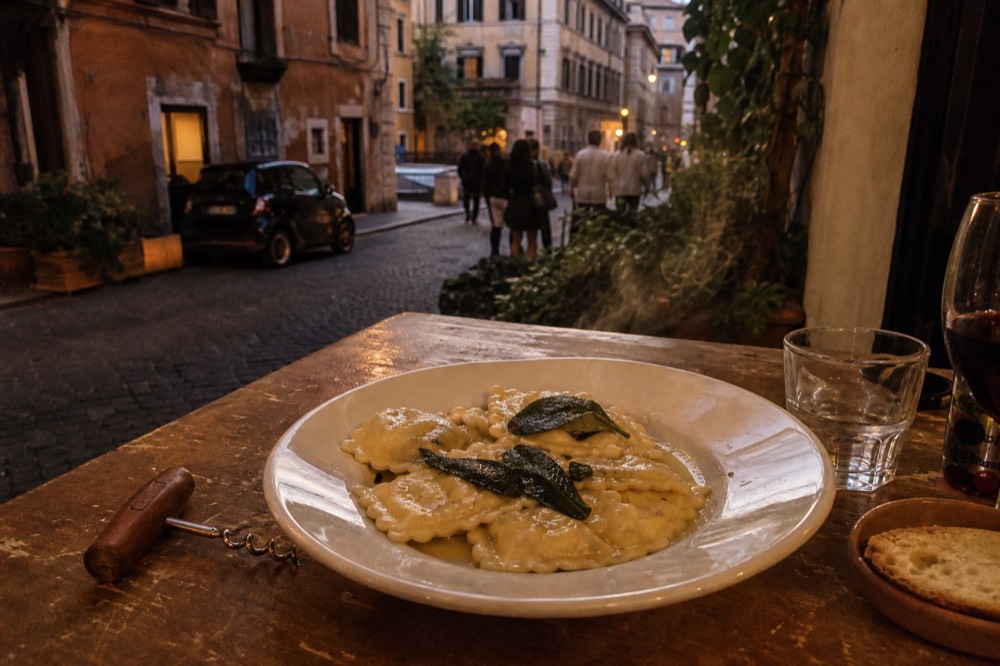
The restaurant most firmly tied to Anthony Bourdain in Rome is Osteria dal 1931, a small old-school trattoria he featured in his Rome episode of Parts Unknown. The dish he singled out was ravioli burro e salvia, sage butter ravioli, which he called completely awesome. The restaurant is still open and still serves that same dish, listed at 13 euros on its menu. That is the one Bourdain Rome recommendation that traces to a filmed episode rather than rumor.
Bourdain's relationship with Rome was never about chasing the newest tasting menu. His Rome episode of Parts Unknown, the CNN series he hosted until his death in 2018, built its food story around the city's stubborn, unfashionable, deeply Roman cooking: the offal tradition of the slaughterhouse district, the pastas that survive on four ingredients, and the trattorias where the menu has not changed in decades. When a host with that worldview picks a favorite, it is never going to be a place with a designer interior. It is going to be a place like Osteria dal 1931.
The claim matters because Bourdain Rome lists circulate endlessly online, and most of them are guesswork. Restaurants get added to "Bourdain's Rome" roundups because a writer assumes he would have liked them, not because he ever set foot inside. The dal 1931 claim is different: it traces to the episode itself, and the restaurant has kept serving the dish he praised ever since. A feature on the restaurant notes that the ravioli burro e salvia Bourdain called completely awesome was still on the menu at 13 euros as of June 2026, which is a rare case of a television food recommendation you can still verify with your own fork.
Rome's old-school trattoria scene is exactly the corner of the city this site covers, and a market-first walk through the neighborhoods that fed it is the most honest way to follow Bourdain's trail. Three options below cover the same ground from different angles.
Where is Osteria dal 1931 and what did Bourdain actually eat?
Osteria dal 1931 sits in Testaccio, the rione built around Rome's former slaughterhouse, and the dish Bourdain praised there was ravioli burro e salvia, fresh ravioli dressed with butter and sage. He described it as completely awesome on camera. The restaurant predates his visit by decades, the name references 1931, and it still lists the dish at 13 euros. Testaccio remains the neighborhood where Rome's working-class cooking is best preserved.
Testaccio is not an accident of geography for a Bourdain episode. The rione grew up around the Mattatoio, Rome's central slaughterhouse, designed by Gioacchino Ersoch and built between 1888 and 1891, which stayed in operation until July 1975. The workers who killed and cut the animals all day also cooked the parts nobody else wanted, and that tradition, the quinto quarto, or fifth quarter, became the neighborhood's culinary identity. Roma Capitale's own tourism portal documents the connection directly, noting that tripe, oxtail, coratella and pajata belong to the least prized part of the animal, historically eaten by the poorest families and above all by the Mattatoio workers, who topped up their wages with the offcuts. That is the world Bourdain came to film, and dal 1931 sits in the middle of it.
The dish itself is almost aggressively simple. Ravioli burro e salvia is fresh pasta, butter, sage, and nothing else worth naming. There is no guanciale, no tomato, no modern reinterpretation. It is the kind of recipe that only works when the pasta is made that morning and the cook has been making it for twenty years, which is the entire argument of the restaurant. Bourdain's praise was not for innovation. It was for a dish that had no reason to change and therefore never did.
The name of the restaurant tells you its whole philosophy before you sit down. An osteria that puts its founding year in its own name is making a promise: that what you are about to eat is what people ate in this neighborhood in 1931, or close to it. In a city where restaurants chase trends and influencers, that promise is the product. Bourdain recognized it, and the fact that the promise is still being kept years after his death is the part of the story worth traveling for.
If you want to build a Bourdain-style Testaccio day around the restaurant, the market comes first. The Mercato di Testaccio opens Monday to Saturday, roughly 7am to mid-afternoon per the market's own site, and the neighborhood around it holds the densest concentration of old-school Roman cooking in the city. The market has been in flux in the best way lately: a new stall, Orietta e Rolando, opened inside it as box 36, and from March 2026 the market has run Friday evening openings until 22:00, a rare chance to see a Roman rione market after dark.
A practical note on timing: dal 1931 is a small place in a residential neighborhood, not a tourist hub, so it fills with locals at Roman lunch and dinner hours. Romans eat dinner late, generally starting between 8pm and 9pm, and a trattoria like this one follows that rhythm. Arriving at 7pm usually means an empty room and a kitchen still warming up. For more on the neighborhood's wider food scene, the Testaccio food tours guide covers the full landscape of market stalls, trattorias and the Ex Mattatoio complex.
Why the ravioli mattered: Bourdain's case for old-school Rome
Bourdain's Rome episode argued that the city's best food is its least changed food, and ravioli burro e salvia was his proof: a dish with three components that survives purely on execution. He consistently favored restaurants where the menu is short, the recipes are inherited, and the cook has no interest in your opinion. That philosophy is why his Rome favorite is a 1931-vintage osteria in a slaughterhouse district rather than a celebrated new opening.
The sage butter tradition is older than any restaurant serving it. Butter and sage sauces go back to a time when Roman cooking was closer to its central Italian, papal-era roots, before tomato arrived and before the four famous Roman pastas took their modern form. Ravioli dressed this way is the kind of dish that appears in home kitchens and in osterias that never modernized, and it coexists in Rome with the more famous cacio e pepe, gricia, carbonara and amatriciana. Of those four, amatriciana is the one with a confirmed EU registration, the Amatriciana Tradizionale TSG, whose specification pins the sauce to guanciale, tomato and pecorino, and states plainly that it has always been made with pork jowl, never bacon or pancetta.
The contrast is the point. A ravioli in butter and sage and a plate of amatriciana come from the same culinary culture: few ingredients, no shortcuts, total confidence. Bourdain's on-air enthusiasm for the former was effectively an endorsement of the whole tradition. He was not telling viewers to cross Rome for one plate of pasta. He was telling them that this is what Roman cooking looks like when nobody is performing for you, and that a restaurant which has served the same dish since before television existed is doing something right.
There is also a lesson in what he did not praise. The episode did not build segments around designer pizza, tasting menus or imported star chefs. It built them around people cooking what their grandmothers cooked, in the neighborhood where that still happens. That is a filter any traveler can apply without knowing anything about Bourdain: find the dish that has no reason to exist except that it is good, made by someone who has made it ten thousand times.
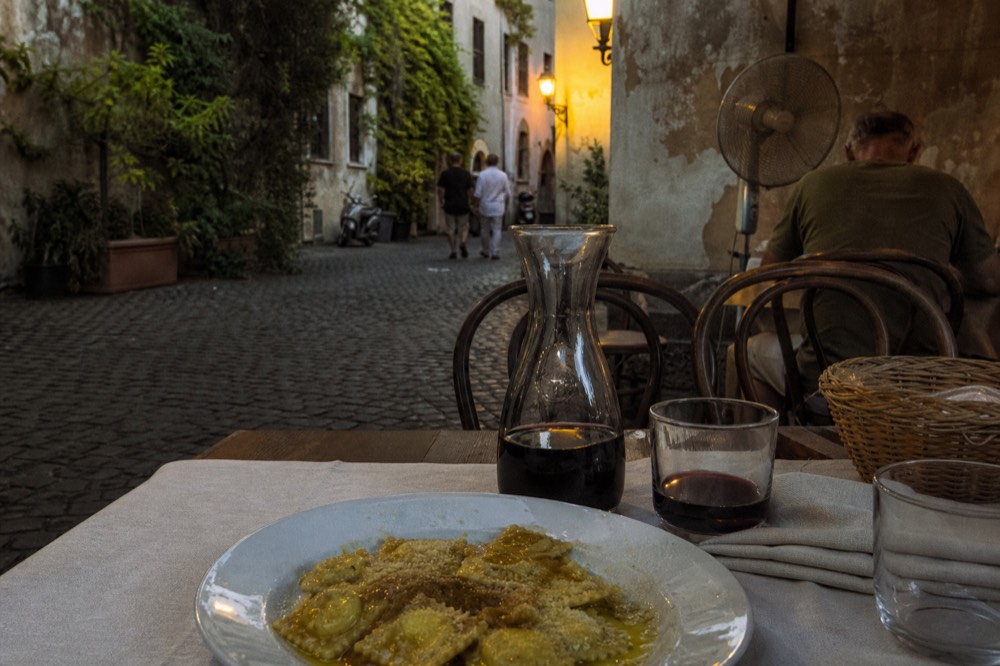
It is worth being honest about what the episode does and does not establish. The filmed record gives us the restaurant, the dish and the quote. It does not give us a ranked list of Bourdain's top five Roman restaurants, and anyone publishing such a list is filling gaps with imagination. The verified core is small and, precisely because it is small, reliable. The table below separates what traces to the episode and its aftermath from what is simply online folklore.
| Claim about Bourdain and Rome | Status | What the record actually shows |
|---|---|---|
| He featured Osteria dal 1931 in his Rome episode | Verified | The restaurant appears in the Parts Unknown Rome episode |
| He praised ravioli burro e salvia as completely awesome | Verified | The on-air quote, reported in later coverage of the restaurant |
| The dish is still served at 13 euros | Verified | The restaurant's menu, as reported in June 2026 |
| He kept a ranked list of Rome favorites | Not on record | No published or filmed ranking exists |
| He endorsed specific gelaterias or pizzerias in Rome | Not on record | No filmed segment or published quote confirms one |
| Other "Bourdain restaurants" in Rome roundups | Mostly folklore | Lists circulate without a filmed episode or quote behind them |
The practical takeaway for a visitor is simple. If you want to eat the way Bourdain ate in Rome, you do not need to chase his exact table, though the osteria he visited is still serving the ravioli he praised, at a price that has barely moved. You need to apply his filter: a short menu, a dish that predates the restaurant's current owners, and a kitchen that would not change a thing if you asked. The ravioli burro e salvia is a good test case, because nothing about it can be faked with a trendy ingredient or a clever name. Either the pasta is made well and the butter is browned correctly, or the dish fails quietly.
That standard also explains why the folklore lists are so persistent. A restaurant that Bourdain never visited can still feel Bourdain-adjacent if it cooks the same way, and writers keep filling roundups with those places. The honest version of the list is short, and that is exactly what makes it useful.
How to eat like Bourdain in Testaccio today
The Bourdain way to eat in Rome is to go where the menu is short, the neighborhood is residential and the recipes predate the internet, and Testaccio is still the best place to do it. Start at the market, eat the quinto quarto dishes the slaughterhouse workers created, and finish at a trattoria that has not redesigned itself. A guided walk through the market and its surroundings costs from $79.27 per group and covers the ground efficiently.
The quinto quarto canon is the practical syllabus. Trippa alla romana, tripe simmered with tomato and finished with pecorino romano and Roman mint, is the signature dish, and Roma Capitale documents that by tradition it is eaten at Saturday lunch, as still happens in many trattorias of Trastevere and Testaccio. Around it sit coda alla vaccinara, braised oxtail, coratella, pajata, and the fried offal that still appears on Testaccio counters. None of it is exotic to the neighborhood. It is simply what this rione has cooked for over a century.
A guided walk makes sense here for the same reason Bourdain needed a local fixer: the quinto quarto canon is not self-explanatory, and a stall holder who explains what coratella is will save you from ordering blind. The Small-Group Testaccio Market & Local Tastings tour, run by Devour Italy Food Tours, is built exactly around this: 3.5 hours, from $79.27 per group, rated 4.9 from 293 reviews, meeting in Piazza di Santa Maria Liberatrice, the square at the heart of the neighborhood.
For visitors who want the same depth of Roman food culture but less walking, a vehicle-based format covers more ground. The VIP Golf Cart Food Tour by Eating Europe runs 4 hours from $191.67 per group, rated 4.9 from 268 reviews, and pairs pasta and gelato stops across central Rome with a guide driving between them.
Both are market-and-neighborhood experiences in the spirit of the episode, and both leave you in a position to find your own dal 1931, which is really the only thing a Bourdain fan should want from a food tour anyway. If you would rather go deeper on the cooking itself, a pasta making class in Rome teaches the fresh pasta technique behind dishes like the ravioli Bourdain praised, from rolling the dough to shaping and dressing it.
What other Rome restaurants can be traced to Bourdain's episodes?
Beyond Osteria dal 1931, the honest answer is: very few, and you should distrust any list that claims otherwise. Bourdain filmed Rome primarily for one Parts Unknown episode, and the reliably documented food stops from it are the old-school trattorias of the slaughterhouse tradition rather than a tour of celebrity venues. The safest rule is to treat only a filmed segment or a published quote as evidence of a real connection.
This matters more than it might seem, because Bourdain's name sells. Rome's dining scene has kept moving since the episode aired: Nobu Roma, a celebrity-backed restaurant, opened on Via Veneto in October 2025, and Carlo Cracco's Viride at the Corinthia opened in February 2026, both examples of the star-chef wave that Bourdain's Rome episode pointedly ignored. None of these places has any Bourdain connection, and none claims one. The risk is the opposite direction: quiet family trattorias that never appeared on television get added to "where Bourdain ate in Rome" listicles by writers who never checked.
The neighboring episodes and the neighboring celebrities are a better guide to what is actually documented. Stanley Tucci's Rome filming is a separate record entirely, and it is well sourced: his Lazio episode featured Trattoria Etruria for cacio e pepe and carciofi alla romana, and a sandwich shop for a smoked tongue sandwich he called one of the most delicious he had ever had. The Stanley Tucci Rome recommendations piece on this site covers that trail in full, and it is a useful contrast: Tucci's Rome is convivial and central, Bourdain's is stubborn and peripheral.
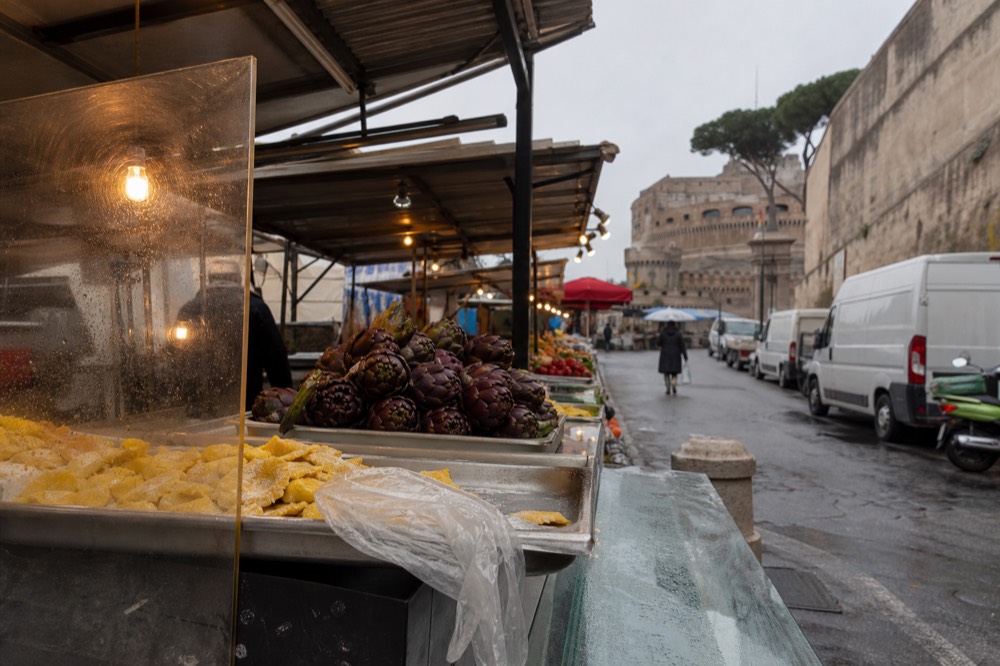
If you want to triangulate a Bourdain-style meal without a guide, three filters do most of the work. First, location: he favored neighborhoods where food workers lived, so Testaccio and Trastevere beat the streets around the Pantheon. Second, menu length: if the menu has photographs or runs to six pages, walk on. Third, the ordering test: a trattoria that serves trippa alla romana on Saturday is plugged into the tradition, whether or not any camera crew ever visited. The evening food tours in Rome guide covers the Trastevere side of that same tradition if your Bourdain day runs past sundown.
Following Bourdain's trail through Rome is really a lesson in reading the city, and it is the same lesson this whole site teaches: the best eating in Rome is not hidden, it is simply local. Whether you start with the ravioli at dal 1931 or with a market walk through Testaccio, the method is the one Bourdain practiced everywhere he went: eat where the neighborhood eats, order what the house is proud of, and be suspicious of anything that seems designed to be photographed. Rome Food Tours exists to make that method bookable, with guides who know which stalls and which trattorias still keep the old rules.
The verified Bourdain Rome record is short and solid: one restaurant, one dish, one quote, all traceable to a filmed episode. Osteria dal 1931 in Testaccio, its ravioli burro e salvia, and the surrounding quinto quarto tradition are the core of it. The questions below cover what is documented, what is folklore, and how to eat the same way today.
Common questions about Anthony Bourdain's favorite Rome restaurant
what was anthony bourdain's favorite restaurant in rome?
Osteria dal 1931 in Testaccio, a small old-school trattoria he featured in his Rome episode of Parts Unknown. The dish he singled out was ravioli burro e salvia, which he called completely awesome, and the restaurant still serves it, listed at 13 euros.
Is Osteria dal 1931 still open?
Yes. The restaurant remained open and serving the same ravioli burro e salvia dish Bourdain praised, at 13 euros, as of June 2026. It sits in Testaccio, the former slaughterhouse district, and keeps traditional Roman service hours, with dinner service running late by local custom.
What did Bourdain eat at Osteria dal 1931?
Ravioli burro e salvia, fresh ravioli dressed with butter and sage. He called the dish completely awesome on camera. It is a deliberately simple preparation, three components with no modern reinterpretation, which is exactly why it stood out to him.
Why did Bourdain film in Testaccio?
Because Testaccio is the home of Rome's quinto quarto tradition, the offal cooking created by the workers of the former Mattatoio slaughterhouse, built between 1888 and 1891 and closed in July 1975. Bourdain consistently championed working-class food traditions, and Testaccio is where Rome's lives most intact.
Are other "Bourdain restaurants in Rome" lists reliable?
Mostly not. Many lists add restaurants he never visited, based on what writers assume he would have liked. Only recommendations that trace to a filmed episode or a published quote are reliable, and for Rome that record is small: the Testaccio trattoria tradition and the dal 1931 ravioli are the firm core.
Can you take a food tour that covers Bourdain's Testaccio?
Yes. A small-group market walk through Testaccio, such as the Small-Group Testaccio Market & Local Tastings tour, covers the market and the neighborhood's traditional cooking in about 3.5 hours. It is the closest guided equivalent to the territory his episode explored.