is it safe to walk around trastevere at night?
A practical, fact-checked answer to whether Trastevere is safe to walk at night, covering pickpockets, the alcohol rules in movida zones, night ZTLs, and how a guided evening food tour changes the picture.
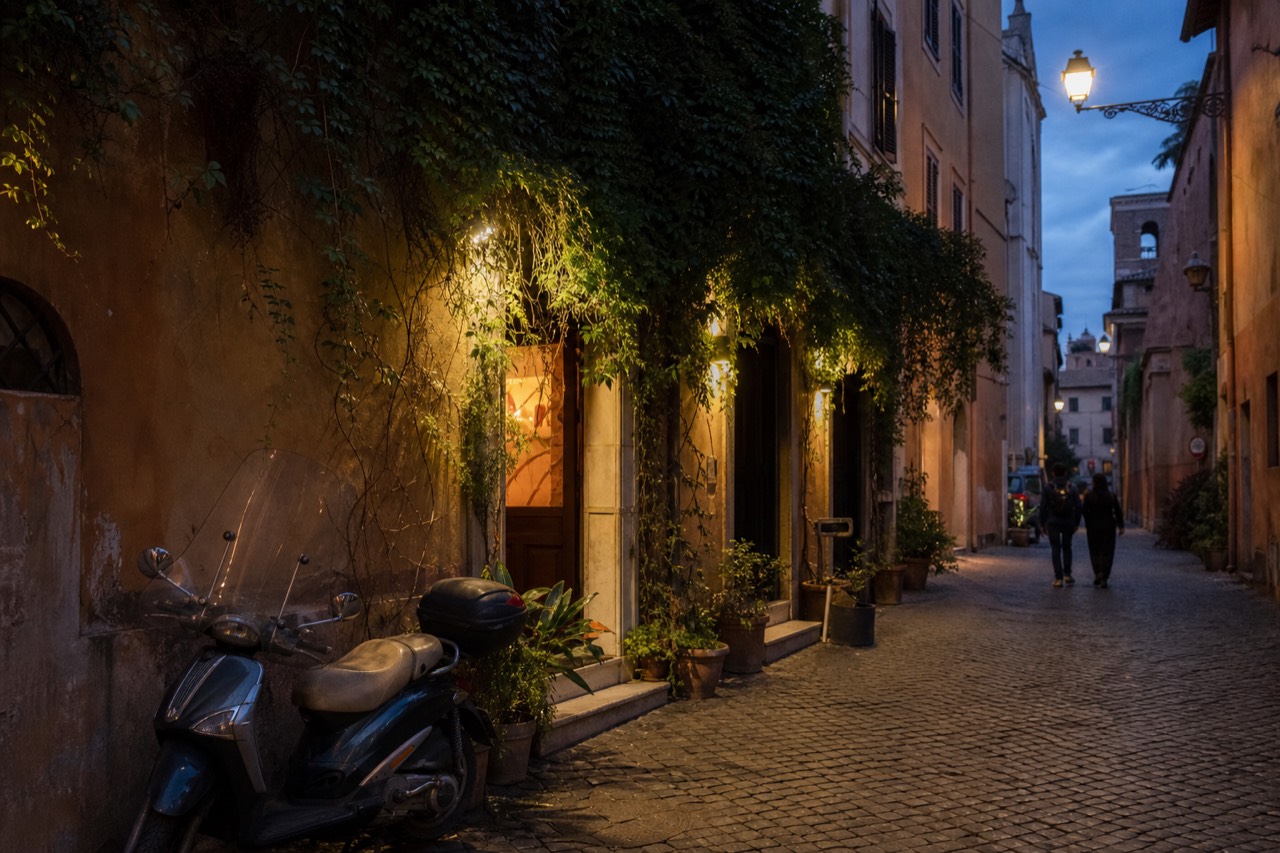
Trastevere is where Rome eats late. On any given Friday the lanes around Piazza Santa Maria in Trastevere hold more people at midnight than at noon, and the neighborhood's restaurants, bars and gelaterie stay busy until the last tram. That density is exactly why the safety question comes up so often: visitors hear "nightlife district" and picture something rougher than what the quarter actually is. The record, from the city's own regulations to the police's own enforcement announcements, describes a crowded, well-policed entertainment zone with a specific and mostly petty crime profile. This article walks through that record, neighborhood by neighborhood and rule by rule, so you can decide for yourself how to spend an evening there. It is part of Rome Food Tours, our running set of guides to eating and drinking well in the capital.
is it safe to walk around trastevere at night?
Yes, Trastevere is safe to walk around at night for the overwhelming majority of visitors, and the risks you actually face are pickpocketing, overpriced drinks and crowds rather than violent crime. As one of Rome's most heavily trafficked and policed nightlife areas, it keeps thousands of people on the streets until well after midnight on weekends, so the practical dangers are those of any dense tourist zone: guard your phone and watch your bags in crowds.
The honest framing starts with what Trastevere is: Rione XIII, the largest of Rome's rioni, whose name comes from the Latin trans Tiberim, "beyond the Tiber," relative to the old city center on the other bank. Roma Capitale's own tourism portal describes it as a residential quarter with a dense fabric of trattorias, wine bars and nightlife venues. It is not a derelict district that empties after dark. It is the opposite, a place where the population on the street swells after sunset, and crowds are the single biggest factor in street safety. A lane with two hundred people in it at 1 a.m. is a difficult place for a mugging and an easy place for a pickpocket.
That distinction matters because most visitor complaints about Trastevere at night are about theft and nuisance, not assault. Phones snatched from café tables, wallets lifted in the crush near the Ponte Sisto crossing, a bag unzipped while its owner films the facade of Santa Maria. These are real, they are annoying, and they are preventable with the same habits you would use in any European nightlife district: front pockets, zipped crossbody bags, nothing valuable on a table you cannot touch. Violent crime against tourists in the quarter is rare enough that when it occurs it makes the local news precisely because it is unusual.
The city, for its part, treats Trastevere as a zone needing active management rather than rescue. The mayor's anti-malamovida ordinance, renewed in January 2026 and running until 11 October 2026, extends the night-time ban on takeaway alcohol sales into viale Trastevere and other areas, an explicit acknowledgment that the quarter's problems are about street drinking and venue compliance, the manageable end of the nightlife spectrum. Police operations continue in the same spirit: a 6 September 2026 Questura action in Trastevere issued over 50,000 euros in fines against venues including a gelateria operating as a pub at night and minimarkets selling high-alcohol drinks without proper licences. That is enforcement against businesses, not a signal that the streets themselves are dangerous.
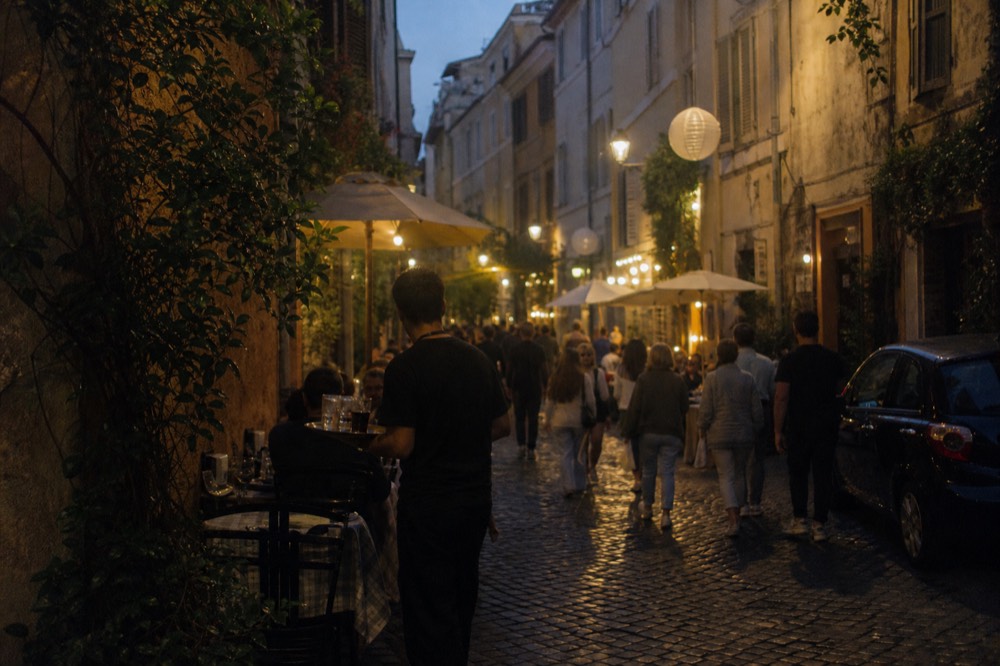
If you want the reassurance of a local leading the way through those exact streets, a guided evening walk is the simplest version of it. The three options below are all Trastevere-based, all evening-oriented, and all led by guides who know which lanes to use and which to skip.
What are the real risks after dark in Trastevere?
The realistic risks are pickpocketing in crowds, phone snatching near the river crossings, drink spiking or overcharging in the least reputable bars, and drunken disorder from other revelers, not robbery or violent crime. The quarter's own enforcement record is about venue violations and street drinking, and the city's rules target alcohol sales and public consumption rather than a crime wave. Your countermeasures are cheap: front pockets, zipped bags, licensed venues, and a planned route home.
Start with the geography of the risk. The pressure points are where crowds compress: the Ponte Sisto and Ponte Garibaldi crossings over the Tiber, the mouth of Via della Lungaretta at Piazza Santa Maria, and the steps around Piazza Trilussa where groups congregate with takeaway drinks. These are the spots where a pickpocket works best because personal space collapses and attention is on the view, not the bag. Two hundred meters into the side lanes, Via della Lungaretta's tributaries like Vicolo del Moro or Via in Lucina, the crowd thins and the risk drops with it. The paradox of Trastevere safety is that the prettiest, busiest squares are the least safe places for your wallet, and the quiet lanes people worry about are the safest.
Phone snatching deserves its own sentence because it is the most common loss visitors report. The pattern is a scooter or e-bike passing close to a table or a sidewalk edge, a hand grabbing a phone left in the open, and a bike gone before you stand up. It is not unique to Trastevere, it happens all over central Rome, but the quarter's outdoor tables make it easier. The fix is behavioral: phone inside, not face-up on a table within reach of the street, and if you are filming the piazza, stand back from the curb.
Then there is the nuisance tier: aggressive touting from a few venues, drinks priced for tourists rather than locals, and the general chaos of a district where a lot of people are drunk by midnight. None of this is dangerous in the criminal sense, but it degrades an evening fast. The reliable defense is to eat and drink in places with printed menus and table service, which is most of the quarter, and to treat any bar with a host pulling you in from the street as a place that has to work for customers because locals do not return.
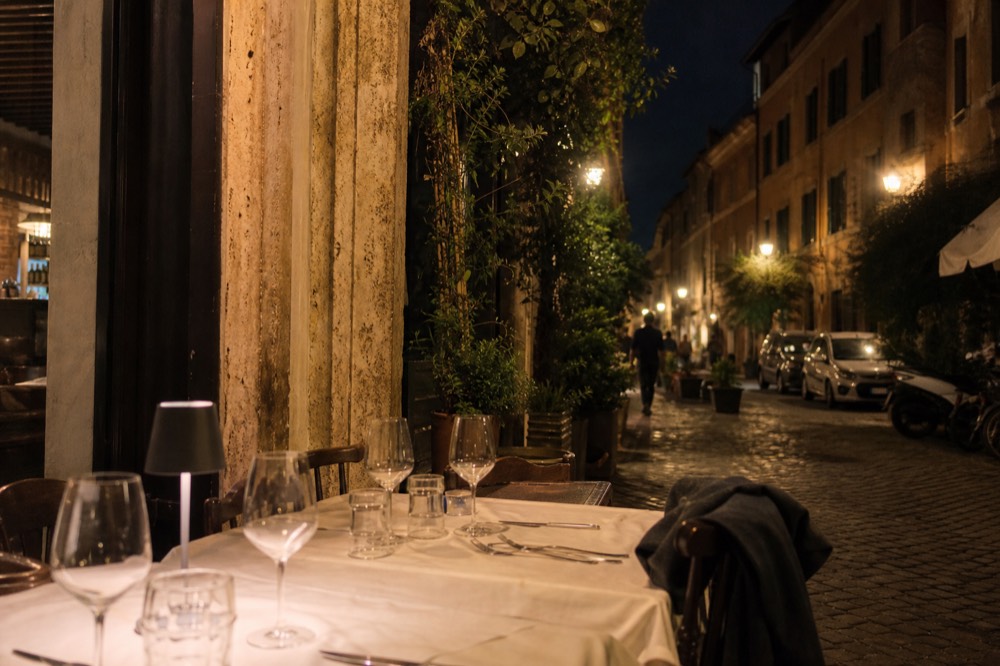
A guided tour solves the venue-selection problem entirely, because the guide has already made those choices. The Trastevere Hidden Gems tour run by The Tour Guy is built exactly for this: a three-hour evening walk from Piazza Farnese into Trastevere's side lanes, with dinner and wine included, from $68.45 per group with the price varying by group size, rated 4.9 across 1,604 reviews on the operator's live listing. The guide meets you by the fountain in Piazza Farnese, and the route deliberately avoids the crush on Lungaretta in favor of the lanes where the neighborhood actually eats.
For a fuller comparison of evening options across the whole city, our guide to evening food tours in Rome covers the formats, the neighborhoods and the price bands in detail.
What do Rome's alcohol and movida rules mean for your evening?
Rome bans takeaway alcohol sales and street drinking in central nightlife zones, including Trastevere, from 22:00 to 07:00, and public drinking anywhere from 23:00 to 07:00, with indoor serving ending at 03:00. The mayor's renewed ordinance extends the takeaway ban until 11 October 2026, so table service is unaffected but an open bottle carried after 22:00 is not.
This is the part of Trastevere law most visitors never hear about, and it explains a lot of what you will see on the street. The rules come from the Nuovo Regolamento di Polizia Urbana, approved by the city assembly in 2019, article 28, which applies to the nightlife areas mapped in the regulation's annex. Inside those areas, retail and takeaway sale of alcohol is prohibited from 22:00 to 07:00, including from vending machines and from food businesses; drinking any beverage from a glass container is prohibited in public streets in that same window; and from 23:00 to 07:00 drinking alcohol in any container is prohibited in those public spaces. Serving alcohol, including on a venue's own outdoor area, stops between 03:00 and 07:00. The reduced-payment fines for breaching these rules run from 160 to 400 euros depending on the specific provision, per the city's own sanction tables. You can read the regulation itself on the Roma Capitale regulations page.
What this means for your walk is simple and mostly in your favor. Sitting at a table inside or on a licensed terrace, with a drink you bought there, is legal until the venue stops serving. What is not legal is buying a bottle at a minimarket and walking the lanes with it after 22:00, or standing on the Piazza Trilussa steps with open containers after 23:00. The ordinance renewed in January 2026, which the mayor extended to 11 October 2026 and widened to include viale Trastevere, tightens the takeaway-sales side further. So the crowds you see on the steps in the early evening thin out legally as the night goes on, and the streets become calmer rather than rowdier after midnight, the opposite of what most visitors expect.
The enforcement record backs that up. The 6 September 2026 operation targeted venues, not walkers: a gelateria running as a pub at night, minimarkets selling high-alcohol drinks without the right licence, unlicensed alcohol sales and black-market labor, adding up to over 50,000 euros in fines. One bottega in Viccolo del Cinque was ordered closed for 15 days in late August 2026 for repeated illegal alcohol service. Read together, these actions say the city is managing the supply side of street drinking, which is the mechanism that keeps the pedestrian experience tolerable. A tourist nursing a glass of wine at a trattoria table is not the target of any of this.
How do the night ZTLs affect getting there and back?
Trastevere has a night limited traffic zone active 21:30 to 03:00 on Fridays and Saturdays, extended to Wednesdays and Thursdays from May to October, which bars unauthorised vehicles including private cars and ride-shares without permits. Taxis and licensed hire cars are exempt, motorcycles and mopeds have free access, and the night gates switch off entirely in August. If you arrive by tram or on foot across Ponte Sisto, none of this touches you.
The ZTL is a driver's problem, but it shapes the evening for anyone who books a tour with a vehicle component or orders a ride home. The details come from Roma Servizi per la Mobilita, the city's mobility agency: the Trastevere night zone runs 21:30 to 03:00 on Friday and Saturday nights including public holidays, and from May to October it also covers Wednesday and Thursday nights, with a 30 km/h speed limit inside. The daytime Trastevere ZTL, 06:30 to 10:00 Monday to Saturday, is a separate thing and irrelevant to your dinner plans. The night gates are suspended during August, which is one of several signs that August runs on a different rhythm in the center. The full schedule is published on the Roma Servizi per la Mobilita ZTL page.
For a walker, the takeaway is that Trastevere at night is a pedestrian's district by design. The gates push vehicle traffic out of the lanes exactly when the crowds are thickest, which is a genuine safety feature, not an inconvenience. If your evening ends at 01:00 and you want a ride, hail a licensed taxi or use a licensed NCC hire car, both exempt from the gates, rather than a private car that will either be fined or will drop you at the edge of the zone. The tram lines along viale Trastevere run late and connect to Trastevere station, and the walk back across Ponte Sisto toward the centro storico is short, lit and usually populated until the last bars close.
One thing worth knowing before you plan a late evening anywhere in the center: sitting on monuments, fountain steps or archaeological remains to eat or drink is prohibited by the same urban police regulation, with a reduced-payment fine of 250 euros for the sitting-to-eat clause, and the monumental fountain rules carry reduced fines from 160 to 450 euros. The steps of Piazza Trilussa are exactly the kind of spot the rule covers. It is enforced unevenly, but the fine is real, it is on the city's own published sanction tables, and there is no reason to learn about it the expensive way.
Is a guided evening tour safer than walking on your own?
A guided tour does not make Trastevere safer, it removes the decisions that create risk: which lanes to use, which venues to enter, when the crowd peaks and how to route home. The quarter's independent safety record is good enough that a confident, prepared walker loses little by going alone. The case for a guide is efficiency and context, three hours of eating and walking with someone who has already filtered the neighborhood.
Be clear about what a guide is and is not. A guide is not a security detail, and Trastevere does not need one. What a guide provides is local routing, the difference between following the crowd down Lungaretta into the pickpocket's favorite crush and turning into Via della Scala toward the quieter, better tables. A guide also handles the language and the ordering, which in a quarter where a handful of venues cater aggressively to tourists is a quiet form of protection against the overpriced-drink problem. And a guide ends the evening with a plan, which is when many solo walkers are at their most disoriented.
The twilight format is the quarter's signature product for a reason. The Twilight Trastevere tour by Eating Europe runs four hours from Piazza Sant'Bartolomeo All'Isola, at $123.04 per person, rated 4.9 across 6,343 reviews on the operator's live listing. It starts on the Tiber island at dusk and works through the quarter as it fills, which means you see the transition from residential calm to nightlife with someone narrating it. For a visitor whose real worry is "will I feel lost at 11 p.m.," that structured arc is the answer.
The luxury tier covers the same ground with a different emphasis. The Trastevere Luxury tour by Cooking Italy, $147.89 per person with a perfect 5 rating across 3,492 reviews, runs four hours with free-flowing fine wine, meeting outside Trapizzino at Piazza Trilussa. It is the format for a celebratory evening where the wine matters as much as the walk. And if your question about Trastevere is broader than the night hours, our piece on whether Trastevere is worth visiting covers the quarter's daytime character, its food scene and its trade-offs in full.
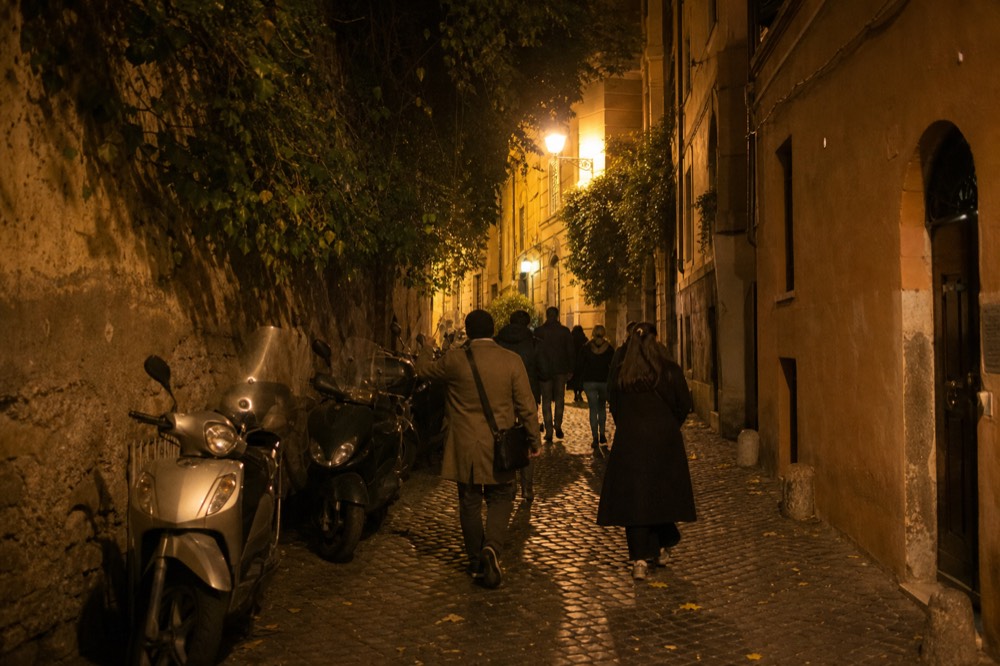
For travelers who prefer to plan the whole evening themselves, the practical route is this: cross into the quarter on foot via Ponte Sisto, eat at a table-service trattoria in the lanes off Via della Lungaretta, skip the takeaway-bottle phase entirely since the rules ban it after 22:00 anyway, and leave via tram or a licensed taxi when you are done. That is a safe evening by any reasonable standard. The one thing we would not recommend is improvising a first visit to the quarter at peak hour on a Saturday night with no reservation and no route, because the failure mode there is not danger, it is a bad table and a long wait.
Who should be more careful, and when?
Solo travelers, women walking after the last tram, and anyone carrying luggage or expensive camera gear should be more careful between 22:00 and 02:00 on weekend nights, especially around the river bridges and the main squares. Families with children and older visitors face a different issue: the crowds themselves, which on summer weekends can make the main lanes slow, loud and physically dense. The quietest safe evenings are Sundays through Thursdays outside the May-to-October window.
The crowd-density point deserves more weight than it usually gets. Trastevere on a July Saturday is not dangerous, but it is intense, and intensity creates its own incidents: spilled drinks, jostled bags, a lost child, a twisted ankle on sampietrini, the polished cobblestones that are treacherous in any Roman rain. If you are traveling with small children or with anyone unsteady on cobbles, the side lanes and the earlier hours are the better choice, and the main-drag crush is best experienced briefly and from a table. The quarter's own institutions support this: Bar San Calisto, the famously unpretentious bar in Piazza San Calisto, reopened on 26 February 2026 after 45 days of maintenance and remains the low-key alternative to the Lungaretta scene, a short walk from the piazza but psychologically in another neighborhood.
For women walking alone, the honest report is that Trastevere is regarded locally as one of the better central quarters for a late walk home, because the streets stay populated and residential. The precautions are the universal ones: stay on the lit main lanes rather than cutting through empty side streets after 01:00, keep the phone charged, and know your route before the second glass of wine. The night ZTL means fewer private vehicles in the lanes, which cuts both the scooter-snatch risk and the general traffic noise. Reports of harassment are not a feature of the quarter the way they are of some nightlife strips, and the enforcement climate, with police visibly present around the movida zones, is a real deterrent rather than a paper one.
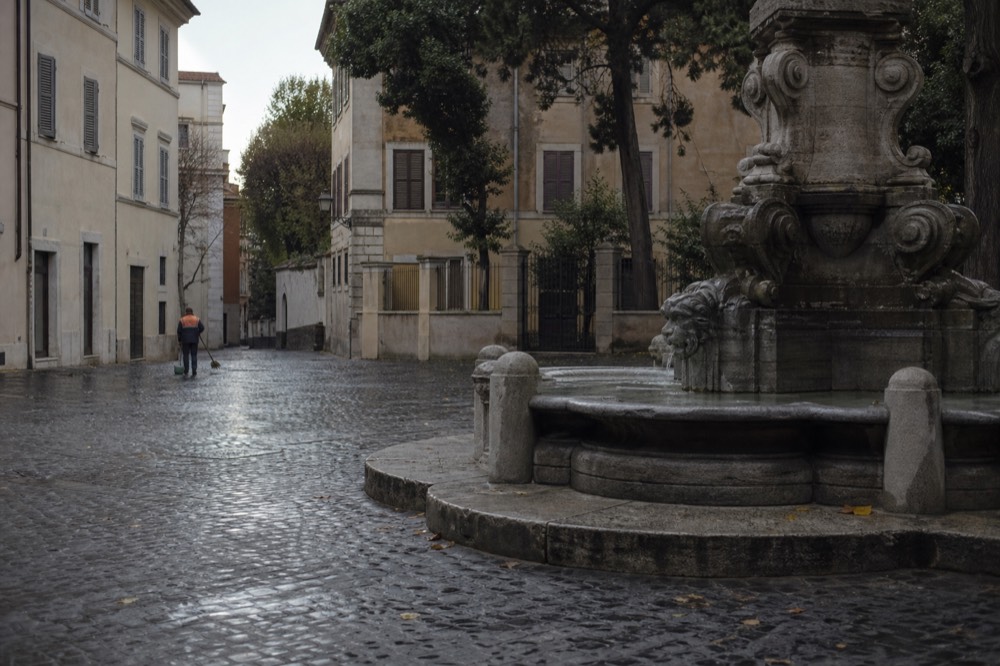
Timing is the variable most visitors can control and few do. The ordinance and the ZTL calendar together define the quarter's rhythm: the alcohol rules bite after 22:00 and 23:00, the night gates run Wednesday or Thursday through Saturday from May to October, and August suspends the night gates entirely while the city empties of locals. A Tuesday evening in November is a different district from a Saturday in June, calmer, more local, and in every practical sense safer, simply because there are fewer people to have incidents with. If your schedule allows, take the quarter on its quiet nights and save the Saturday spectacle for a night when you have a guide and a plan.
| Time and situation | What to expect in Trastevere | Sensible precautions |
|---|---|---|
| Weekday evening, 19:00 to 22:00 | Busy restaurants, moderate crowds, families dining | Normal city awareness, book tables ahead |
| Weekend, 22:00 to 02:00 | Peak movida, dense crowds on Lungaretta and the bridges | Front pockets, zipped bag, phone off tables |
| After 23:00 on any night | Public alcohol consumption is banned in the mapped zones | Keep drinks indoors or on licensed terraces |
| After 01:00 midweek | Thinning crowds, some lanes quiet | Stick to lit main lanes, know your route |
| August nights | Night ZTL suspended, fewer locals, hot evenings | Check venue opening signs, expect variable hours |
Whatever shape your evening takes, the quarter's food is the reason to be there after dark, and these are the three Trastevere formats we would shortlist, from the budget-friendly hidden-gems walk to the four-hour luxury version.
These are the questions readers ask most often about evenings in Trastevere, answered from the same city regulations, enforcement records and tour listings covered above. Each answer repeats the practical rule rather than the reassurance, because the rules are what actually keep the quarter walkable after dark. If your question is not here, the sections above cover the alcohol ban, the night ZTL and the crowd calendar in detail.
Common questions about walking around Trastevere at night
is it safe to walk around trastevere at night?
Yes, for most visitors Trastevere is safe to walk at night. The quarter is Rome's busiest nightlife district, which means the streets stay crowded and policed until very late, and the risks are pickpocketing and phone snatching rather than violent crime. Keep valuables out of back pockets, avoid carrying takeaway alcohol after 22:00 when the city's rules ban it, and use the lit main lanes if you are out after 01:00.
Is Trastevere safe for solo female travelers at night?
Trastevere is regarded locally as one of the better central quarters for walking late, because the streets stay populated and residential. Take the usual precautions: stay on lit main lanes rather than empty side streets after the bars thin out, keep your phone charged, and plan your route before you leave the restaurant. A licensed taxi or NCC hire car can enter the night ZTL if you prefer not to walk.
What time does Trastevere get busy at night?
The quarter fills up from around 20:00 as diners take their tables, and the movida peak runs from roughly 22:00 to 02:00 on Fridays and Saturdays, with Wednesdays and Thursdays also busy from May to October when the night ZTL extends to those nights. Weekday evenings outside the summer window are far calmer and more local in character.
Can you drink alcohol in the streets of Trastevere?
Not after 22:00. Rome's urban police regulation bans takeaway alcohol sales in the mapped nightlife zones from 22:00 to 07:00 and public consumption of alcohol from 23:00 to 07:00, and the mayor's renewed ordinance extends the takeaway ban until 11 October 2026. Drinking at a table inside or on a licensed terrace is unaffected until venues stop serving at 03:00.
Is it safe to take a food tour in Trastevere in the evening?
Yes. Evening food tours run in the quarter every night of the week, led by guides who handle venue selection and routing, and the format removes most of the decisions that create risk for an independent walker. Options range from a three-hour hidden-gems walk with dinner and wine from $68.45 per group to the four-hour Twilight Trastevere tour at $123.04 per person and the luxury free-flowing-wine version at $147.89 per person.
What should I avoid in Trastevere at night?
Avoid leaving phones on outdoor tables within reach of the street, carrying open bottles after 22:00, sitting on fountain steps or monuments to eat, which carries a reduced-payment fine of 250 euros, and venues with touts pulling you in from the street. Also avoid improvising a Saturday-night visit with no reservation: the failure mode is a bad table and a long wait, not danger.