what italian city has the best food?
Bologna usually wins the best-food-city argument, and this page concedes it honestly, then makes the specific case for what Rome does better than anywhere: the four pastas, the Roman artichoke, pizza al taglio and the Jewish Ghetto.
what italian city has the best food?
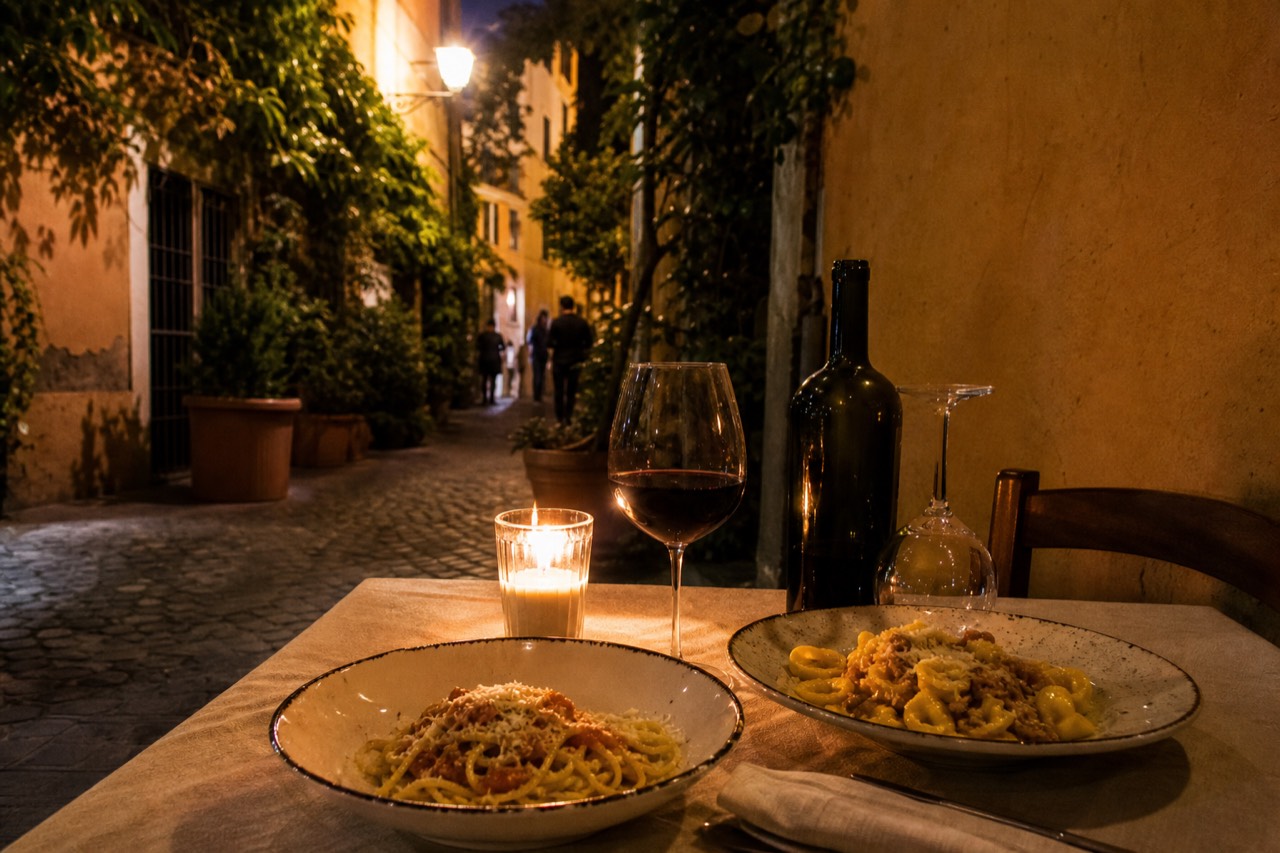
The honest answer is Bologna, if the question means everyday eating quality across a whole city: fresh pasta, cured meats, balanced prices and a food culture that never performs for tourists. But Rome holds four things no other Italian city can match: the four classic pastas, the Roman artichoke, pizza al taglio at its highest level, and the Jewish Ghetto's fried carciofi. The best answer depends on what you travel to eat.
That split verdict is not a dodge. It reflects how Italians themselves talk about food. Bologna is the city people move to for the eating, the one whose nickname, La Grassa, "the fat one," is worn with pride. Rome is the city people visit for the monuments and then discover, often on the second night, that its trattorias are doing something no one else is doing. The two cities are not competing on the same plate.
This page works through the argument the way a Roman would want it worked through: concede what deserves conceding, then make the specific case. Along the way it answers the question people actually type into search engines, what is the food capital of Italy, and settles a few sub-arguments, whether Naples has a claim, whether Florence is overrated for eating, and where a first-time visitor should actually spend their food budget.
For travelers who want to taste the Roman side of the argument rather than just read about it, the three walks below cover the city's street-food canon from three different angles and price points.
what is the food capital of italy?
There is no official food capital of Italy, and no institution has ever named one. In practice the title is contested between Bologna, which most Italians name for everyday eating, and Rome, which holds the largest concentration of dishes with protected status, the most starred restaurants among Italian cities, and the only cuisine whose entire national tradition was inscribed by UNESCO in December 2025. Naples holds a moral claim through pizza alone.
The UNESCO point deserves its weight. On 10 December 2025 the Intangible Cultural Heritage committee inscribed Italian cooking, between sustainability and biocultural diversity, on its Representative List, the first time an entire national cuisine received the designation rather than a single dish or practice. The Reuters report on the inscription noted the Italian government framed it as a tool to protect products from imitation, with industry estimates projecting up to 8% tourism growth. That recognition belongs to the whole country, but Rome is where most visitors first meet the tradition at table.
Rome also has the scale. The city recorded 22.9 million tourist arrivals in 2025, per Roma Capitale's official tourism statistics, which means its food economy serves more eaters than any other Italian city, and its trattorias have survived that pressure without collapsing into tourist-menu sameness in the neighborhoods that matter.
So when someone asks what the food capital is, the useful answer is a question back: capital of what? If it is pasta craft and everyday eating, Bologna. If it is the depth and variety of a single city's own invented dishes, plus the weight of a capital's dining scene, Rome. If it is one perfect food done better than anywhere on earth, Naples and its pizza.
Which city should you pick for your trip?
If your trip allows only one food city and eating is the main purpose, the table below is the honest shortlist.
| City | The case for it | The signature foods | Best for |
|---|---|---|---|
| Bologna | Highest everyday eating quality, fresh egg pasta culture, low prices | Tagliatelle al ragù, tortellini, mortadella | Dedicated food travelers |
| Rome | Most invented dishes of any Italian city, four classic pastas, the Ghetto | Carbonara, cacio e pepe, carciofi alla giudia, pizza al taglio | First-time visitors who want monuments plus food |
| Naples | The world's reference pizza, seafood, street food | Pizza, cuoppo, spaghetti alle vongole | Pizza pilgrims |
| Florence | Great steak and sandwiches, strong Tuscan wine | Bistecca alla fiorentina, lampredotto | Wine-and-meat eaters |
| Palermo | The richest street-food scene in the country | Panelle, spleen sandwiches, arancine | Adventurous street eaters |
Florence deserves a note, because it is the city most often accused of coasting. That is unfair in the neighborhoods, but the historic center's tourist-menu restaurants have earned the reputation. If you eat in Florence, eat where the sandwich shops and the market counters are.
why does Bologna usually win the argument?
Bologna wins because its food culture is the least performative in Italy: the pasta is rolled fresh every morning, the ragù simmers in home kitchens, prices stay honest, and the quality floor across ordinary restaurants is higher than in any other city. A random trattoria in Bologna is a safer bet than a random trattoria almost anywhere else. That consistency, not any single dish, is why Italians keep naming it.
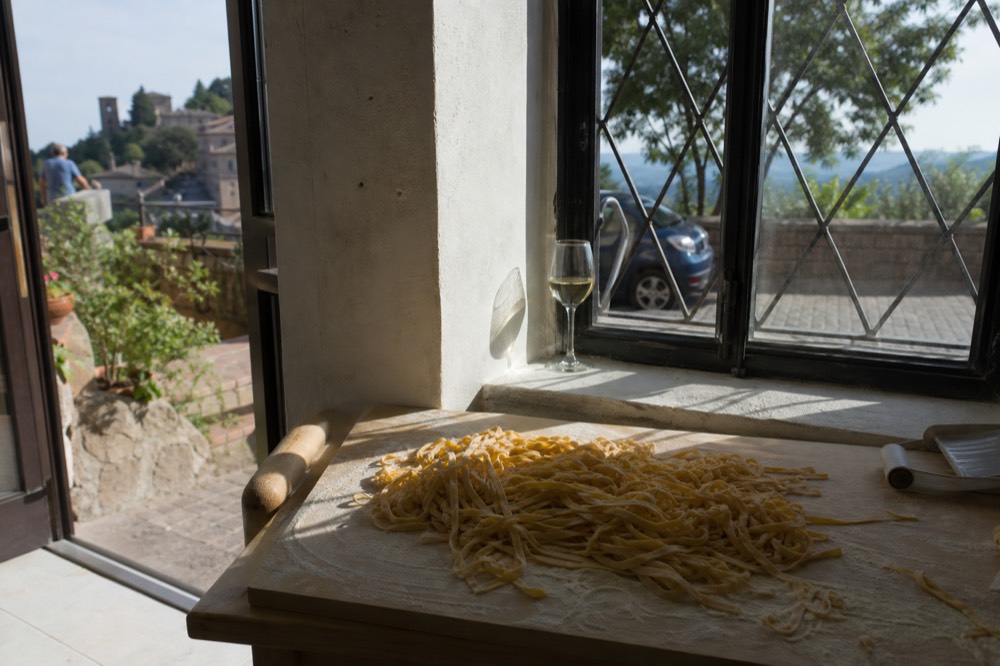
The case for Bologna is structural. Emilia-Romagna is the region that produced Parmigiano Reggiano, traditional balsamic vinegar, prosciutto di Parma, mortadella and the world's densest concentration of protected food names. Bologna sits in the middle of all of it, and its cooks treat egg pasta, tagliatelle, tortellini, lasagne, as a daily craft rather than a heritage performance. When the question is which city to live in for the food, Bologna's answer does not change with the season.
Concede all of that honestly, because the argument for Rome is not that Bologna is overrated. It is that Bologna perfects and the capital invents. Tagliatelle al ragù is a masterpiece, but it is a farmhouse dish refined. Carbonara, cacio e pepe, gricia and amatriciana were assembled in Rome, from ingredients that were already there, into something the world now orders by name. Rome's four pastas are the only Italian city's dish set that functions as a national shorthand.
There is also the matter of what a visitor can actually reach. Bologna's best eating rewards return visits and local knowledge. Rome's best eating is concentrated in three or four walkable neighborhoods, Trastevere, Testaccio, the Jewish Ghetto and the historic center, and a first-time visitor with two evenings can eat at the level locals eat at. That accessibility is part of why the argument never quite ends.
what does Rome do better than anywhere else?
Rome does four things better than any other city: the four classic pastas built on pecorino and guanciale, the Roman artichoke in both its fried and braised forms, pizza al taglio as a daily street food, and the Jewish Ghetto's fried food tradition. Each of these has a documented history in the city, and none of them can be eaten at the same level outside it.
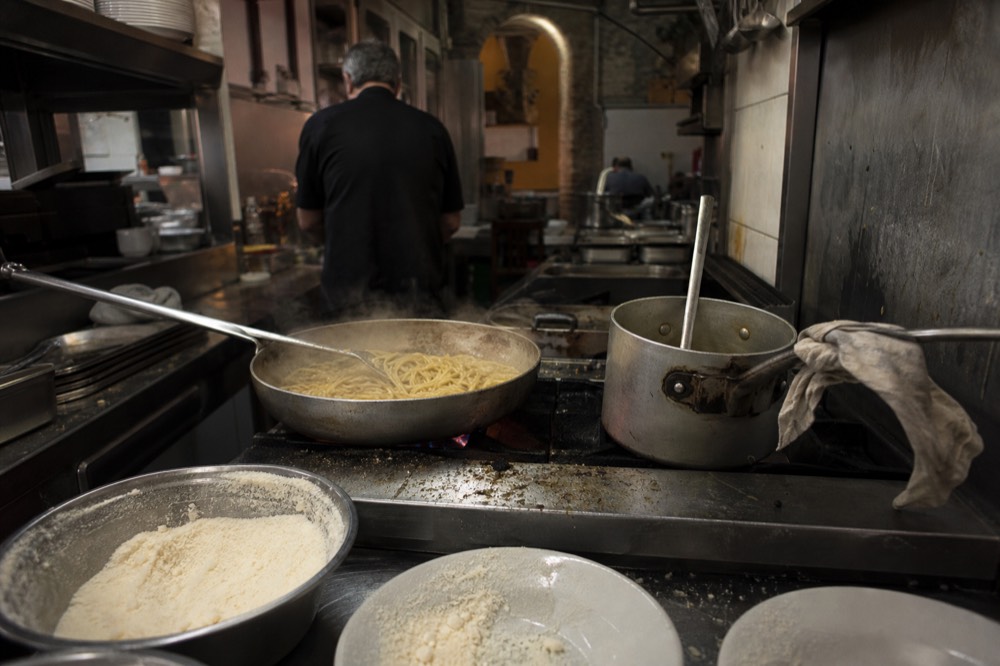
Start with the pastas, because they are the spine of the Roman case. Carbonara, cacio e pepe, gricia and amatriciana share a base logic: cured pork, sheep's cheese, and technique doing the work that cream and butter do elsewhere. An AstraRicerche survey of 1,004 Italians ahead of Carbonara Day 2026 found 46.1% named carbonara their favorite pasta dish, and the survey's reporting puts the dish's ten-year social reach at 1.7 billion people. No other city's invention dominates the national imagination like that.
The Roman artichoke is the second pillar. The Carciofo Romanesco del Lazio carries a protected PGI registration, its harvest running from January into May, and the two Roman preparations, carciofi alla giudia, the whole flower fried until the leaves open like a chrysanthemum, and carciofi alla romana, braised with Roman mint and garlic, appear on menus across the city in season. Bologna has no equivalent vegetable dish with a protected name and a festival calendar behind it.
Pizza al taglio is the third. In the 50 Top Pizza 2025 guide, Rome placed 12 venues overall and took first and second place for pizza al taglio, with Frumentario by Alessandro Santilli ranked first and Pizzarium second. Naples wins the sit-down pizza argument without contest; Rome wins the by-the-slice argument, the pizza you eat standing on a bench with a supplì on the side.
The fourth pillar is the Jewish Ghetto, and it is the one visitors most often miss. The quarter's fried artichokes, salted cod fillets and ricotta-and-visciole tart belong to a continuous tradition older than the ghetto walls themselves, which were erected by papal bull in 1555 and came down after 1870. No other Italian city has a Jewish-Roman culinary quarter of that depth. Our Jewish Ghetto food tours guide covers where to eat it street by street.
If reading this far has already settled the argument for you, the question becomes how to taste the Roman canon without burning a whole evening on research. A guided street-food walk in the historic center solves that in a single outing, and free cancellation is available on the listing if your plans shift.
are the four Roman pastas really unmatched?
Yes, in one specific sense: no other Italian city has a set of four pasta dishes that all originated there, all share a common technical base, and all are now ordered by name across the country and the world. Bologna's tagliatelle, Naples' spaghetti alle vongole and Rome's four pastas are equals in quality, but only Rome's set functions as a complete, internally consistent cuisine within a cuisine.
Here is the set, with what pins each one down.
| Pasta | The base | What makes it Roman | Protected status behind it |
|---|---|---|---|
| Cacio e pepe | Pecorino Romano, black pepper | No pork, no tomato: cheese emulsion technique alone | Pecorino Romano PDO, registered 1996 |
| Gricia | Guanciale, pecorino | The ancestor dish, pork and cheese, no egg, no tomato | Pecorino Romano PDO |
| Carbonara | Guanciale, egg, pecorino | The emulsion finished off heat, never cream | Pecorino Romano PDO |
| Amatriciana | Guanciale, tomato, pecorino | Tomato added to gricia in the early 19th century | Amatriciana Tradizionale TSG, registered 2020 |
The protected-status column is where the Roman case gets legally interesting. Amatriciana Tradizionale is a registered TSG at EU level, and its published specification pins the sauce composition: 18 to 30% Amatrice pork jowl, guanciale, cured at least 30 days, and it states plainly that the sauce has always been made with pork jowl, never bacon or pork belly. Pecorino Romano is a PDO whose specification requires sheep's milk from Lazio and Sardinia and a minimum maturing of five months for table cheese. Carbonara, cacio e pepe and gricia have no PDO or PGI of their own, but their load-bearing ingredients do.
That is a level of codification Bologna's dishes do not have in the same way, and it means a Roman trattoria making the four pastas is working inside a tradition with written rules at its edges. It also explains why Roman cooks are famously touchy about cream in carbonara: the whole set depends on emulsion technique, and cream is the shortcut that admits you cannot do it.
The practical takeaway for a visitor is that you can test the whole argument in one evening. Order a carbonara and a cacio e pepe in the same sitting, in a trattoria in Testaccio or Trastevere, and you will taste two dishes that share ingredients and diverge completely on technique. Our Testaccio food tours guide lists the neighborhood trattorias where this comparison is fairest.
where do the artichoke, pizza al taglio and the Ghetto fit in?
They fit as Rome's second course of evidence: the seasonal vegetable with a protected name, the street pizza with a national ranking, and the fried-food tradition of the Jewish quarter. Together with the four pastas they form a case no other Italian city can assemble, which is why the best-food-city argument always circles back to Rome even after Bologna is conceded.
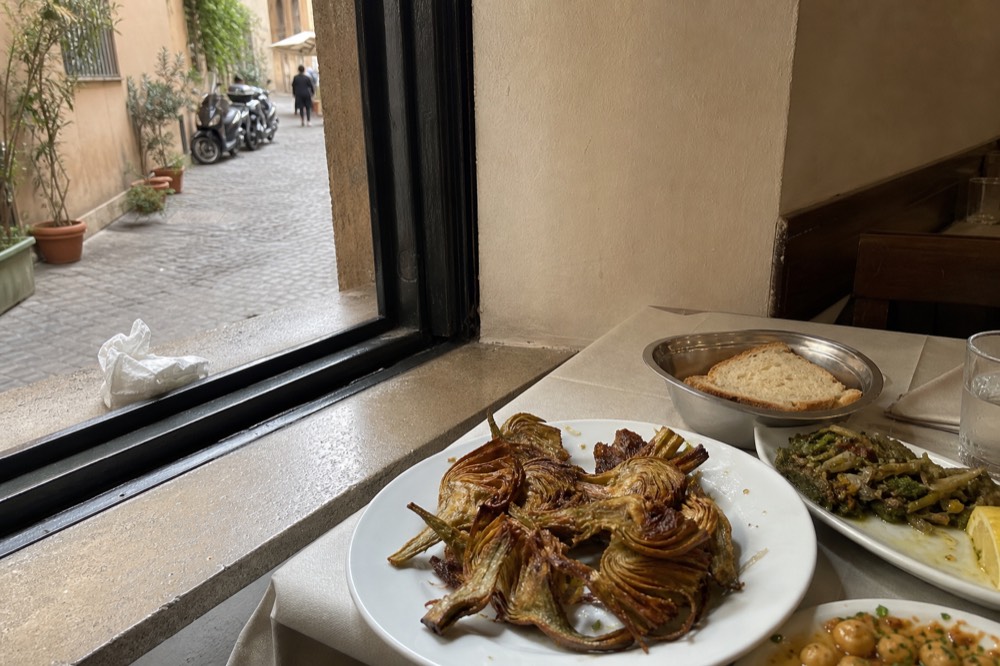
Timing matters for the artichoke. The Carciofo Romanesco del Lazio PGI harvest starts in January and can run into May, weather depending, and menus across the city track it. Come in March or April and the fried carciofi alla giudia are at their best; come in August and you are eating the city's summer canon instead, which is a different and also excellent list: carbonara does not have a season, and neither does pizza al taglio.
Pizza al taglio rewards a specific approach: buy by weight, point at what just came out of the oven, and eat it within ten minutes. Roman pizza by the slice is baked in long rectangular trays, cut with scissors, and priced per etto, per hundred grams. The potato-topped slice, the zucchini flower slice and the plain rosso are the local tests of a shop's quality, and the top-ranked shops in the city sell out by early evening, which is itself useful information about when Romans eat.
The Ghetto is best treated as a meal destination rather than a photo stop. The quarter is small, four blocks crossed by Via Catalana, bounded by Via del Portico d'Ottavia and the Tiber, and its kosher restaurants and fry shops carry a tradition that survived the ghetto period from 1555 to 1870. Eat the artichoke where it was invented, then walk five minutes to the theater district for gelato. The hidden gems in Rome post on this site lists a few of the quieter stops around the same streets.
how should you eat your way through Rome?
Eat in the neighborhoods, not the monument plazas: Trastevere and Testaccio for trattorias, the historic center for street food, the Ghetto for fried artichokes, and Prati for the market. Plan one long lunch and one lighter dinner, order the four pastas across different sittings, and put at least one guided walk early in the trip so a local frames what you are tasting. Prices for quality food experiences in the city span a wide band, so check the live listings.
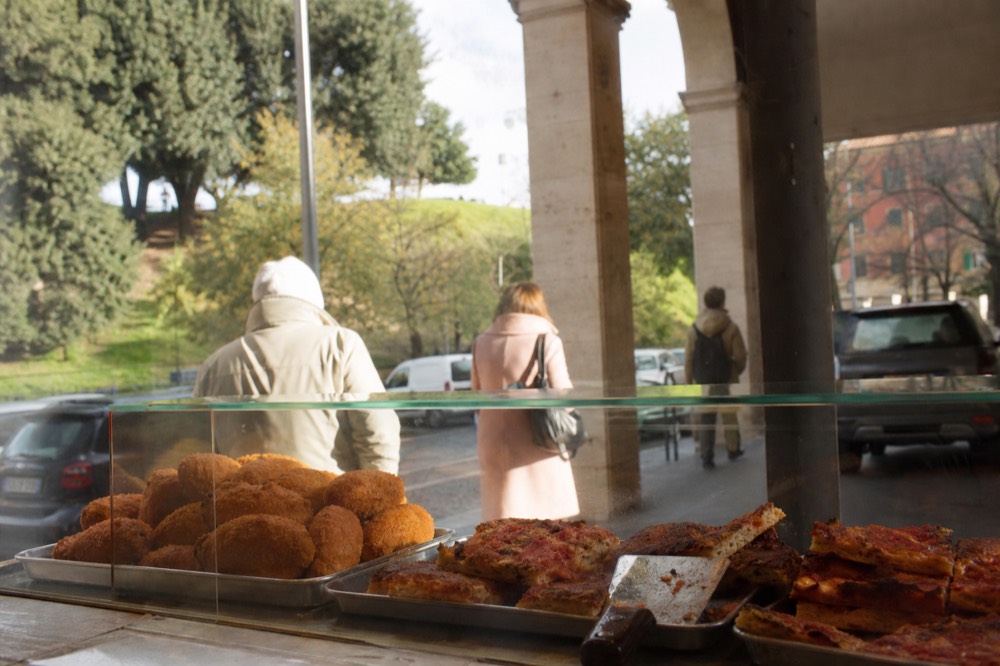
The guided-walk recommendation is not a sales line; it is sequencing advice. A food tour on your first evening teaches you the names, the neighborhoods and the standards, and every meal after it gets better because you know what to order and what to skip. The Eat Like a Local Street Food Tour, run by Hili srl, is the roster's cheapest introduction: 2.5 hours, 4.9 from 1,331 reviews, meeting by the fountain in Piazza di S. Simeone in the historic center. It covers the street-food canon, the supplì, the pizza al taglio, the fried snacks, in the streets where Romans actually buy them.
If you want the same canon with a guide who goes deeper on fewer stops, the 2.5-Hour Street Food Walk by Food Raphael Tours and Events runs with a 4.8 rating from 4,201 reviews, meeting under the Giordano Bruno statue in Campo de' Fiori. The two walks overlap in content but differ in pace and starting neighborhood, so pick by where your hotel is.
Beyond the walks, the self-guided version of the Roman case is simple. Lunch on the four pastas in Testaccio, where the slaughterhouse district's quinto quarto tradition, the offal cooking born from the workers' quarter, still anchors the menus. Dinner in Trastevere, where the trattorias run later and the evening street life is part of the meal. One afternoon in the Ghetto for the fried artichoke, in season. One market morning, Testaccio's market or Trionfale, to see the produce that the four pastas and the artichoke dishes are built on. For the wider question of whether a food tour justifies its price at all, our is a food tour worth it in Rome post works through the math.
One planning note on the calendar: August is when the argument gets complicated. The night traffic zones switch off in August, many family-run places close for holidays by custom rather than law, and the artichoke is long out of season. Rome in August still eats well, but it eats a reduced version of itself. Come between January and May for the artichoke, or in autumn for the fullest menus.
Whichever city you finally crown, the practical difference for a traveler is smaller than the argument suggests: both Bologna and Rome will feed you better in one week than most cities manage in a lifetime. The argument is worth having anyway, because knowing what Rome specifically does best is what turns a good eating trip into a great one. Rome Food Tours exists precisely to make that case one dish at a time.
If the walk format appeals, the three options below span the range from a short street-food stroll to a four-hour golf-cart tour of the whole canon.
Bologna wins the general argument for the highest everyday eating quality, while Rome wins the specifics with the four pastas, the protected artichoke, top-ranked pizza al taglio and the Ghetto's fried tradition. Naples holds the pizza crown and Palermo the street-food crown. The questions below cover the comparisons travelers most often ask before booking, including the food-capital question and how many days Rome needs.
Common questions about Italian food cities
what italian city has the best food?
Bologna, if the question means the highest everyday eating quality across a whole city. Rome, if the question means the deepest set of dishes a single city invented: the four pastas, the Roman artichoke, pizza al taglio and the Jewish Ghetto tradition. Naples wins if pizza is the only metric. Most Italians name Bologna for living and Rome for visiting.
what is the food capital of italy?
There is no official food capital. Bologna is the popular answer for everyday eating, Rome holds the largest dining scene and the most locally invented dishes, and Naples holds the pizza crown. Italian cuisine as a whole was inscribed by UNESCO as Intangible Cultural Heritage on 10 December 2025, the first national cuisine to receive the designation.
Is Naples better than Rome for food?
Not better, different. Naples is the world reference for sit-down pizza and has an exceptional street-food culture built around fried seafood. Rome's range is wider: four classic pastas, a protected artichoke, top-ranked pizza al taglio and the Ghetto's fried tradition. A pizza-focused traveler should pick Naples; almost everyone else gets more variety in Rome.
Is Florence good for food?
Florence is very good in the right places: the bistecca alla fiorentina, the lampredotto sandwich and the Tuscan wine list are all serious. The historic center also has the country's highest concentration of tourist-menu restaurants, so the quality floor is lower than Bologna's. Eat at the market counters and sandwich shops and skip anywhere with a photographed menu board.
What should I eat in Rome that I cannot get elsewhere?
Carbonara, cacio e pepe, gricia and amatriciana, in that order of fame; carciofi alla giudia in the Jewish Ghetto between January and May; pizza al taglio from a top-ranked shop, bought by weight and eaten within minutes; and supplì, the fried rice balls, from a street counter. All five are Roman inventions or Roman specializations at their best in the city.
How many days do I need to eat Rome properly?
Three evenings minimum: one for the pastas in Testaccio or Trastevere, one for the Ghetto and the historic center's street food, and one for a market morning plus pizza al taglio. A food tour on the first evening compresses the learning curve, and every meal after it tends to be better ordered.