Vegan and Vegetarian Food Tours in Rome: What to Book and What to Swap
Roman cooking has a meat-heavy reputation that its own menu does not fully support. Cacio e pepe aside, much of what the city eats every day is already plant-based or one small swap away from it.
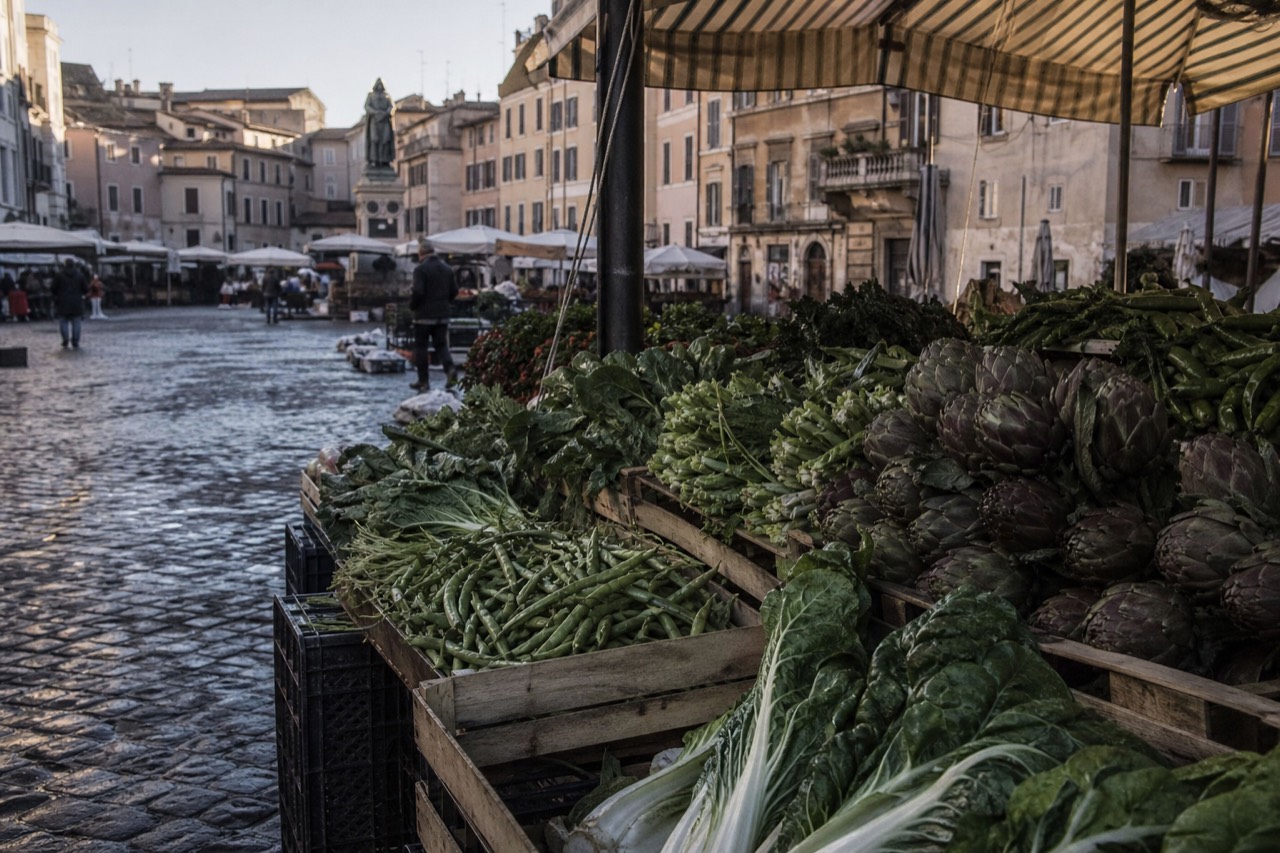
Short answer
Rome is easier for plant-based eaters than its reputation suggests. A dedicated vegan street food walk runs $91.75 per person with a 5.0 rating from 79 reviews, and classic dishes like pizza rossa, carciofi alla romana and puntarelle are vegan or near-vegan as standard. The honest catch is the four famous pastas, which all need replacing.
Rome's culinary identity is usually sold through its four famous pastas and its offal tradition, which makes a plant-based traveller assume the city has little to offer. The assumption does not survive contact with an actual Roman menu. Pizza rossa, carciofi alla romana, puntarelle, fritti di verdura and a whole family of legume dishes are everyday Roman food, not concessions made for tourists. The real question is not whether you can eat vegan in Rome, but which parts of the classic repertoire work as-is and which have to be replaced.
Can vegans and vegetarians actually eat well in Rome?
Yes, and better than in most Italian cities, because Roman home cooking grew out of poverty cuisine built on vegetables, bread and legumes rather than on meat. An Eurispes report puts 8.5 percent of Italians as meat-free, and Rome's markets, pizzerias and trattorias carry enough plant-based standards that a vegetarian can order blind almost anywhere, while a vegan needs to navigate around cheese and a few cured-pork staples.
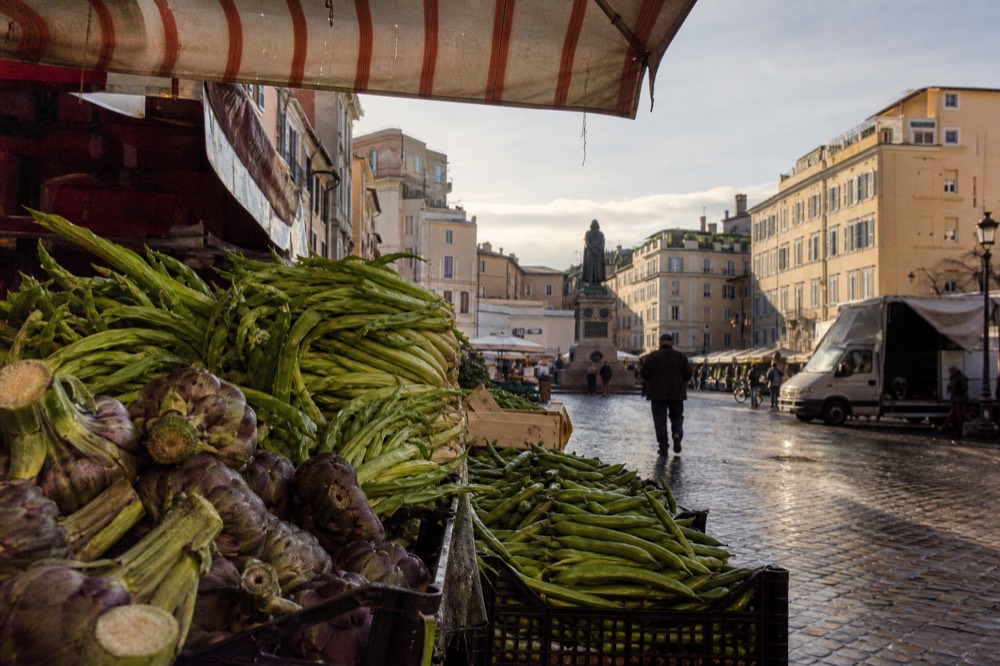
The numbers behind the shift are worth knowing. Eurispes Rapporto Italia 2026 reports that 8.5 percent of Italians do not eat meat, split between 5.3 percent vegetarians and 3.2 percent vegans, per the Eurispes survey data. Rome reflects that demand: the vegan minimarket Cimadù opened in the Colli Albani district with a full gastronomy counter, and fully plant-based options now appear on menus that ten years ago would have offered none.
For a vegetarian, Rome is close to effortless. For a vegan, the friction points are predictable and few: pecorino romano, guanciale, anchovy and egg. Once you know where those four ingredients hide, most of the menu opens up. That is exactly the work a good Rome Food Tours guide does for you, pointing at the dishes that arrive vegan without asking and steering you past the ones that only look plant-based.
Which classic Roman dishes are already vegan or vegetarian?
Pizza rossa, pizza bianca without cheese, carciofi alla romana, most fritti, panzanella-style salads and the legume soups are vegan as standard. Vegetarians can add cacio e pepe, gricia, supplì and the Jewish quarter's cheese-topped dishes. The four famous pastas are the only category where a vegan needs a full replacement rather than a swap.
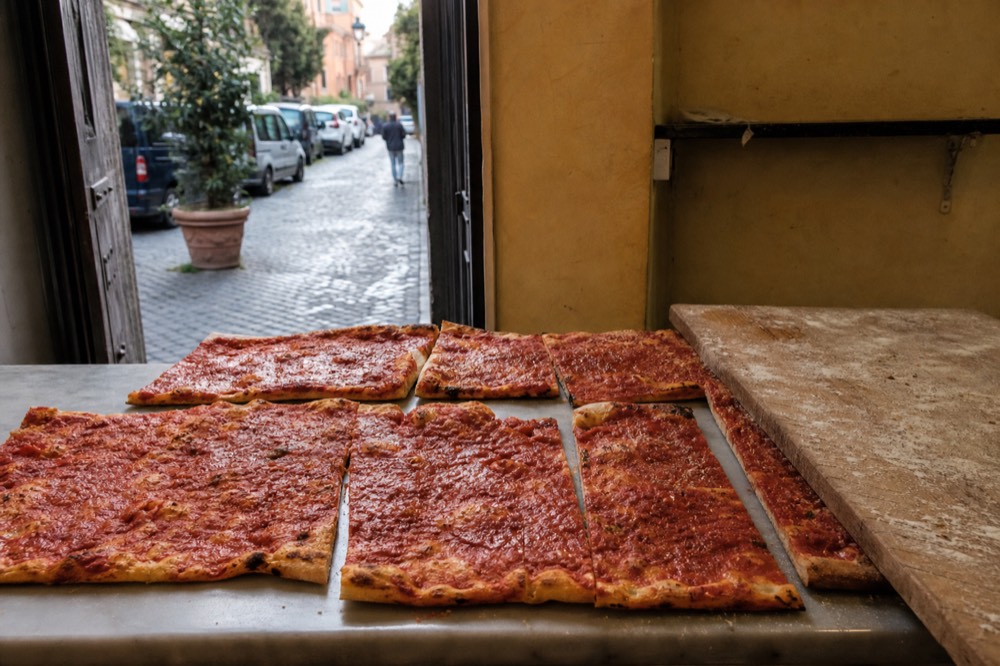
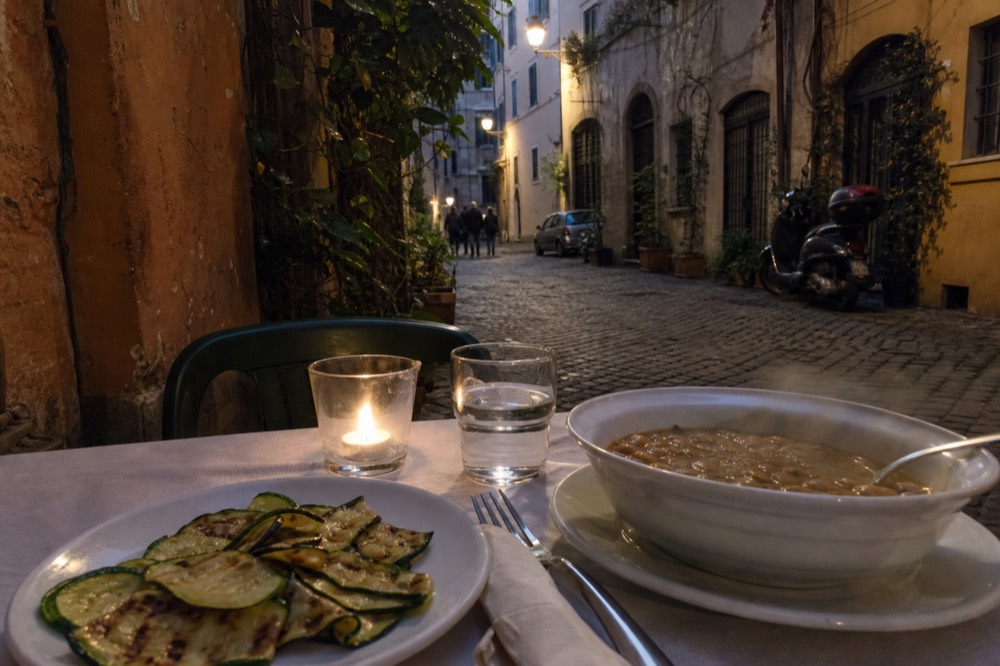
Roman pizza al taglio is quietly one of Europe's best vegan street foods. The classic pizza rossa is tomato, oil and salt on bread, no dairy, and it is what Roman children eat after school. Carciofi alla romana, artichokes braised with garlic, mint and oil, are a protected-season vegetable dish: the Carciofo Romanesco del Lazio PGI harvest starts in January and can run into May, so winter and spring visitors get the real thing.
| Dish | Status as served | Notes for plant-based eaters |
|---|---|---|
| Pizza rossa | Vegan as standard | Tomato, oil and salt on focaccia-style bread |
| Carciofi alla romana | Vegan as standard | Braised with garlic, Roman mint and olive oil |
| Puntarelle | Usually not vegan | The dressing traditionally contains anchovy, ask for it without |
| Fritti di verdura | Usually vegan | Fried courgette flowers and vegetable fritters, check the batter |
| Cacio e pepe | Vegetarian only | Pecorino romano is the whole point of the dish |
| Supplì al telefono | Vegetarian only | Rice croquette with mozzarella, sometimes meat ragù inside |
| Zuppa di ceci o lenticchie | Usually vegan | Chickpea and lentil soups, confirm no pork in the base |
The one dish that fools everyone is puntarelle, the crunchy chicory shoot salad that is Rome's signature winter vegetable. It looks entirely plant-based, but the traditional dressing is anchovy, garlic and oil. Asking for it "senza acciughe" usually works, and the dish is worth the ask.
If you want a walk that does this filtering for you, three options cover the space: a dedicated vegan street food walk, a general street food tour where a vegetarian can eat almost everything, and a pasta class where the dough itself is often vegan.
A few practical habits will save you most of the guesswork. At a pizza al taglio counter, point at what you want rather than assuming, since display cases often mix plain and cheese-topped pieces on the same tray. For the fritti, ask whether the batter contains egg or dairy before ordering, because recipes vary from shop to shop. With the legume soups, the single question that matters is whether the base was made with pork, and staff will normally know without checking. The same phrase that works for puntarelle, "senza acciughe," can be reused elsewhere, and "senza formaggio" covers the cheese question on pizza bianca.
Timing matters for the artichokes. Because the Carciofo Romanesco del Lazio harvest runs from January into May, a visit outside that window means the dish may be absent from menus or made from a different preparation, so it is worth checking what is actually in season before setting expectations.
What does a vegan food tour in Rome actually include?
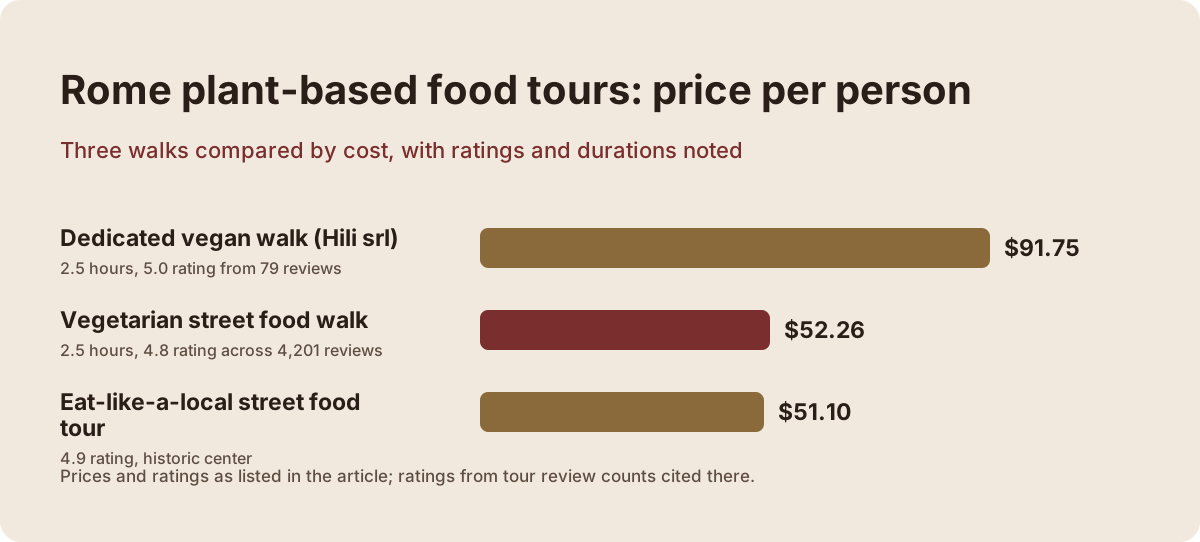
The dedicated vegan walk, run by operator Hili srl, costs $91.75 per person, runs 2.5 hours and holds a 5.0 rating from 79 reviews, meeting by the stairs of Sant'Andrea della Valle. Stops are planned entirely around plant-based tastings, so nothing on the route needs to be declined or adapted, which is the main argument for booking it over a general food tour.
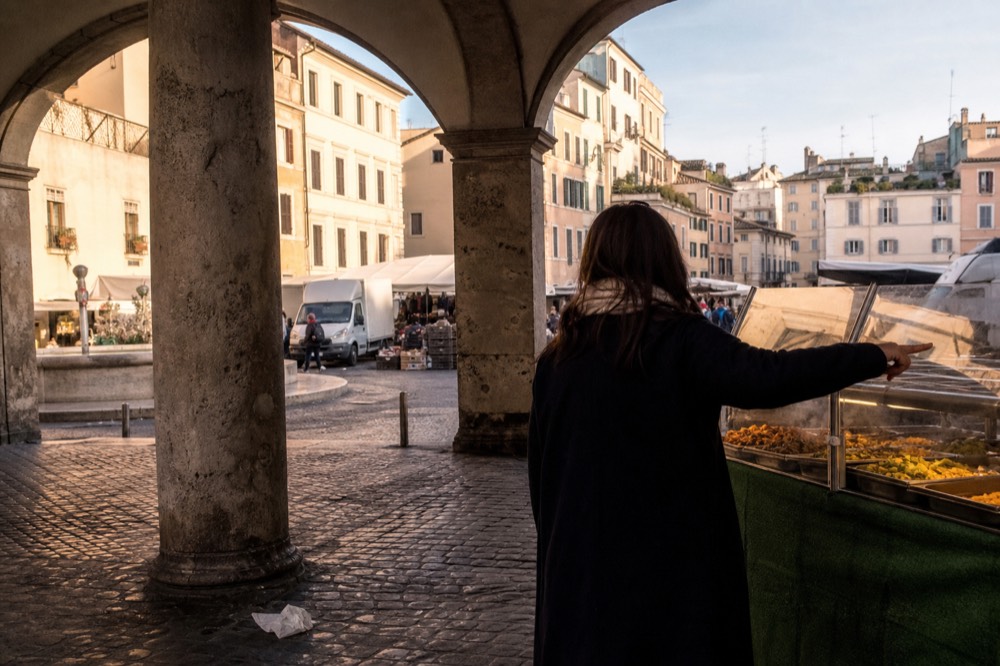
The difference between a vegan tour and a standard one is not just the food, it is the absence of negotiation. On a general walk, a vegan guest watches the group eat supplì and cured meats while nibbling the one vegan-safe sample. On a dedicated walk, every stop is chosen in advance, from pizza al taglio counters to gelaterie that carry fruit-based, dairy-free flavors.
A vegetarian has an easier calculation. The 2.5-hour street food walk with a local guide, from $52.26 per person with a 4.8 rating across 4,201 reviews, meets under the Giordano Bruno statue in Campo de' Fiori and covers the historic center. Most of its tastings are vegetarian-safe as served, though a strict vegan should message the operator before booking to confirm what can be substituted on the day.
The trade-off is honest: the vegan tour costs more per hour and has a smaller review base, while the general tour is cheaper and better reviewed but needs advance notice for plant-based swaps. Neither is a wrong choice, they are different bets on how much you want to manage yourself. A third option sits between them: the eat-like-a-local street food tour of the historic center, from $51.10 per person with a 4.9 rating from 1,331 reviews, meets by the fountain in Piazza di S. Simeone and works well for vegetarians who want a second route through the same territory.
Which Roman dishes have to be replaced or adapted?
The four classic pastas are the problem zone: carbonara, gricia and amatriciana all rely on cured pork, and cacio e pepe on pecorino, so a vegan replaces the whole category rather than adapting it. The Amatriciana Tradizionale TSG specification even fixes the sauce at 18 to 30 percent guanciale, so a vegan version is by definition a different dish, however good it is.
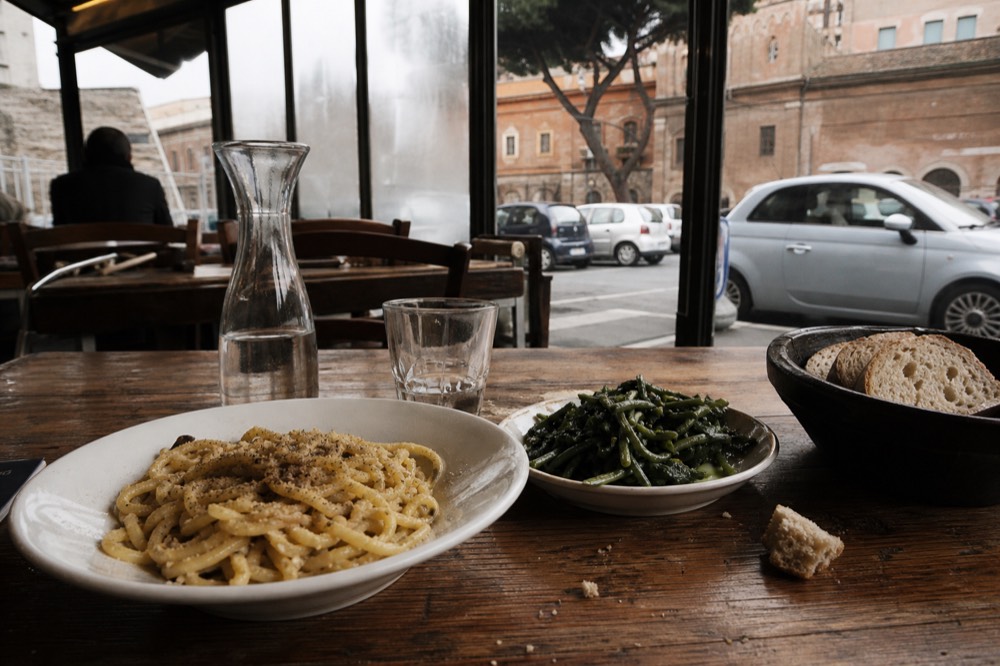
This is where honesty matters more than enthusiasm. Some guides will tell you a "vegan cacio e pepe" exists in Rome. What exists is pasta with oil, pepper and sometimes a cheese substitute, and it can be genuinely good, but it is not the Roman dish. The same applies to carbonara: the traditional dish has no cream and no bacon, but it does have egg and guanciale, and no plant-based version preserves it.
| Classic dish | Blocking ingredient | What to order instead |
|---|---|---|
| Cacio e pepe | Pecorino romano | Pasta e ceci, the chickpea and pasta soup, usually vegan |
| Carbonara | Egg and guanciale | Zuppa di farro or a vegetable fritto misto |
| Gricia | Guanciale and pecorino | Puntarelle without anchovy, in season |
| Amatriciana | Guanciale, TSG-specified | Marinara-style tomato dishes, pizza rossa |
| Carciofi alla giudia | Fried in oil, sometimes finished with fat | Ask whether the fry is oil-only, many are |
| Supplì | Mozzarella, sometimes ragù | Filetti di baccalà is not vegan, but fried vegetables usually are |
Vegetarians lose almost nothing. Gricia without the pork is essentially cacio e pepe, and cacio e pepe itself is already vegetarian. The Jewish quarter's carciofi alla giudia, the deep-fried whole artichoke, is vegetarian-friendly when fried in plain oil, which is the traditional method, though some kitchens finish it differently, so ask.
Where should vegans shop: which markets work best?
Mercato di Testaccio and the Nuovo Mercato Esquilino are the two best markets for plant-based shopping, with the Trastevere market at Piazza San Cosimato a strong third. Testaccio publishes hours of roughly 7:00 to 15:30 Monday to Saturday and now opens Friday evenings until 22:00, while Esquilino is the city's most international market, with spice, grain and legume stalls that suit vegan cooking.
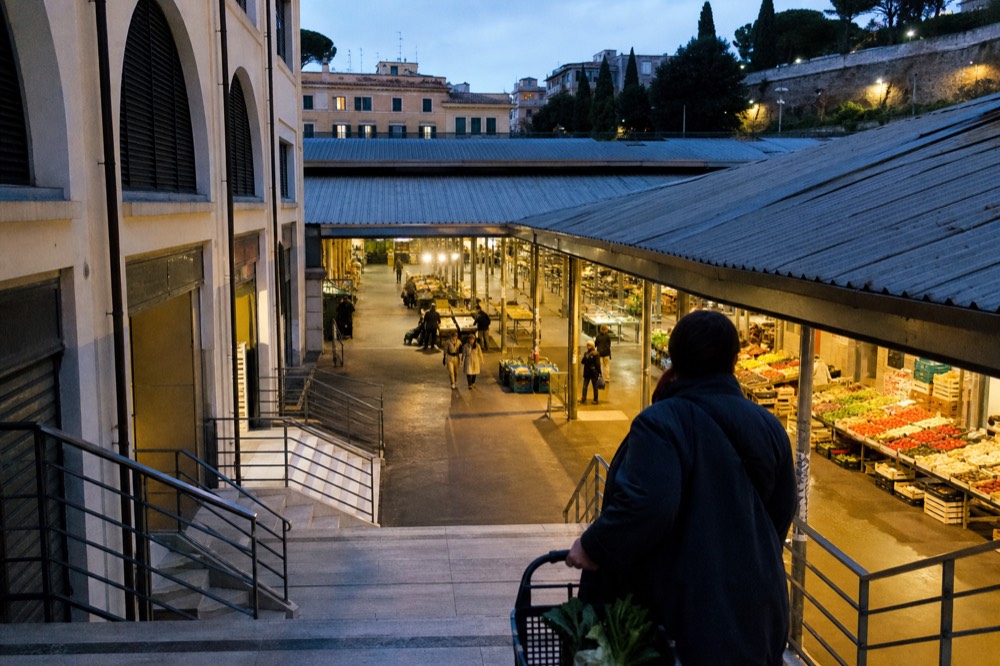
Testaccio is the food-lover's market: around 103 stalls, traditional greengrocers next to street food and vegan stands, and an underground ancient Roman warehouse beneath it, though visits to the archaeological area are currently suspended for refurbishment, so do not plan around them. The market's own site publishes its hours, and the Friday late opening gives evening-arrival travellers a chance to shop.
Esquilino, split across two former barracks buildings, is where Rome's immigrant communities shop, and its food half carries 128 food stalls with Chinese, Indian, halal, Bengali and Senegalese products alongside Italian produce. For a vegan cook, the spice and legume selection is unmatched in the city center.
A street food walk that starts in Campo de' Fiori gives you the market-square atmosphere in a shorter format, and it pairs well with a self-guided market morning.
For a self-guided day, the official Roma Capitale markets page lists all 70 of the city's rionali markets, 30 covered and 40 open-air, per the city's tourism portal. The Trastevere market at Piazza San Cosimato runs every morning except Sunday and its stalls carry seasonal local produce including puntarelle, artichokes and broad beans, alongside cheeses and fish a vegan will simply walk past.
Can vegans take a Roman cooking class?
Yes, and it is one of the best plant-based bookings in the city, because traditional Roman fresh pasta is often made with just flour and water. The pasta making class near the Pantheon costs $68.52 per person, runs 3 hours and holds a 4.9 rating from 3,493 reviews, and while its standard menu includes cheese-based sauces, the flour-and-water dough itself is vegan at the base.
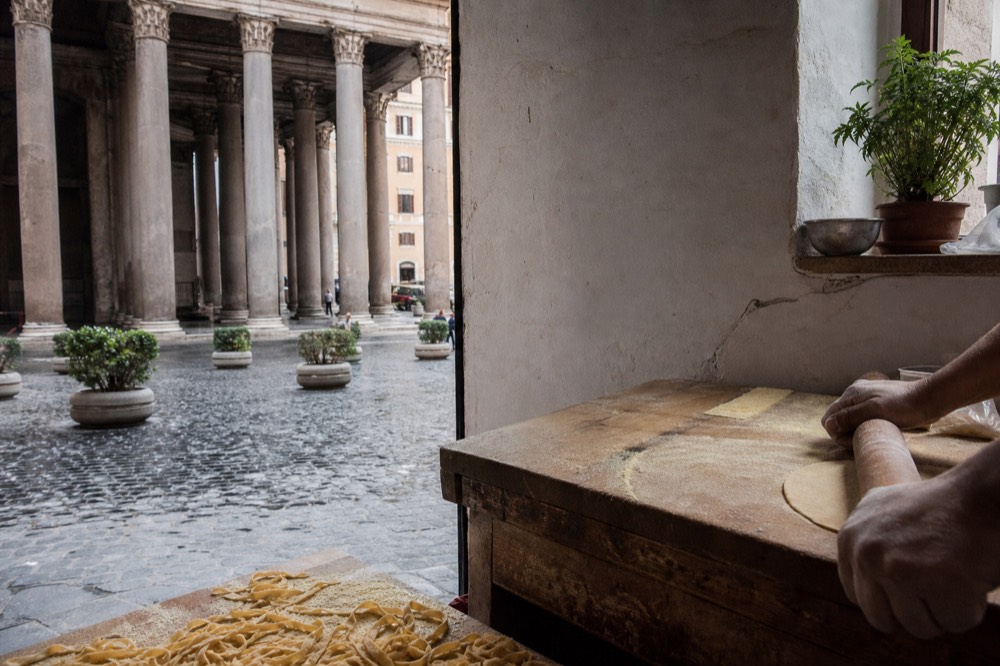
The key fact is that much of Italy's fresh pasta, especially the Roman shapes like tonnarelli used for cacio e pepe, is traditionally eggless. That means the hands-on part of a pasta class is fully vegan-compatible; only the sauce and the dessert need attention. Message the operator when booking and most schools will adapt, within the limits of what a class built around pecorino can honestly do.
| Class | Price | Length | Rating | Vegan notes |
|---|---|---|---|---|
| Pasta making near the Pantheon | $68.52 per person | 3 hours | 4.9 from 3,493 reviews | Eggless dough possible, sauces need swapping |
| Pizza and gelato, small group | $117.13 per group, varies by size | 2.5 hours | 4.9 from 339 reviews | Pizza dough vegan, toppings adaptable |
| Family pasta and tiramisu | $60.39 per person | 3 hours | 4.9 from 263 reviews | Family format, ask about plant-based dessert |
| Home cooking, three Roman pastas | $93.47 per group, varies by size | 3 hours | 4.9 from 106 reviews | Menu is the four classics, least adaptable |
If you are weighing the cost against a guided walk, the average advertised price of Rome cooking classes runs far higher than these listed options, so the classes above sit at the accessible end of the market. Our breakdown of average cooking class costs in Rome gives the fuller picture.
For a deeper comparison of class formats, the guide to cooking classes in Rome covers family options, market-to-table formats and what each operator actually teaches.
What about the gluten-free and vegan crossover?
Rome handles the double restriction better than most cities because the demand is measurable: the health ministry counts 279,512 diagnosed coeliacs in Italy, 27,883 of them in Lazio, and the national celiac association accredits over 4,000 venues for eating out. A dish that is both vegan and gluten-free, like grilled vegetables, legume soups and most carciofi preparations, is easy to find, but vegan gluten-free pasta needs a specific request.
The official picture comes from the health ministry's annual celiac disease report to Parliament, which tracks both diagnoses and the state support system, per the Ministry of Health publication. Rome's restaurant sector has responded: the Prati district has a fully gluten-free and lactose-free restaurant that marked two years of operation, and many market stalls now label their preparations.
For travellers managing both restrictions, the practical advice is to separate the two problems. Pizza rossa is vegan but not gluten-free; gluten-free pasta is widely available but usually served with non-vegan sauces. The intersection, a gluten-free pasta with tomato and vegetables, exists but should be requested in advance rather than assumed. Our gluten-free food tours guide covers the dedicated celiac-safe options in more depth.
How much should a vegan food experience in Rome cost?
Plant-based travellers can spend as little as $51.10 on a 2.5-hour street food walk or as much as $128.96 per group on a market-and-pasta experience, with the dedicated vegan tour at $91.75 per person in the middle. Cooking classes run from $60.39 to $93.47 depending on format, and self-guided market eating costs almost nothing beyond the produce itself.
| Experience | Price | Length | Best for |
|---|---|---|---|
| Street food walk, historic center | $52.26 per person | 2.5 hours | Vegetarians, tight budgets |
| Eat like a local street food tour | $51.10 per person | 2.5 hours | Vegetarians wanting a second route |
| Vegan street food walk | $91.75 per person | 2.5 hours | Vegans who want zero negotiation |
| Pasta class near the Pantheon | $68.52 per person | 3 hours | Hands-on cooks, vegan-adaptable dough |
| Testaccio market and pasta tour | $128.96 per group, varies by size | 3.5 hours | Groups combining market and meal |
Two budget notes worth knowing. Lazio law prohibits a separate coperto charge in restaurants, and any service charge must be shown on the price list before you order, so a plant-based meal in Rome should not carry surprise cover fees. And the city's tourist accommodation tax, charged per person per night and capped at 10 consecutive nights, is collected by the hotel or host rather than included in an online booking price, which matters when comparing total trip costs against tour prices.
For street-level self-guided eating, the Rome street food guide maps the bakery and pizza al taglio stops that make up the backbone of a cheap vegan day.
These are the questions plant-based travellers ask most before booking: whether Rome itself is workable, which dishes arrive vegan without asking, whether a dedicated vegan walk exists, and whether the classic cooking classes can be adapted. The short answers are yes, more than you would expect, yes at $91.75 per person, and usually yes with advance notice.
Common questions about vegan and vegetarian food tours in Rome
Is Rome good for vegans?
Yes, better than its reputation. Roman everyday food includes pizza rossa, braised artichokes, vegetable fritters and legume soups that are vegan as standard, and the city now has dedicated vegan venues including a full vegan minimarket. The four classic pastas are the main obstacle and need replacing rather than adapting.
What Roman dishes are already vegan?
Pizza rossa, carciofi alla romana, most vegetable fritters and the chickpea and lentil soups are vegan as typically made. Puntarelle looks vegan but its traditional dressing contains anchovy, so ask for it without. Always confirm the fry oil on fried items.
Is there a dedicated vegan food tour in Rome?
Yes. The vegan street food tour runs 2.5 hours from $91.75 per person with a 5.0 rating from 79 reviews, meeting by the stairs of Sant'Andrea della Valle. Every stop is planned around plant-based tastings, so nothing on the route needs to be declined.
Can vegetarians take a normal Rome food tour?
Almost always. Vegetarians can eat the majority of standard tour tastings, including supplì, cacio e pepe and most pizza stops. Book any general tour with a message noting the diet, and check the live listing's dietary notes before paying.
Can you make vegan pasta in a Roman cooking class?
Often yes, because traditional Roman fresh pasta shapes like tonnarelli are made with just flour and water. The dough work is fully vegan-compatible, but sauces and desserts need advance arrangement with the operator, so request it when booking rather than on the day.
Is cacio e pepe vegetarian or vegan?
It is vegetarian but not vegan. The dish is pasta, pecorino romano and black pepper, and the cheese is the entire sauce. Vegan versions exist in Rome but they are adaptations, not the traditional dish.