What is the average cost for cooking classes in Rome?
Rome cooking class prices explained: average advertised cost, price bands by class type, and what the price actually covers, from market visits to wine and the meal you cook.
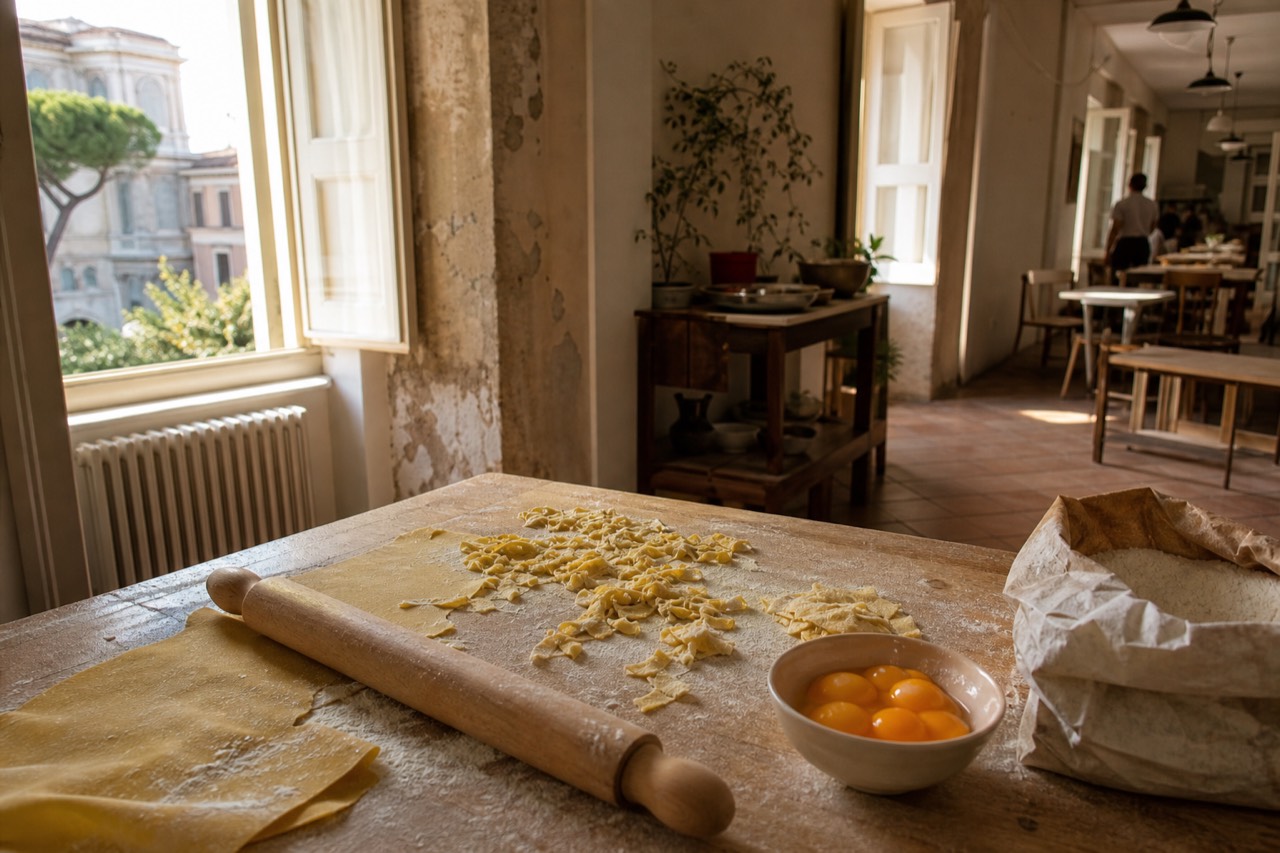
Rome has quietly become one of the most expensive cities in Italy to take a cooking class, and one of the most crowded. The city recorded 22.9 million tourist arrivals in 2025, and a growing share of those visitors now want to roll pasta dough rather than just eat the results. That demand has pushed advertised prices upward, but the spread between the cheapest and most expensive options is wide enough that knowing the price bands saves real money. This site, Rome Food Tours, tracks the live listings so the numbers below reflect what classes actually charge.
What is the average cost for cooking classes in Rome?
The average advertised price of a cooking class in Rome is $172 per person, based on an analysis of 198 classes listed in 2026. That average is skewed by premium and private formats. Group classes with wine and a full meal cluster between roughly $34 and $128.96 per person, with market-to-table experiences at the top of the band.
That $172 figure comes from a price analysis of the whole Rome cooking class market, and it is worth reading carefully. An average is not a typical price. A handful of private lessons and multi-course experiences priced well above $200 pulls the mean up, while the volume of short group classes priced under $70 pulls it down. Most visitors who book a standard three-hour pasta class with wine pay somewhere between $60 and $70.
The comparison with Florence is instructive. Florence cooking classes average $201 based on 164 classes, noticeably higher than Rome. Rome, in other words, is the cheaper of Italy's two main cooking class cities for comparable formats, even though both have climbed in the years since travel rebounded.
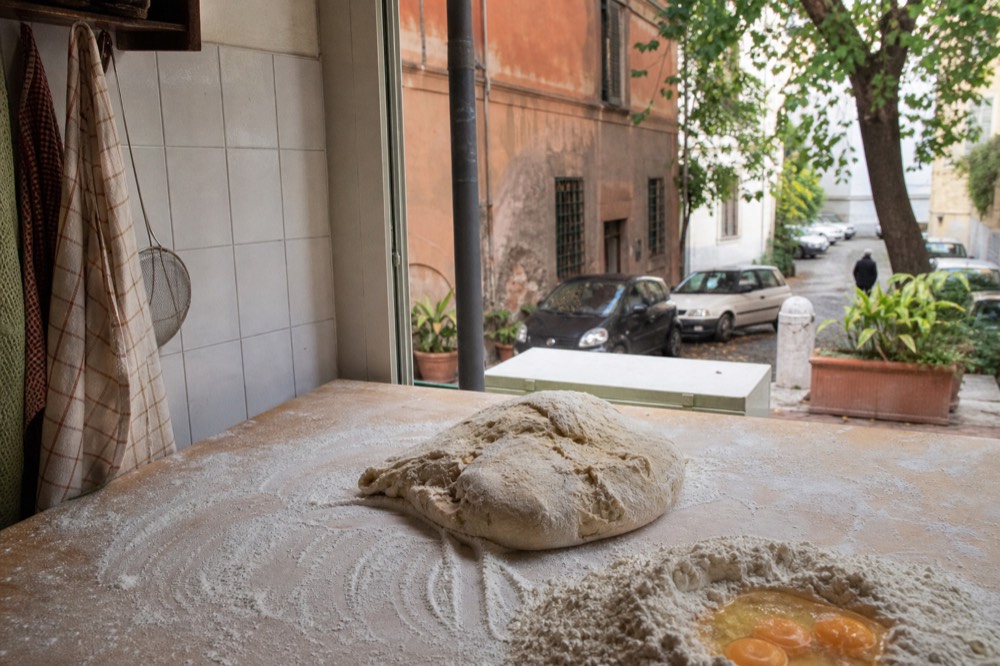
Context matters too. UNESCO inscribed Italian cuisine on its Intangible Cultural Heritage list in December 2025, the first national cuisine to receive the designation, and Italian officials projected up to 8% tourism growth tied partly to food travel. Cooking classes sit right at the center of that wave, which is why prices in the historic center have risen faster than prices in outer neighborhoods like Testaccio.
If the goal is simply to learn cacio e pepe and eat what you make, a group class does that at the low end of the band. If the goal is a full evening with a market visit, wine pairings and a sit-down dinner, expect to pay closer to the average or above it. The rest of this article breaks the market into its real price bands so the choice is a priced one rather than a guess. For a broader look at the formats on offer, the Rome cooking classes overview covers the full landscape.
How much do the main types of Rome cooking classes cost?
Short group classes run from about $34 to $68.52 per person, standard three-hour pasta classes with wine sit between $60 and $70, family formats charge around $60, and market-to-table experiences cost from about $77.81 to $128.96 per person or per group depending on pricing structure. Private lessons sit above all of these bands.
The cheapest entry point is a short pizza, tiramisu or gelato class. A 2.5 to 3 hour pizza and tiramisu session with wine runs $33.68 per person, rated 4.8 across 1,246 reviews. At that price the class covers two dishes, a drink and the meal, which is why it works as a budget pick or a first taste of cooking in Rome.
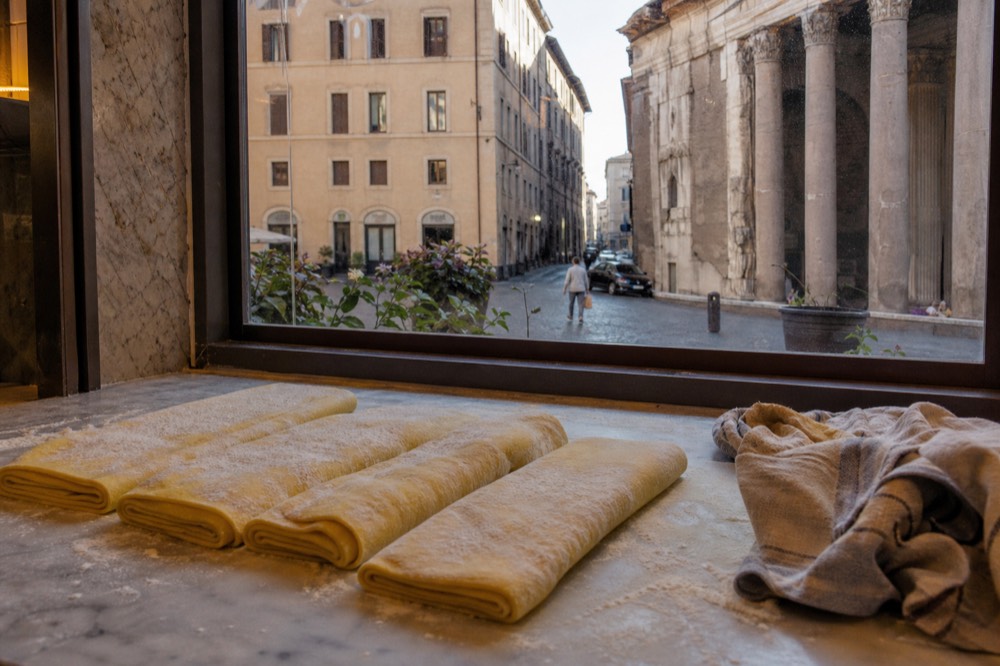
The middle band is where most Rome pasta classes live. A top-rated pasta making class with wine, dessert and limoncello near the Pantheon costs $68.52 per person and holds a 4.9 rating from 3,493 reviews. A fresh pasta class with wine and gelato, run by a well-established operator, costs $63.87 per person with a 4.9 rating from 928 reviews. These are the formats most visitors picture when they imagine a Rome cooking class: three hours, one or two pasta shapes, wine with the meal.
Family classes price similarly. A family-friendly pasta and tiramisu class costs $60.39 per person, rated 4.9 from 263 reviews, and a small-group pizza and gelato class for families is priced at $117.13 per group with the price varying by group size. Group pricing, common in the family segment, means the per-person cost falls as the party grows. The family cooking classes in Rome guide covers that segment in detail.
| Class type | Typical price | Length | What the price usually includes |
|---|---|---|---|
| Pizza and tiramisu or gelato class | $33.68 per person | 2.5-3 hours | Pizza dough, tiramisu or gelato, one glass of wine |
| Standard pasta class with wine | $60.39-$68.52 per person | 3 hours | Two pasta shapes, sauce instruction, wine, dessert or limoncello |
| Family pasta and tiramisu class | $60.39 per person | 3 hours | Kid-paced pasta and tiramisu, soft drinks or wine for adults |
| Small-group family pizza class | $117.13 per group | 2.5 hours | Pizza and gelato for the whole party, group pricing |
| Home cooking class, three Roman pastas | $93.47 per group | 3 hours | Three classic pastas in a home setting, group pricing |
| Market-to-table class with market visit | $77.81-$128.96 per person or group | 3.5-4 hours | Guided market shopping, tastings, cooked meal |
The top band belongs to market-to-table formats, which charge more because they bundle a guided market visit, tastings and a cooked meal into one ticket. A Testaccio food tour with a market visit and local tastings costs $77.81 per person, while a longer Testaccio experience with Roman pasta and market tastings is priced at $128.96 per group. A four-hour Roman food tour built around the Trionfale market costs $105.30 per group, again varying by group size.
What does the price of a Rome cooking class actually include?
Most Rome class prices include all ingredients, the equipment and workspace, the meal you cook, and at least one alcoholic drink with the meal. Market-to-table formats add a guided market visit and tastings. What is rarely included is hotel pickup, extra drinks beyond the stated pairing, and sometimes a recipe book or apron to take home.
The inclusions are where two classes at the same headline price can differ sharply. A $68.52 class that includes wine, dessert and limoncello with the meal delivers more than a $68.52 class that charges for drinks separately. Checking the inclusions list on the live listing before booking is the single fastest way to compare value.
Ingredients are essentially always included, and in Rome that matters more than visitors expect. Pecorino Romano, the cheese that anchors cacio e pepe and carbonara, is a protected PDO product with a production season running October to July, and classes that cook the classic Roman pastas use the real thing. The cost of those ingredients is built into the ticket, not added at the counter.
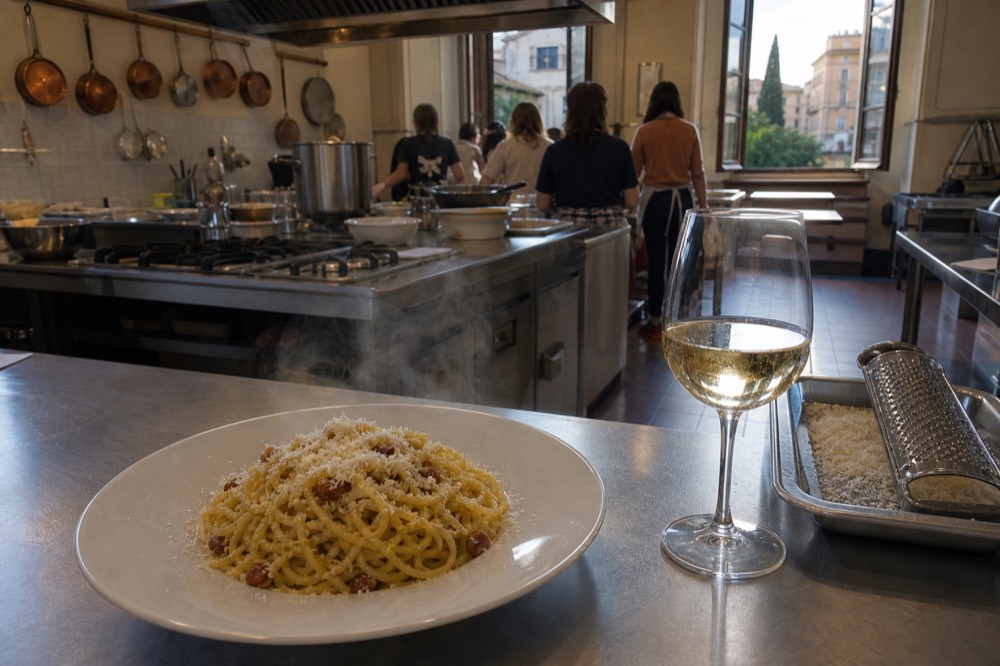
Wine is the inclusion that varies most. Budget classes typically pour one glass with the meal. Mid-band classes increasingly offer wine throughout the session, and a few premium formats advertise free-flowing wine across the whole class, which is one reason their prices sit at the top of the range. If unlimited wine matters, the listing states it; if it does not say so, assume a single pour.
The meal itself is the inclusion people forget to value. A three-hour class ends with a full dinner, which in central Rome would easily cost $30 to $50 per person at a trattoria. Subtract that from the ticket price and the effective cost of the instruction drops noticeably, which is the honest arithmetic behind the claim that a mid-band class is better value than it first looks.
Why are market-to-table classes more expensive than standard classes?
Market-to-table classes cost more because the ticket covers two experiences: a guided visit to a working Rome food market with tastings, and a cooking session built around what was bought there. Prices run from about $77.81 to $128.96 per person or group, against $33.68 to $68.52 for a classroom-only class.
The market visit is not a walk-through. Rome's covered markets are working food economies with their own rhythms, and a guide who knows the stallholders turns a shopping trip into a tasting route. The Trionfale market, one of the largest covered markets in the city with around 270 stalls, sits on the Vatican side of the river and supplies exactly the kind of produce, cured meats and cheeses a Roman cooking class needs. A class that shops there first charges for the guide's time across both halves of the experience.
Testaccio is the other classic base. The Mercato di Testaccio publishes hours of roughly 7am to mid-afternoon Monday to Saturday, and the neighborhood around it was built for the city's former slaughterhouse, which is why Roman offal cooking and the quinto quarto tradition are part of the local food story. Market-to-table classes in Testaccio lean into that identity, teaching the four classic Roman pastas alongside the market's own history.
The Trionfale market food tour illustrates the format's pricing logic: $105.30 per group for a four-hour experience with a perfect 5 rating from 511 reviews, meeting at a cafe on Via Cipro before the market walk. The price reflects the doubled length and the doubled guide time compared with a classroom-only session. Check availability if the market-plus-cooking structure appeals, since the format sells out faster than standard classes.
The same logic applies to the Testaccio market and pasta experience at $128.96 per group, rated 4.9 from 1,760 reviews. Group pricing again means larger parties pay less per head, which is why families often find market-to-table formats better value than they appear at first glance.
Is a private cooking class in Rome worth the higher price?
Private classes in Rome run well above the group bands, often starting around $90 to $100 per group and climbing toward $200 or more per person for premium private formats. They are worth it for families with young children, dietary restrictions, or travelers who want a fixed menu, and poor value for solo travelers who enjoy a group table.
The group pricing model used by several Rome operators makes semi-private options unusually affordable. A home cooking class in Testaccio teaching cacio e pepe, amatriciana and carbonara costs $93.47 per group, rated 4.9 from 106 reviews. For a couple splitting that ticket, the per-person cost lands below many standard group classes, and the setting is a home kitchen rather than a commercial school.
What private and small-group formats genuinely add is control. The menu can be adjusted, the pace can slow for children, and dietary needs get more attention than a twelve-person class can give. Rome has a strong infrastructure for this: the vegan street food walk run by a local operator holds a perfect 5 rating from 79 reviews, and gluten-free travelers benefit from a national accreditation network of more than 4,200 venues trained in coeliac-safe food handling. Asking a class operator about gluten-free or vegan menus in advance is normal practice in Rome, not a special request.
The premium end of the private market is where the $172 average gets pulled upward. Multi-course private lessons with wine pairings, chef-led market shopping and sit-down service justify their prices for travelers treating the class as the evening's main event. For everyone else, a well-rated group class at $60 to $70 delivers the same skills and the same meal.
The fresh pasta class with wine and gelato, at $63.87 per person with a 4.9 rating from 928 reviews, is a good benchmark for what the mid-band buys: a three-hour session, fresh pasta from scratch, wine with the meal and gelato to finish. Travelers comparing it against a private quote can use that ticket as the yardstick for whether the private premium is worth paying.
How can you pay less for a cooking class in Rome?
Book a short group class in a non-central neighborhood, choose group-priced formats if traveling as a party, and avoid weekend evening slots, which carry the heaviest demand. Short classes from $33.68 and group-priced family formats from $60.39 per person are the two cheapest reliable routes into a Rome cooking class.
Location is the biggest lever. Classes in the historic center near the Pantheon and Piazza Navona price for the address. The same quality of teaching in Testaccio or Trastevere often costs less, and the neighborhoods themselves are worth the tram ride. Testaccio in particular has built a food education identity around its market and its slaughterhouse history, and operators there compete on value as well as ratings.
Timing is the second lever. Rome recorded nearly 2 million overnight stays in August 2026 alone, up 2.25% on the prior year, and summer evenings are the most competitive slots in the week. A midweek morning class faces less demand, and morning formats sometimes price below their evening equivalents for identical content.
Format choice is the third lever. Group-priced classes, where the ticket covers the whole party, reward larger groups. A family of four splitting a $117.13 group ticket pays under $30 per head, which undercuts even the budget band. Solo travelers should do the opposite arithmetic and stick to per-person pricing.
One warning about the cheapest listings. A price far below the $33.68 floor usually means a demonstration rather than hands-on cooking, or a class without wine and without a full meal. The listing states whether you cook or watch; read that line before assuming a bargain. The operators in this article's price tables all list hands-on formats with the meal included.
Should you book a class, a market tour, or both?
Book a standard cooking class if learning the pasta technique is the goal, a market tour if tasting Rome's ingredients matters more than cooking them, and a market-to-table experience if the budget allows both. Market-to-table formats from $77.81 to $128.96 bundle the two into one ticket and usually cost less than booking separately.
The decision comes down to what the trip is missing. A visitor eating every meal in trattorias already tastes the results of Roman cooking; a class adds the how. A visitor who has never walked a covered market misses the raw side of the cuisine, the puntarelle and artichokes and whole wheels of pecorino, and a market tour restores it.
Rome's market scene makes the combined format easy. The city runs 70 neighborhood markets, 30 covered and 40 open-air, and the food markets a visitor can actually enjoy are concentrated in Testaccio, Trastevere, Monti, Prati and the Esquilino. A combined experience that shops one of them and then cooks the haul is the fullest version of a Rome food day, and the price band reflects that.
For travelers weighing the decision against the whole question of whether a food experience earns its ticket price, the is a food tour worth it in Rome analysis walks through the same value arithmetic from the tasting side. The cost breakdown in this article is the honest basis for the class side: the meal, the wine and the ingredients are real value inside the ticket, and the instruction is what remains after subtracting them. A mid-band class leaves roughly the cost of a restaurant dinner attached to three hours of teaching.
The same reasoning applies to the market side. A guided market visit with tastings replaces a lunch, and the combined formats price the two halves against each other rather than stacking two full tickets. That is why the market-to-table band, despite sitting at the top of the price range, is often the best value per hour of the whole Rome cooking class market.
For most travelers the practical answer is simple: pick the format whose inclusions match the evening you actually want, then compare the two or three best-rated options inside that band rather than across bands. A $33.68 pizza class and a $128.96 market-to-table experience are not competitors, they are different products, and the price alone tells you which is which.
Rome cooking classes average $172 as advertised, based on 198 classes analyzed in 2026, but the typical group class costs far less. Short pizza and tiramisu formats start at $33.68 per person, standard pasta classes with wine run $60.39 to $68.52, and market-to-table experiences reach $128.96. The answers below cover the questions buyers ask most.
Common questions about cooking class costs in Rome
What is the average cost for cooking classes in Rome?
The average advertised price is $172 per person, based on an analysis of 198 classes in 2026. That average is pulled up by private and premium formats. Typical group classes with wine and a meal cluster between roughly $33.68 and $128.96 per person.
What is the cheapest cooking class in Rome?
Short group classes start at $33.68 per person, typically a 2.5 to 3 hour pizza and tiramisu or gelato session with a glass of wine. Family formats with group pricing can work out cheaper per person for larger parties.
Do Rome cooking class prices include the meal?
Yes. Hands-on class prices essentially always include the ingredients, the equipment and the full meal you cook, plus at least one drink. Check the inclusions list on the live listing, since drink quantities and extras like aprons or recipe books vary.
Are market-to-table classes worth the higher price?
Usually, if the market interests you. The ticket covers a guided market visit with tastings plus the cooking session and meal, which replaces both a lunch and a class. Prices run from about $77.81 to $128.96 per person or group.
Is Rome more expensive than Florence for cooking classes?
No. Florence classes average $201 based on 164 classes analyzed, against Rome's $172 average from 198 classes. For comparable formats, Rome is the cheaper of the two cities.
How far in advance should you book a Rome cooking class?
Book one to two weeks ahead for standard group classes, and earlier for summer weekends and market-to-table formats, which have smaller capacities. Evening slots in peak season fill fastest given Rome's record visitor volumes.