Is a food tour worth it in Rome?
An honest cost breakdown of Rome food tours: what the tastings would cost bought separately, what a guide actually adds, and who should save the money instead.
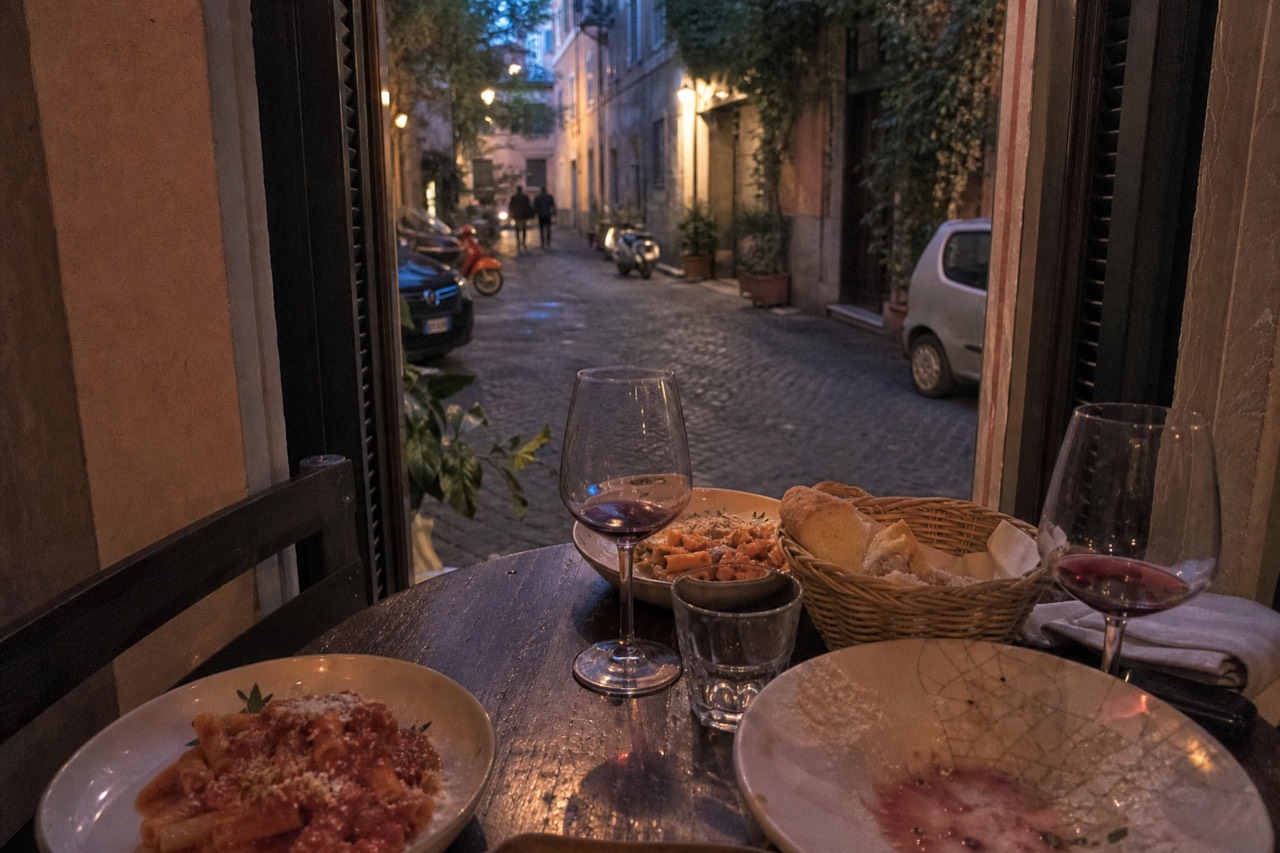
Is a food tour worth it in Rome?
Yes, for most first-time visitors a Rome food tour earns its price. The cheapest walks start around $52 per person and a good three-hour tour replaces a full meal while decoding dishes most visitors order badly. The value is highest in your first two days in the city; after that, a market visit or a cooking class usually beats a second walking tour.
Rome recorded 22.9 million tourist arrivals in 2025, according to the city's own statistical yearbook, and an enormous share of those visitors eat at least one meal in a restaurant chosen by algorithm rather than by knowledge. That is the gap a food tour fills. It is not a luxury product dressed up as sightseeing. At its best it is a meal with a translator attached, someone who can tell you why the carbonara in front of you has no cream in it, why the artichoke season starts in January, and which counter at the market sells the porchetta worth queuing for.
The honest answer also depends on what you would otherwise do with the money and the evening. A traveller who would happily wander into a random trattoria and order whatever looks familiar gets more out of a tour than a traveller who reads menus in advance and already knows the difference between gricia and amatriciana. And the format matters as much as the price: a street food walk, a sit-down tasting walk and a hands-on cooking class deliver completely different value for the same evening of your trip.
If you are leaning toward booking something on your first or second night, these three options cover the main formats and price points in the city.
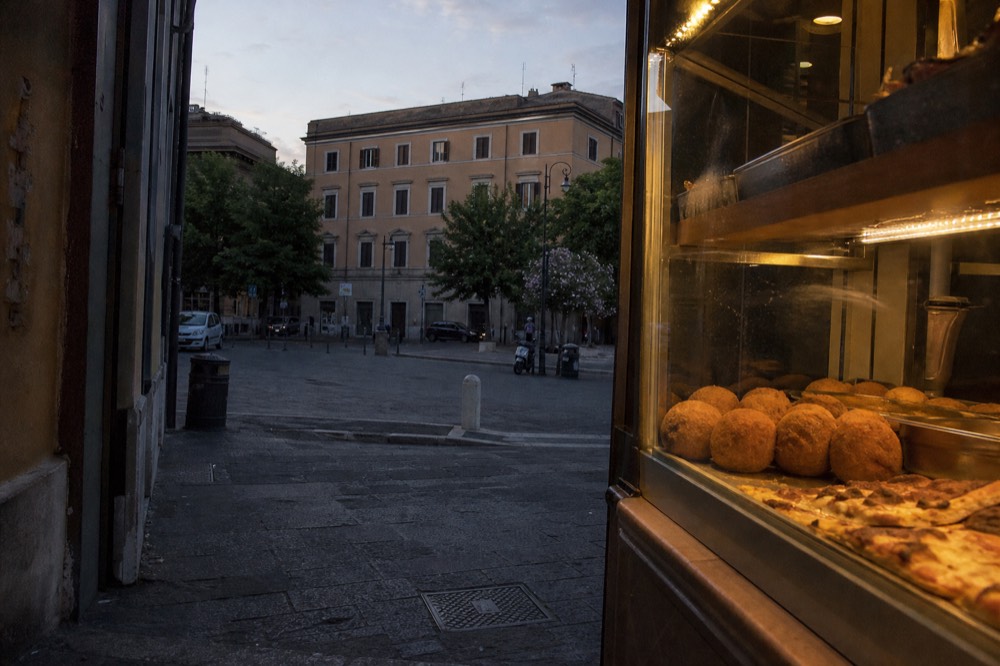
One more framing point before the maths. In December 2025 UNESCO inscribed Italian cuisine on its Intangible Cultural Heritage list, the first time an entire national cuisine received the designation, as Reuters reported at the time. That does not change the taste of your spaghetti, but it does capture why food is not a side activity in this city. Rome is one of the few capitals where the local government's tourism portal maintains pages on trippa alla romana and the quinto quarto. A tour that explains that context is doing something a guidebook paragraph cannot, and it is the reason Rome Food Tours exists as a site at all: the food here rewards explanation, not just consumption.
Is it worth it to do a food tour in Rome?
It is worth it if one honest condition holds: the tour replaces a meal you would buy anyway. A 20-plus-tasting walk at $120.78 per person undercuts an equivalent dinner plus the risk of ordering badly, and a $68.52 pasta class feeds you the dish you just made. If you would have eaten a cheap slice and a gelato anyway, the tour is entertainment, not savings.
Run the numbers and the case is clearer than most people expect. Take the Trastevere 20+ tastings tour at $120.78 per person, which runs four hours with free-flowing wine. To replicate even half of that on your own you would need a sit-down dinner with wine in a decent Trastevere trattoria, a stop at a supplì counter, a gelato, and the willingness to walk into four unfamiliar places without a recommendation. A medium gelato cone in central Rome cost up to 4 euros in July 2025 per local reporting, and an espresso at the counter averaged 1.35 euros in Rome in December 2025 according to ISTAT data in the FIPE restaurant sector report. Add a pasta dish, a secondo, a carafe of wine and cover for the ordering mistakes, and the standalone evening lands in the same range as the tour, minus the guide.
The same logic works at the budget end. The 2.5-hour street food walk at $52.26 per person includes several tastings across the historic center. Bought separately, those items, a supplì, a slice of pizza al taglio, a small cheese and cured meat board, would plausibly run 25 to 35 euros if you found the right counters on your own, which in your first 24 hours in the city you probably would not. The tour is partly buying the finding.
| Item you would buy anyway | Typical standalone cost in central Rome | What the tour version adds |
|---|---|---|
| Espresso at the counter | 1.35 euros average in December 2025 | The guide orders for you and explains the standing-bar custom |
| Medium gelato cone | Up to 4 euros in July 2025 | A stop at a gelateria chosen for ingredients, not location |
| Pizza al taglio slice | A few euros, varies by weight | A pizzeria known for the Roman style rather than foot traffic |
| Dinner with wine in Trastevere | Highly variable, check the room | A multi-stop route that avoids the tourist-menu traps |
| Cooking class equivalent | Ingredients plus a rented kitchen you do not have | Not reproducible on your own at any price |
Notice what is not in that table: the guide's knowledge. That part is the genuinely unbundlable component, and it is what the next section prices.
There is a second, less obvious saving: ordering risk. FIPE reported average restaurant services inflation of 3.2 percent nationally in 2025, and the tourist-oriented menus near the major sights price accordingly. A bad dinner in the wrong piazza costs 40 to 60 euros per person and delivers nothing but regret. A tour distributes that risk across many small stops, where the worst outcome is one underwhelming bite among twenty. If you are still weighing whether the format suits you, the question below on who should skip it is the one to read next.
What does the guide actually add beyond the food?
A good guide buys three things you cannot buy separately: queue-free access to small counters, translation of what a menu actually says, and the stories behind dishes like carbonara and amatriciana that no signboard explains. Since December 2025 Italian cuisine carries UNESCO intangible heritage status, and a guide is the cheapest way to hear why that matters in context.
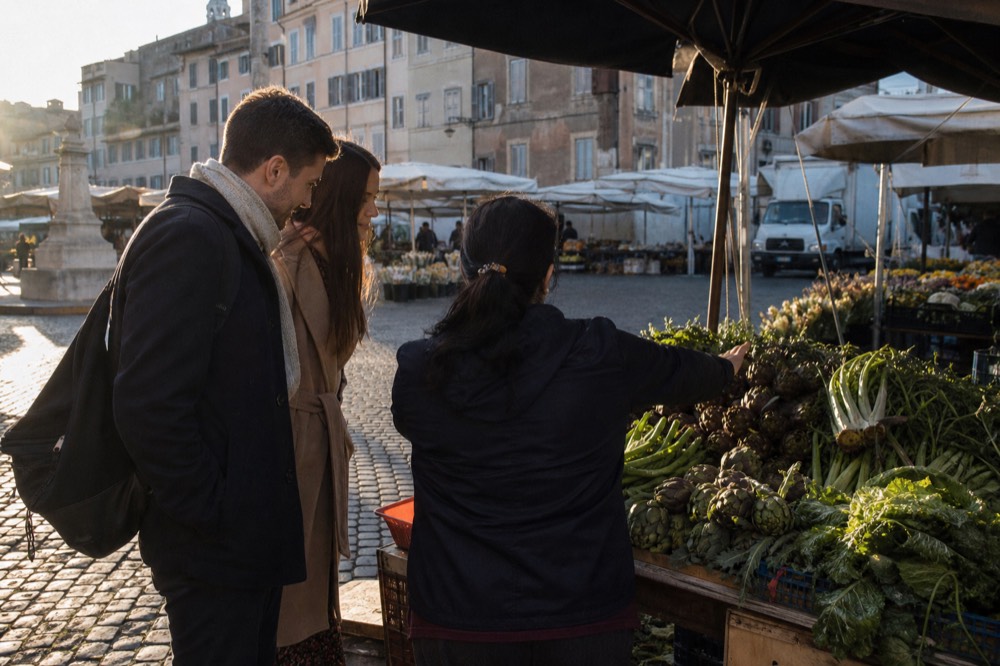
The access part is underrated. The best pizza al taglio counters, the trippa specialists, the tiny salumi shops in the Jewish quarter, all have queues at peak hours and none of them have English menus. A guide who walks in with a group has a relationship with the counter, gets the order right, and moves the group through in the time a solo visitor would spend deciphering the price board. Multiply that by six or eight stops and you have saved the better part of an evening.
The knowledge part is harder to price but easy to illustrate. The amatriciana sauce served in Rome is a registered Traditional Speciality Guaranteed at EU level, and its specification states plainly that the sauce has always been made with cured pork jowl, never bacon or pancetta. Almost no visitor knows that, and plenty of Roman menus are silent on it. A guide who explains the guanciale rule while you taste the dish converts a plate of red pasta into the most memorable thing you ate all week. The same goes for the quinto quarto tradition in Testaccio, the offal cuts the slaughterhouse workers once took as part of their pay, which the city's tourism portal documents directly. Standing in Testaccio and hearing that story beats reading it in a search result.
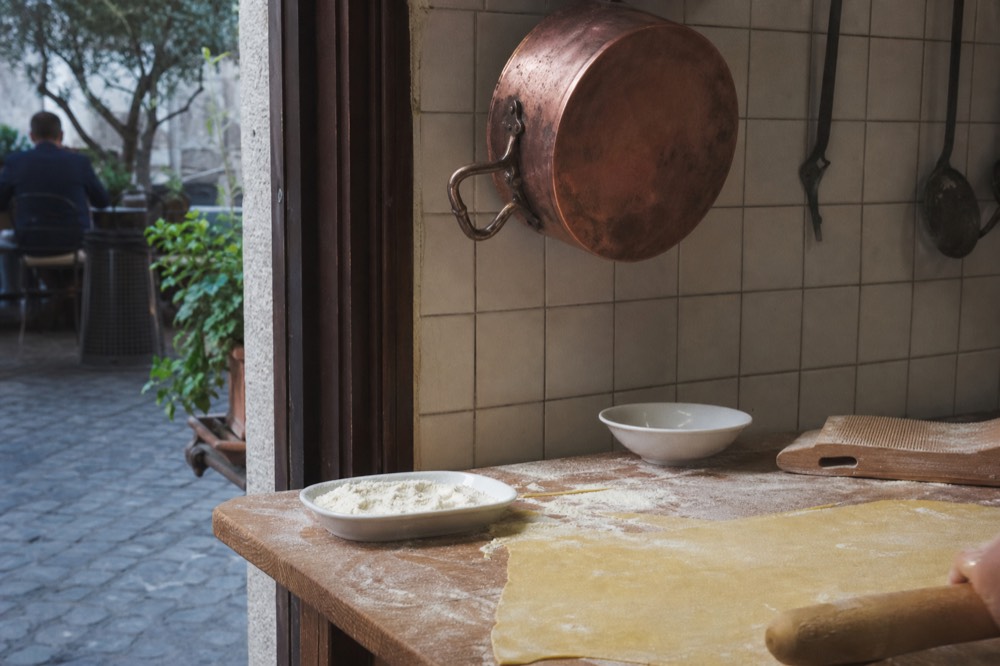
Cooking classes make the guide's value unusually visible, because the guide is the teacher and the food is the lesson. The Pasta Making Class near the Pantheon, run by Pastamania from a cooking school on Via della Gatta, costs $68.52 per person for three hours and includes wine, dessert and limoncello alongside the pasta you make and then eat. It scores 4.9 across 3,493 reviews, and the reason it reviews so well is structural: you leave with a skill, a full stomach and a story, which is more than any walking tour can promise. You can compare it against the Pantheon pasta class listing and Check availability if a class format appeals more than a walk.
A word on credentials, because they matter more than most buyers realize. Italian law requires tourist guides to pass a national abilitation exam and complete at least 50 hours of professional update courses every three years, per the tourism ministry's own guidance. Not every food tour is led by a licensed guide, and food-focused walks occupy a grey zone where the rule is applied unevenly. The practical test is simple: a listing that names the operator, the stops and the guide's role is usually the real thing; a listing that promises only "a local guide" with no operator name deserves a second look.
Who should skip a food tour in Rome?
Skip a food tour if you have more than four days in the city, you already know the four Roman pastas, or you are traveling on a strict daily budget: a self-guided morning at Mercato di Testaccio plus a slice of pizza al taglio costs a fraction of even the cheapest $52 walk. Repeat visitors and long-stay travellers rarely need one at all.
The economics change with time. A tour compresses a week of food discoveries into three hours, which is exactly what a short-trip visitor wants and exactly what a long-stay visitor does not need. If you are in Rome for ten days, you will find the good counters yourself, slowly, and the pleasure of finding them is part of the trip. The tour fee is then paying for acceleration you do not require.
Budget travellers should be equally clear-eyed. The DIY version of a food tour is genuinely good in this city: Mercato di Testaccio opens Monday to Saturday from about 7am to mid-afternoon and mixes traditional stalls with street food counters, and entry costs nothing. A espresso, a slice, a porchetta sandwich and a market wander can be done for under 15 euros if you pick well. What you lose is the interpretation, and only you can decide what that is worth on your budget. If you want the fuller picture of the neighbourhood, the Testaccio food tours guide breaks down what the district's paid options cover and what to do free.
There is also a personality filter. If you hate eating standing up, skip street food walks and book a sit-down tasting tour or a class. If you are a picky eater or traveling with one, a tour built around Roman classics will include things you will not touch, and the per-tasting maths collapses. And if your group is large, check the per-group pricing tours before assuming the per-person ones are cheaper, because several Rome listings are priced per group and the per-head figure drops fast with four or more people.
What Does a Guided Food Walk Cost?
Rome food tours cluster in three price bands: street food walks from $51.10 per person, full dinner-style walks from $75.95 up to $147.89, and cooking classes from $33.68 to $68.52 per seat, with some listings priced per group rather than per person. Group-size pricing is the detail that changes the maths most, so check whether the quoted price is per head or per group before comparing.
The table below covers the main formats on the current roster, with the prices as published on each operator's live listing. Ratings are shown as displayed on the listings themselves.
| Format | Tour | Price as listed | Length | Rating on the listing |
|---|---|---|---|---|
| Street food walk | Street Food Tour with Local Guide | $52.26 per person | 2.5 hours | 4.8 from 4,201 reviews |
| Street food walk | Eat Like a Local, Historic Center | $51.10 per person | 2.5 hours | 4.9 from 1,331 reviews |
| Small-group walk | Small-Group Trastevere with Wine | $78.97 per person | 3 hours | 4.9 from 3,592 reviews |
| Tasting walk | 20+ Tastings, Free-Flowing Wine | $120.78 per person | 4 hours | 4.9 from 1,708 reviews |
| Dinner walk | Gourmet Tour with Barolo Wine | $75.95 per person | 3.5 to 4 hours | 4.9 from 2,676 reviews |
| Luxury walk | Trastevere Luxury, Fine Wine | $147.89 per person | 4 hours | 5 from 3,492 reviews |
| Market tour | Testaccio Market and Pasta | $128.96 per group | 3.5 hours | 4.9 from 1,760 reviews |
| Cooking class | Pasta Making by the Pantheon | $68.52 per person | 3 hours | 4.9 from 3,493 reviews |
Two patterns are worth noticing. First, the per-group listings, like the Testaccio market tour at $128.96 per group and the Trastevere hidden gems dinner at $68.45 per group, can be the cheapest or the most expensive option on the board depending entirely on how many people you split them across. Second, the dinner-equivalent walks cluster tightly around $76 to $121, which is roughly what a good sit-down dinner for one costs in the center anyway, as the earlier maths showed.
For a pure budget entry point, the street food walk is the one to look at first. It is the cheapest listing on the roster, it covers the historic center, and its 2.5-hour length fits neatly before a late Roman dinner if you still want one. It also happens to be a good example of the per-person pricing that makes comparison shopping easy.
One cost that no tour price includes: the city's accommodation tax, which is charged per person per night on top of your lodging and is collected by the hotel or host, not by any tour operator. It is capped at 10 consecutive nights and varies by accommodation category, so it belongs in your daily budget maths but never in the tour price comparison.
How Do You Tell a Good Guided Walk From a Bad One?
A good Rome food tour names its stops in advance, caps the group size, and states exactly how many tastings and drinks are included. A bad one hides behind phrases like "hidden gems" with no count, quotes a price without saying whether it is per person or per group, and schedules an evening district walk before the district comes alive. Read the listing before the reviews.
The single strongest quality signal is specificity. The 15-tastings tour across Trastevere and the Jewish Ghetto tells you the number, the two neighbourhoods and the meeting point on Via dei Baullari. The Trionfale market tour names the market, the starting cafe and the four-hour length. Listings that commit to countable promises have to deliver them; listings built on atmosphere have nothing to fail against.
Group size is the second signal. "Small group" should mean a number, and several Rome operators do publish one. A tasting walk with 20 or more people turns every counter stop into a queue and every explanation into a shout. If a listing does not state the cap, assume the worst and check the reviews for complaints about crowding, which are the most reliable crowd-sourced metric there is.
The third signal is timing against the district. Trastevere only becomes itself after dark, and the anti-malamovida rules that restrict late-night takeaway alcohol in the nightlife zones are a reminder of how lively that gets. A Trastevere tour that starts at 4pm is selling you a quiet piazza at the wrong hour; the twilight and evening versions exist for a reason. If you are choosing a neighbourhood before choosing a tour, the Trastevere food tours guide compares the evening options, and the question of whether the district itself deserves your evening is covered in is Trastevere worth visiting.
Finally, check what the operator says about dietary needs. Rome has a dedicated vegan street food walk and a celiac-aware infrastructure that is among the best in Europe, with over 4,200 accredited gluten-free venues nationwide per the Italian celiac association's network. A good tour asks about restrictions at booking; a bad one discovers your allergy at the second stop.
Is a food tour worth it in Rome compared to a cooking class?
For a one-night visit, a walking tour wins because it covers more ground and more dishes. For a longer trip, a cooking class usually wins on value: the $68.52 Pantheon pasta class or the $63.87 fresh pasta class with wine and gelato both feed you dinner, teach a repeatable skill, and run three hours for less than the big tasting walks. The best answer for most travellers is one of each, on different nights.
The comparison is really about what you keep afterwards. A walking tour leaves you with a mental map of a neighbourhood and a list of places to return to, which is worth a lot on a short trip. A class leaves you with the ability to make cacio e pepe at home, which sounds like a modest souvenir until you actually do it a month later and the whole evening comes back. If you want the deeper comparison of class formats, prices and what each covers, the Rome cooking classes guide lays out the full field, and the shorter version of the same question is in should you take a cooking class in Rome.
Whichever way you lean, book the thing that replaces a meal rather than the thing that schedules around one. That single rule is the honest answer to the money question this article started with, and it is why the three options below, a class, a second class format and a big tasting walk, are the ones worth comparing first.
The short answers below pull together the whole article: the price bands, the worth-it condition, the class-versus-walk comparison and the budget route. Each one restates a question buyers actually ask, and each answer gives the figures from the tour roster so you can make the call without rereading everything above. If your situation is not covered, the who-should-skip section above is the closest match.
Common questions about food tours in Rome
Is a food tour worth it in Rome?
For most first-time visitors, yes. The cheapest walks start around $52 per person and a good tour replaces a full meal while steering you away from tourist-menu traps. The value is highest in your first two days in the city; on longer trips, a market visit or a cooking class usually beats a second walking tour.
Is it worth it to do a food tour in Rome?
It is if the tour replaces a meal you would buy anyway. A 20-plus-tasting walk at $120.78 per person costs about what a decent sit-down dinner with wine costs in the center, minus the risk of ordering badly. If you would have eaten a cheap slice and a gelato anyway, treat the tour as entertainment spending rather than savings.
How much does a food tour in Rome cost?
Street food walks run from $51.10 to $52.26 per person, small-group and dinner walks from $75.95 to $120.78, and luxury walks up to $147.89. Several market and dinner tours are priced per group, from $68.45 to $128.96 per group, so always check whether the quoted price is per person or per group before comparing.
Is a food tour or a cooking class better in Rome?
A walking tour covers more ground and more dishes, so it wins on a short trip. A cooking class feeds you the dish you made and leaves you with a repeatable skill, and the main ones run $63.87 to $68.52 per person for three hours. On a trip of four nights or more, one of each is the best answer.
Can you do a Rome food tour on a budget?
Yes. The cheapest listings are the street food walks at $51.10 and $52.26 per person, and the fully DIY version, a morning at Mercato di Testaccio plus street snacks, costs a fraction of that. You give up the guide's interpretation, but you keep most of the food.