Do you tip at a cooking class?
Tipping at a Rome cooking class is optional, modest and genuinely different from US habits. Here is what Italians actually do, what the law says, and how much is generous without being odd.
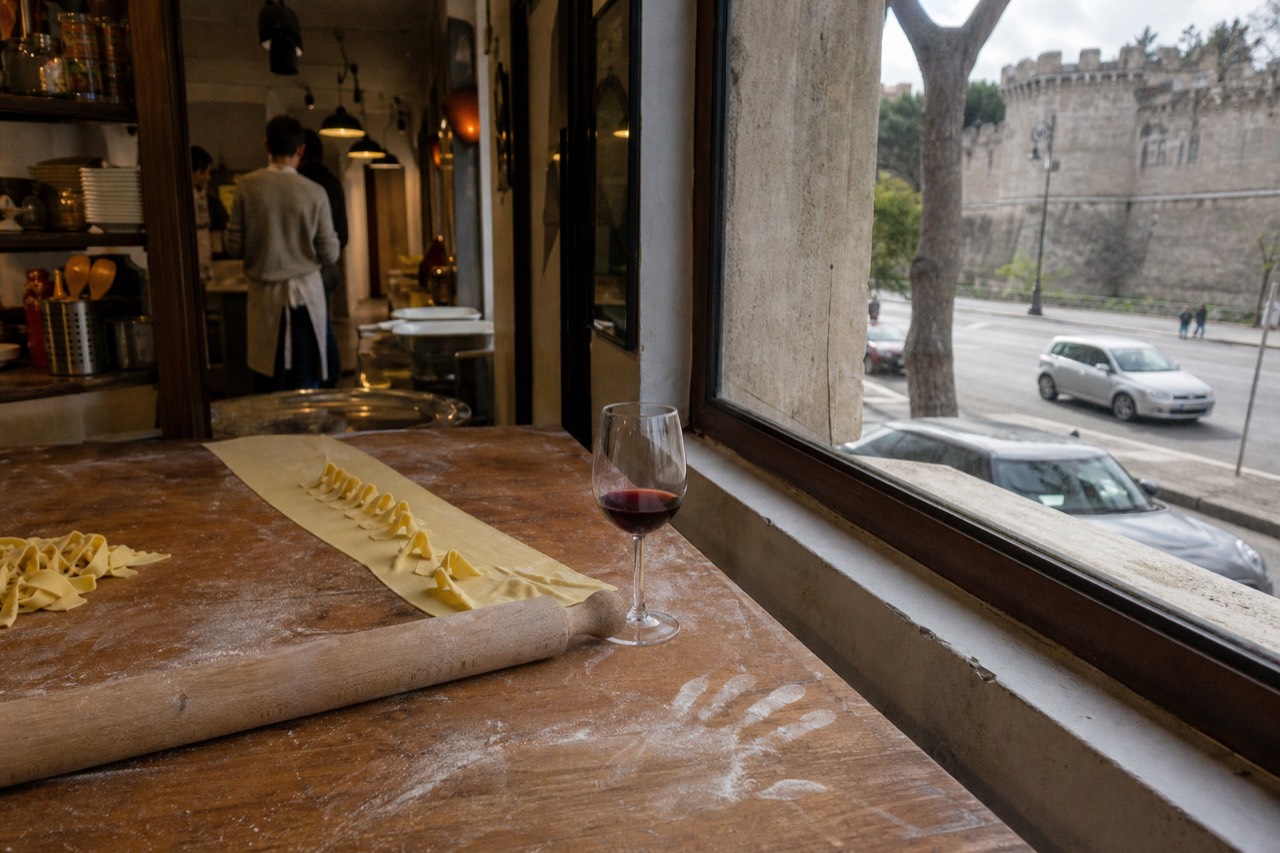
A cooking class in Rome ends the way most of them end: you are sitting at a long table with strangers who no longer feel like strangers, eating the pasta you just rolled by hand, and the chef who has spent three hours teaching you is clearing flour off the counter. Somebody in the group always asks the same quiet question. Do we tip?
The honest answer is that tipping in Italy is not an obligation, it is a gesture, and a cooking class is one of the few places where the gesture genuinely lands well. The chef has spent hours with you, by name, in a small group. That is personal service in a country where personal service is normally rewarded with a round of applause rather than a percentage.
Do you tip at a cooking class?
Yes, you can, and it is appreciated, but it is not expected, and nobody will think less of you if you skip it. Italian service workers earn a full wage and are not dependent on tips the way US servers are, so a tip at a Roman cooking class is a thank-you, not a payroll top-up. The local norm is small: a few euros per person in cash, handed directly to the chef.
That distinction, expected versus appreciated, is the whole ballgame. In the United States a tip is effectively part of the price. In Italy it is a message. A 2026 survey of 192 tour operators found that Americans are the most generous tippers worldwide, which cuts both ways: Italian operators love American guests, and they also know an American tip says more about where the guest is from than about the service.
What complicates the cooking class specifically is that the person you would tip is not a waiter. A chef-instructor at a Roman cooking school is a professional running a class, often the owner of the business or a partner in it. Tipping the owner of a business is a concept that barely exists in Italian culture. Tipping a hired instructor who poured three hours of patience into your cacio e pepe is a different thing entirely, and it reads as exactly what it is: gratitude.
So the practical rule most Roman operators would give you, if you asked them off the record, is simple. If the class was good, leave something small. If the class was run by the owner personally and the price already felt fair, leaving nothing is completely normal. Nobody is calculating.
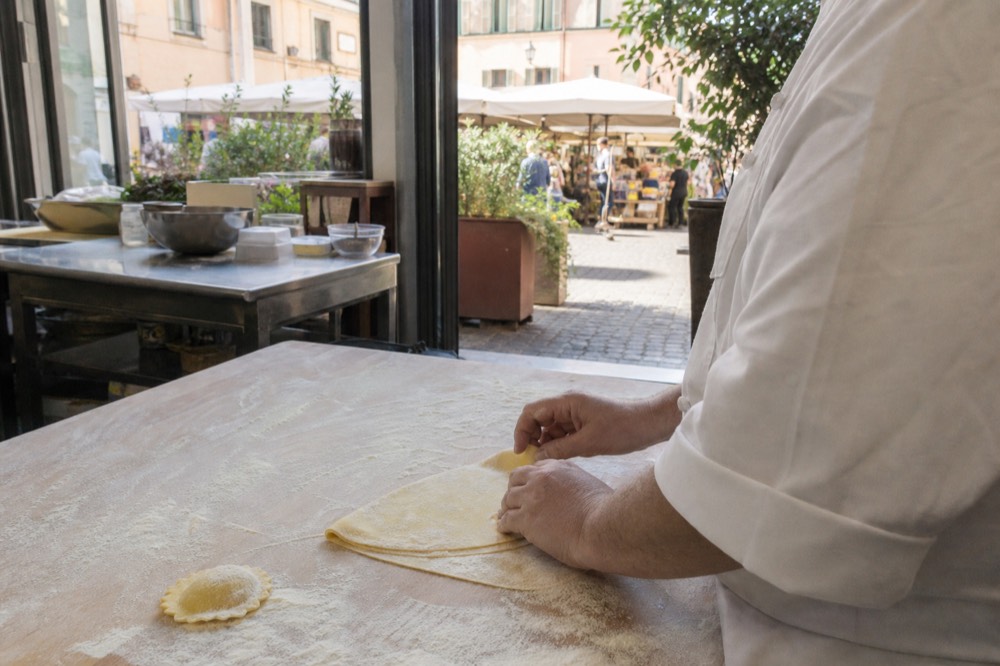
If you are still choosing a class and the tipping question is part of a bigger budget question, the numbers matter more than the etiquette. Rome cooking classes averaged $172 in advertised price in 2026 across 198 classes analyzed by Budget Your Trip, which means a few euros of tip is a rounding error next to what you already paid for the seat. The class you pick shapes the experience far more than the tip shapes the bill, and a well-chosen class is worth reading about before you read about gratuities.
How much do people actually tip at a Rome cooking class?
The working range that Roman instructors describe is roughly 5 to 10 euros per person for a group class, or about 5 to 10 percent of what you paid, whichever feels more natural. For a private class, 15 to 25 euros for the chef is a generous gesture. Cash is king: hand it over directly or leave it visibly on the table at the end, because card terminals rarely have a tip line in Italy.
Those numbers will feel shockingly low to an American. That is fine. They are supposed to. A 50 euro tip on a 70 euro class would not read as generous in Rome, it would read as strange, and it can put the recipient in the awkward position of having to refuse. Italian politeness around money runs in the opposite direction from American politeness around money: modesty is the courtesy, and excess creates embarrassment rather than warmth.
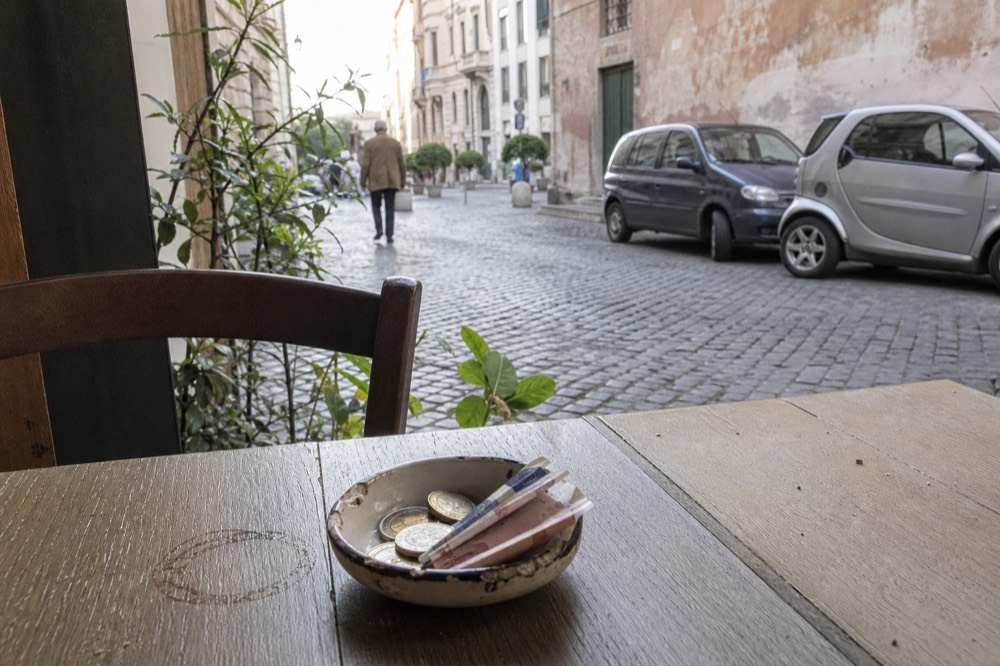
There is also a timing question. The natural moment is the end of the class, during or just after the meal you cooked together, when the instructor is still circulating and can receive it personally. Slipping it earlier feels transactional. Mailing it later is impossible. And if the class ends with the whole group applauding the chef, which good Roman classes often do, the applause itself is a real part of the local currency of thanks.
One thing worth knowing before you decide the amount: tips in Italy are now formally part of the tax system in a way that makes them legitimate rather than under-the-table. Italian law has created a special flat rate for tips in tourism and restaurants, which means your chef can and does declare them.
Is tipping required by law or custom in Italy?
No. There is no legal obligation to tip anywhere in Italy, and no social obligation either. What Italian law does regulate is the opposite direction: restaurants in Lazio are barred from adding a separate coperto charge, and any service charge must be disclosed on the price list before you order. Tips, called mance in Italian, are entirely voluntary, and since 2025 they are taxed at a special low flat rate when workers declare them.
The coperto point matters for cooking classes too, because some class bookings include a meal component and guests sometimes worry about surprise charges. In Lazio, regional law 21/2006, article 16, prohibits adding a separate cover charge, and if a business charges for table service it must show that on the price list before you order. A cooking class price is what you paid at booking. Nobody at a Roman cooking school will slide a service-charge line under your nose at the end.
The tax side is genuinely interesting and rarely explained to visitors. Italy's budget law for 2025 raised the income threshold for the special 5 percent flat tax on tips in tourism and restaurants to 75,000 euros, and from 2025 the reduced rate applies automatically unless the worker signs a written waiver, as the Italian tax information service Legge in Chiaro documents. In plain terms: the state has made declaring tips easy and cheap, so tips are not frowned upon, they are accounted for.
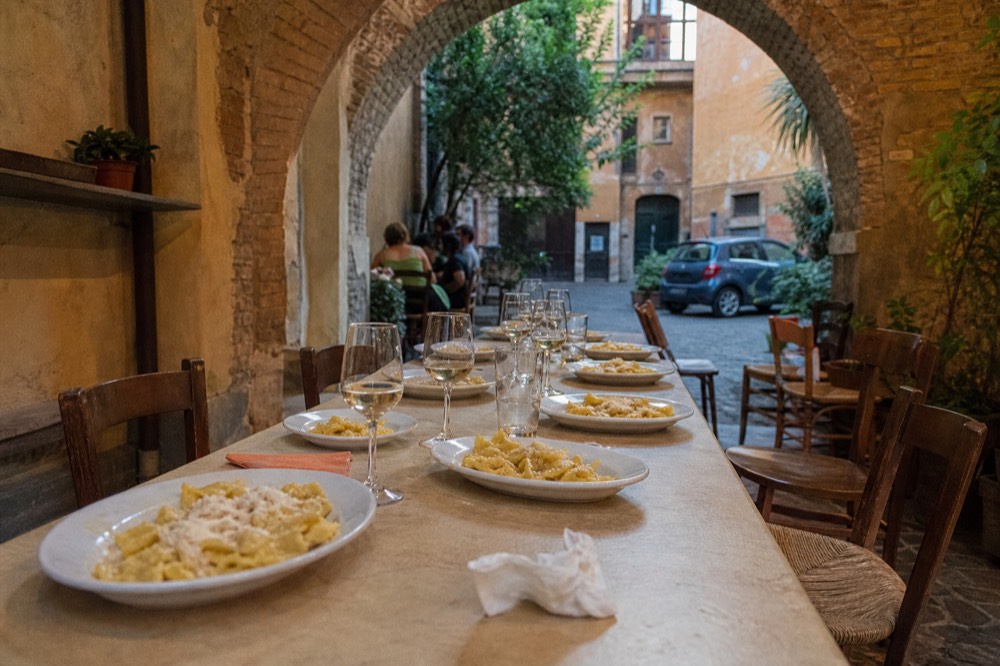
And workers do declare them. The average amount of tips declared under the favorable regime in 2024 tax filings rose to 1,087 euros, per Il Sole 24 Ore's reporting on the filings. That average, spread across a year of shifts, tells you the scale of ordinary Italian tipping: real, appreciated, and nowhere near US percentages. A guest review of a Roman class that mentions leaving 10 euros for the chef is describing a tip on the generous end of normal, not a token one.
If you are weighing whether a class is worth the money at all before worrying about the extra 10 euros, that is a separate and reasonable question, and one we have written about in detail in should you take a cooking class in Rome.
Who do you tip: the chef, the assistant, or nobody?
Tip the person who taught you, and if there was an assistant who worked the room, refilling wine and rescuing your dough, include them or mention them by name when you hand the tip over. In a class with one instructor and one helper, a single tip handed to the instructor with a word of thanks for both is normal. Tipping every individual separately is unnecessary and can feel excessive.
Roman cooking schools typically run with a lead chef-instructor and, for larger groups, one or two assistants who do the invisible work: portioning ingredients before you arrive, sweeping flour between stations, running dishes. The assistants are usually younger, often culinary students, and they are the people for whom a tip makes the most tangible difference. If you only remember one thing, remember them.
A practical pattern that works well in a group class: pool the tip. If eight people each put in 5 euros, you hand the chef a 40 euro thank-you with the group's name on it, which is a meaningful and entirely normal gesture, and you tell the chef it is for the team. This avoids the awkwardness of one guest overtipping another and makes the moment collective, which suits the communal mood of a Roman class anyway.
| Situation | Who to tip | Typical amount | How to give it |
|---|---|---|---|
| Small group class, one chef | The chef | 5-10 euros per person | Cash, handed directly at the end |
| Group class with assistant | Chef, on behalf of the team | 5-10 euros per person, pooled | One envelope or handful, name the assistant |
| Private class at your rental | The chef | 15-25 euros total | Cash at the end of the meal |
| Market tour plus class combo | The guide-chef | 10-15 euros per person | Cash after the class portion, not mid-market |
| Class you did not enjoy | Nobody | Nothing | A review with specifics is worth more |
The last row is not cynicism, it is the actual function of the review economy. A cooking class operator in Rome responds to detailed public feedback far more than to a withheld tip, and a withheld tip communicates nothing except to the worker who did not get it. If something was genuinely wrong, the tip is not the lever. The review is.
Do you tip differently for private classes versus group classes?
Yes, in amount and slightly in style. A private class puts one professional at your family's or group's exclusive service for hours, so the tip scales up: 15 to 25 euros for the chef is a comfortable range, more if the class came to your accommodation and the instructor carried equipment. For a group class, the per-person 5 to 10 euro range already accounts for the fact that the chef's attention was split.
Private classes also change the relationship. Your instructor has learned everyone's names, adjusted the menu around your child's allergy, and possibly lugged a pasta machine up three flights of stairs to your apartment. That is closer to a personal service than a class, and the tip naturally lands closer to what you would give a private guide for a morning. It stays modest by Italian standards, but the ceiling is a bit higher and nobody will blink at the top of the range.
The format of the class changes the etiquette less than you would think. A pizza and gelato class, a fresh pasta class, a family class where kids are rolling dough: the same rules apply. What shifts is the per-person price you started from, and since the tip is a thank-you rather than a percentage, you anchor it to the effort you witnessed, not to the invoice. A shorter, cheaper class with a spectacular instructor deserves a better tip than a long expensive one with a distracted one.
For families specifically, there is a small extra courtesy worth mentioning. If your kids made a mess and the assistant spent the class quietly cleaning up after them, a tip that names that assistant is the single most appreciated thing you can do. Roman cooking schools notice which guests see the staff, and being seen is a compliment in any language.
What about other food experiences: tours, tastings and market walks?
The same logic carries across Rome's food experiences, scaled to the format. Walking food tour guides are tipped more often than class instructors, typically 5 to 10 euros per person for a good half-day walk, because guiding is a tip-adjacent profession in Italy even though it is not tip-dependent. Tastings and short experiences are tipped rarely. The pattern is consistent: the more hours a named person spent personally on you, the more a tip makes sense.
A guide who walked you through Trastevere for four hours, told you the history of every piazza and steered you away from the tourist traps, has done the kind of work where a tip feels natural to Italian operators too. Italy has even formalized the profession heavily: guides inscribed in the national register must complete at least 50 hours of authorized professional update courses every three years, per the Ministry of Tourism's own guidance. That is a credentialed professional, and the tip is a courtesy to one, not charity.
For tasting-heavy formats the calculus is different. A wine tasting led by a sommelier, a gelato crawl, a market walk with a few stops: these are shorter, and the per-person tip, when it happens at all, tends toward rounding up or a couple of euros. If a tasting is hosted by the winemaker or owner, the owner rule applies and most Italians tip nothing at all.
The one format where the answer is easiest is the vehicle tour. A golf cart food tour with a driver-guide is a premium, personal service for hours, and the driver-guide is tipped like a private guide: somewhere in the 10 to 20 euro range for a group is well received. You are tipping the driving and the narration together, and both were exclusively yours.
When is a tip not expected at all?
Skip the tip when the class was run by the owner of the school personally, when the experience was short and tasting-based, or when a service charge was already itemized in what you paid. Also skip it if you paid a private instructor a premium rate negotiated directly: the premium was the point. In all these cases a warm thank-you, a photo together and a detailed review are the culturally fluent way to say the same thing.
The owner exception surprises Americans most. In the US, tipping the owner feels normal because everyone in service is tip-dependent. In Italy, tipping a business owner can subtly imply you think they are staff, which is why many Italian owners will politely refuse or redirect the money to their assistants. If your class was clearly a small family operation and the person teaching you introduced themselves as the founder, a tip is not wrong, but do not be surprised if it is waved off, and do not press.
The review point deserves its weight. Italian cooking schools live and die by review counts, and a guest review that names the chef and describes the dish you finally got right does more for that chef's livelihood than any envelope. If you have five minutes on the walk back to your hotel, that is the highest-value tip of all, and it costs nothing.
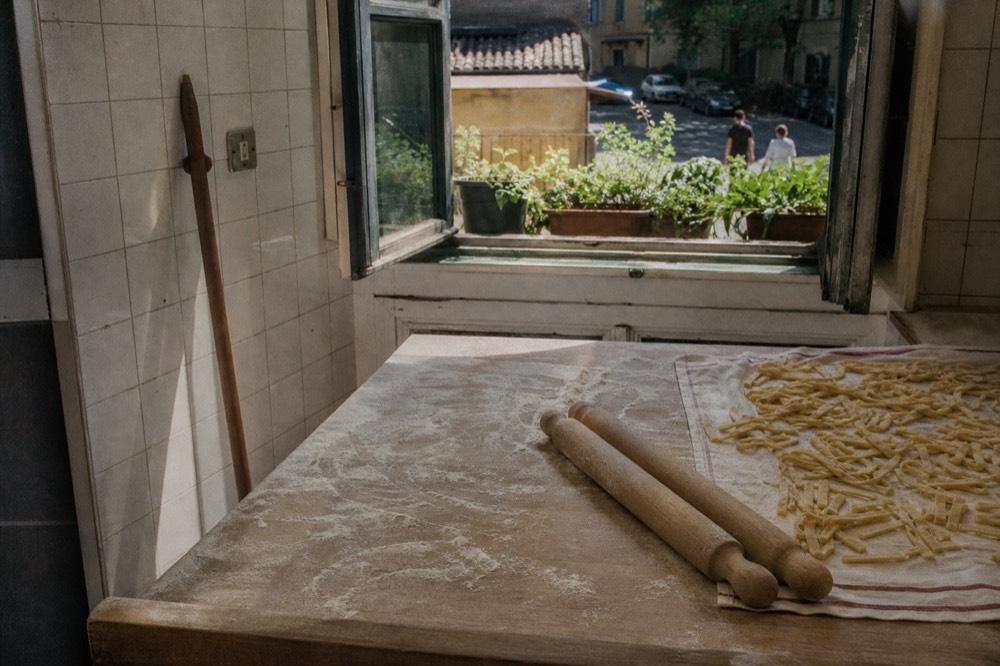
Finally, do not confuse the class tip with restaurant tipping, because the mechanics differ. In a Roman restaurant you might round up the bill or leave a few coins; at a class you are thanking a teacher. The teacher version is more personal, more direct, and, in a nice way, more optional. If you are still planning the whole evening around food, our guide to evening food tours in Rome covers what a night walk costs and what a guide there expects, and the same modest-cash logic applies.
The short version, before you book
Tip 5 to 10 euros per person in cash for a good group class, 15 to 25 for a private one, hand it to the chef at the end, and skip it entirely if the chef is the owner or the class disappointed you. It is a thank-you in a country where thank-yous are voluntary, so let the amount match your actual gratitude rather than a habit imported from home.
If that feels like a lot of rules for a small envelope of coins, remember the frame: Italy made tipping legally clean and socially optional at the same time, which is why nobody here will chase you for it and why everybody remembers the guests who did it gracefully. The chef who taught you carbonara will remember that you got the guanciale right. The 10 euros is a footnote. The flour on your hands is the story you took home, and if you want to keep reading before you decide on a class at all, what a Rome cooking class costs on average breaks down the prices by format.
The questions below come up again and again from travelers booking Roman cooking classes, so here are the short answers in one place: tip small, tip cash, tip the person who taught you, and treat the whole thing as a thank-you rather than a bill.
Common questions about tipping at cooking classes
Do you tip at a cooking class?
Yes, you can, but it is optional in Italy. A tip of 5 to 10 euros per person in cash for a good group class, or 15 to 25 euros for a private class, is a generous and well-received thank-you. Nobody expects it, and nobody will think less of you for skipping it, especially if the class was taught by the school's owner.
How much should I tip my cooking class instructor in Rome?
5 to 10 euros per person for a group class is the comfortable local range, pooled and handed to the chef at the end. For a private class, 15 to 25 euros total. If there was an assistant, mention them by name when you hand it over, or give it to the chef explicitly for the team.
Do you tip in cash or can you add it to the card?
Cash. Italian card terminals rarely offer a tip prompt, and handing euros directly to the chef is the normal, personal way to do it. Take a few coins and small notes with you to the class, since you will not get another natural moment after the group disperses.
Is tipping required in Italy?
No. Italian service workers earn a full wage and tips are legally voluntary. Italy even taxes declared tips at a special low flat rate, which makes them legitimate but not obligatory. What Italian law does require is price transparency: any service charge must be shown on the price list before you order, and in Lazio a separate coperto charge is prohibited.
Should I tip if the class was run by the owner?
Usually not, and many owners will politely refuse. Tipping a business owner is not a strong Italian custom and can feel misplaced. A detailed public review that names the chef does more for a small school than an envelope, and it costs nothing.
Do you tip food tour guides the same way?
Similar logic, slightly higher frequency. Guides on multi-hour walking tours are tipped more often than class instructors, typically 5 to 10 euros per person for a half-day. Short tastings are tipped rarely, and driver-guides on private or vehicle tours land in the 10 to 20 euro range for a group.
One last note before you go: everything on Rome Food Tours is written to help you plan the eating side of the city, classes included, so the etiquette above pairs well with the price guides and class comparisons elsewhere on the site.