what is the healthiest meal to order at an italian restaurant?
The healthiest orders at a Roman restaurant, dish by dish: grilled fish, legume soups, contorni and the vegetable-forward half of Roman cooking, with what to skip.
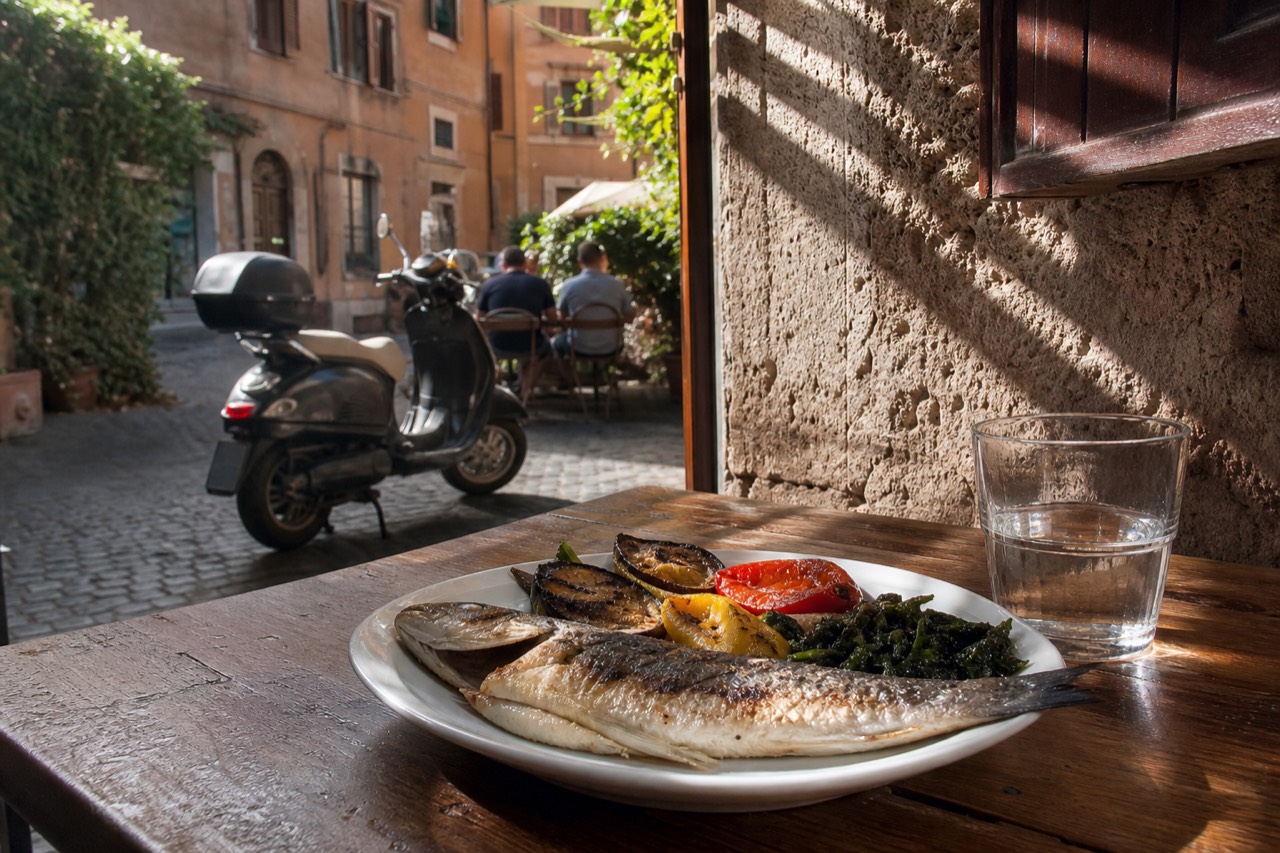
Grilled fish, a plate of greens dressed in olive oil, and a bowl of bean soup: this is the half of the Roman menu that most visitors walk straight past on their way to the carbonara. It is also the half that Roman families eat most nights of the week. Italian restaurant food has a reputation abroad for being heavy, but the actual menu in a Roman trattoria splits roughly in two, and the lighter side is not a compromise order. It is the cooking the city has always done with vegetables, legumes and fish from the nearby coast.
This page answers the question for Rome specifically, because a generic answer about "Italian food" misses what makes the city's menus different. Rome has its own vegetable traditions, its own protected artichoke, and a market culture that still shapes what kitchens cook each week. The short version: order grilled or baked fish, a legume soup such as pasta e ceci, and two contorni, and you have eaten the way the healthiest Roman meals have always been built.
what is the healthiest meal to order at an italian restaurant?
The healthiest realistic order at a Roman restaurant is a legume soup or a small vegetable-forward primo, a grilled or baked whole fish as the main, and two contorni such as cicoria ripassata or grilled zucchini, finished with fresh fruit. That structure gives you lean protein, fibre, olive oil as the main fat, and almost no cream or deep frying. A glass of wine is optional and fits the pattern.
That answer is not a diet plan imposed on the menu. It is a description of what the menu already contains. Roman cooking grew out of the quinto quarto tradition, the offal cooking of the slaughterhouse workers, but it grew alongside an equally old habit of eating vegetables and legumes as the base of the week. Roma Capitale's own food pages document tripe, oxtail and coratella as the historic poor cuts, and the same pages document trippa alla romana as a Saturday dish dressed with pecorino and Roman mint, a pattern where even the richer plates rotate with lighter ones.
The fish part matters more in Rome than in most inland cities, because Rome has always eaten from the coast. Lazio's fishing ports have supplied the city's markets for generations, and the fish counters at markets like Testaccio and Trionfale carry catch from that coast. A whole orata or spigola, grilled or baked in salt with little more than olive oil and lemon, is one of the cleanest proteins you can order anywhere, and in Rome it is a normal order, not a special request.
If you want to see how the healthy half of the city's cooking is actually assembled, from market stall to plate, a guided walk through the markets and trattorias is the fastest route. These three options cover the range:
A market-led tour shows you the raw materials, and a cooking class shows you the technique. Both are useful here, because the healthiest Roman orders are simple preparations where the quality of the vegetable or the fish does most of the work.
Which Roman dishes are naturally the lightest?
The lightest dishes on a Roman menu are pasta e ceci and other legume soups, the vegetable contorni, grilled or baked fish, and raw vegetable antipasti such as puntarelle with anchovy dressing. None rely on cream, butter or deep frying, and several are built almost entirely on olive oil, vegetables and pulses. Roman cooking keeps its heavy and light dishes clearly separated, so the light half is easy to find once you know the names.
Start with the legumes. Pasta e ceci, pasta with chickpeas, is a thick soup where the chickpeas themselves create the body, with a short pasta stirred in and olive oil finishing the bowl. It is the same family as pasta e fagioli and the minestra di farro, the spelt soup that goes back further than any pasta dish in the city. These are peasant dishes in the best sense: filling, cheap, and nutritionally close to what modern dietetics recommends, a legume base with a small amount of grain.
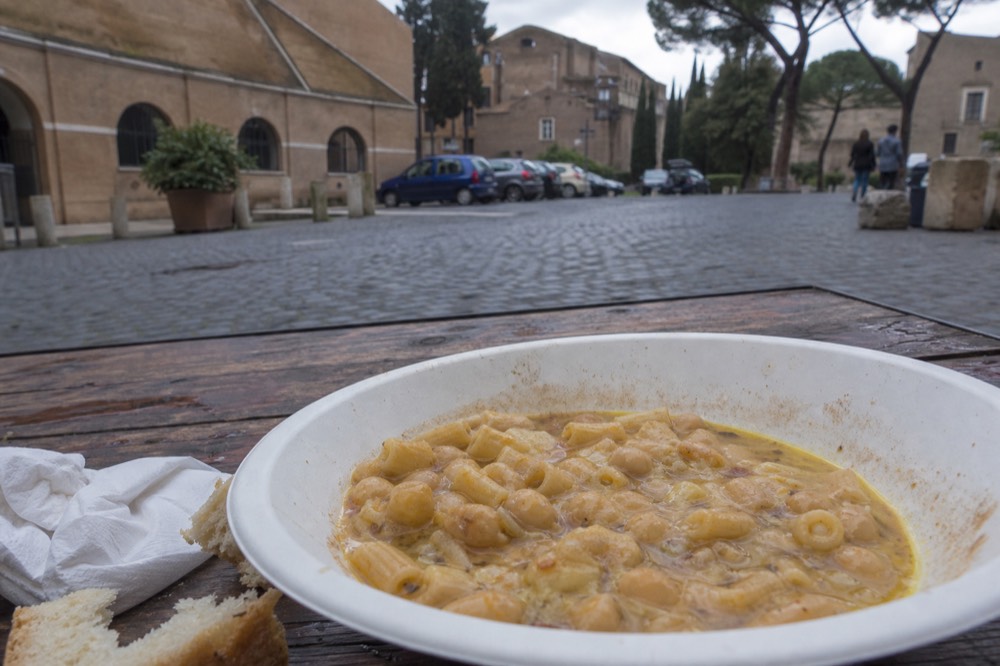
Then the vegetables. The contorni list is where Roman kitchens quietly excel. Cicoria ripassata is chicory or escarole wilted, then sauteed with garlic and chili in olive oil. Broccoli romaneschi, carciofi alla romana, fagiolini, spinach simply braised, and in the right season puntarelle, the crunchy Catalonian chicory shoots dressed with an anchovy, garlic and oil emulsion, all sit on the same list. Order two of them instead of a second starch and the meal changes shape completely.
The artichoke deserves a specific note. Carciofo Romanesco del Lazio is a registered PGI product, and the EU's published specification sets its harvest window as starting in January and running, weather permitting, into May. Carciofi alla romana, the artichoke braised whole with Roman mint, garlic and olive oil, is the light preparation. Carciofi alla giudia, the Jewish Roman fried artichoke, is the celebratory one, and it is fried. Both belong to the city; only one belongs on the light list. The European Commission publishes the artichoke's specification on EUR-Lex if you want the full production detail.
If you would rather learn the light dishes than just order them, a hands-on class is the efficient way in:
How do you read the menu for the healthy half?
Read the menu in four sections: the antipasti of vegetables and legumes, the primi dominated by pasta and soups, the secondi of meat and fish, and the contorni. The healthy order draws mostly from the first and last sections, takes one legume primo or a small pasta, and picks fish over meat at the secondi. Anything described as fritto, mantecato, or in a cream sauce sits outside the pattern.
The vocabulary does most of the work for you. Alla griglia means grilled. Al forno means baked. In umido means stewed, usually in tomato. Ripassata means the vegetable is cooked twice, boiled then sauteed in oil, which sounds heavier than it is, since the second pass uses a modest amount of olive oil. Fritto means fried, and in Rome it means seriously fried. Anything "alla carbonara", "mantecato" or with panna listed as an ingredient is carrying its fat in cream or egg rather than oil.
A simple reading of the sections:
| Menu section | Lightest picks | Heavier picks to limit |
|---|---|---|
| Antipasti | Puntarelle, insalata di polpo, raw vegetable plates, bruschette with tomato | Fried suppli, fritto misto, cured meat boards |
| Primi | Pasta e ceci, minestra di farro, small tomato or vegetable pasta | Carbonara, gricia, amatriciana, cream sauces |
| Secondi | Orata or spigola alla griglia, branzino al sale, baccala dishes | Fried cutlets, rich stews, saltimbocca with butter |
| Contorni | Cicoria ripassata, carciofi alla romana, broccoletti, insalata | Patatine fritte, anything in béchamel |
One structural habit helps: Italians order courses, but nobody orders every course. A Roman dinner can be a primo and a contorno, or a secondo and two contorni, and that is a completely normal order. The fixed-price tourist menus push all four courses at once, and that is where the meal stops being light regardless of what you picked. Order the way locals do, fewer courses, better chosen.
The same logic applies to bread and water. Bread arrives without butter, because in Lazio the custom is to eat it plain, and that is a small accidental health feature of the cuisine. Water is usually still or sparkling, ordered by the bottle, and drunk through the meal. Wine, when it is drunk at a weekday dinner, is typically a glass or two alongside, not a course on its own.
What about pasta, pizza and portion sizes?
Pasta is not the problem; portion size and sauce are. A standard Roman primo is a modest plate, and tomato or vegetable sauces keep it light, while the four classic Roman pastas carry guanciale and pecorino and are best treated as an occasional plate. Pizza in Rome is thin-crusted, and a marinara or vegetable pizza is a genuinely reasonable meal. The trick is picking one starch, not stacking three.
The four Roman pastas, carbonara, cacio e pepe, gricia and amatriciana, are the city's signature dishes and they are also its richest. The amatriciana has a registered traditional specification, and that specification is blunt about the guanciale: cured at least 30 days, cut from the throat, with the fat part greater than the lean. That is a flavor decision, not a health one. Ordering one of these once in a trip is the point of coming to Rome. Ordering one every night is where the holiday starts to feel heavy.
The lighter pasta orders are real pasta orders, not a consolation prize. Spaghetti al pomodoro, pasta with fresh tomato and basil, is on nearly every menu and is rarely listed because locals simply ask for it. Aglio e olio, the garlic and oil pasta, is oil-based and modest. Pasta e ceci turns the pasta into a legume soup. A half portion, mezza porzione, is accepted in many trattorias for lunch, and asking for it is unremarkable.
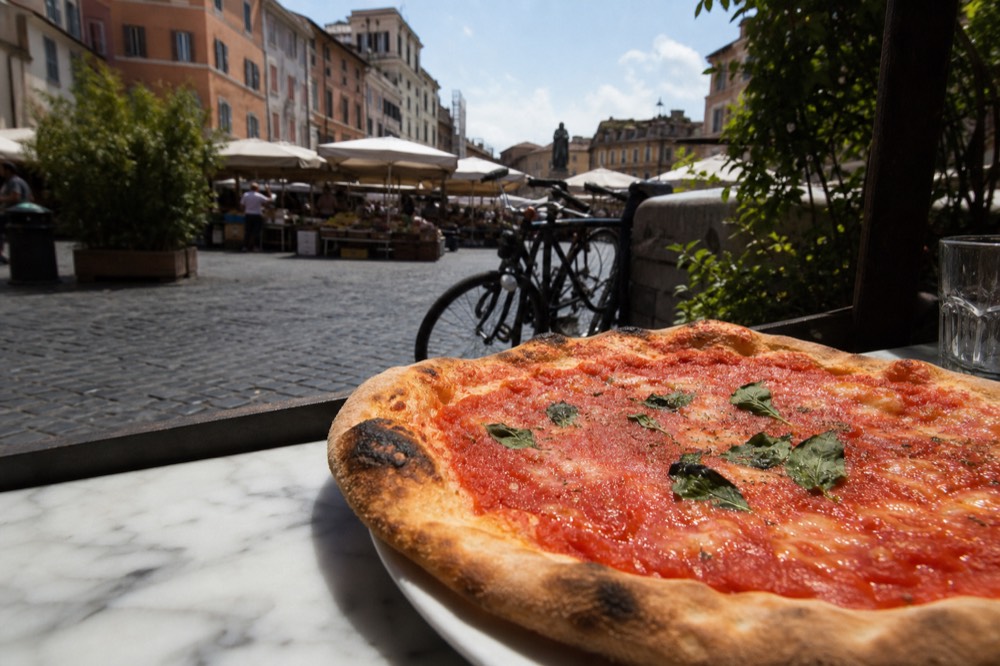
Pizza in Rome is a different animal from Naples, thin and crisp, and the marinara, tomato, garlic and oregano with no cheese, is the lightest thing on any pizzeria menu. A vegetable pizza with a handful of mozzarella is close behind. Roman pizza al taglio, sold by weight, lets you choose a small slice and stop, which is a portion-control mechanism built into the format itself. The Gambero Rosso street food guide lists hundreds of addresses in the city, so quality is easy to find at every level.
Portion size is where most restaurant meals in any country go wrong, and the Italian course structure quietly helps with it. Because courses arrive separately and slowly, you register fullness between them. The failure mode is the fixed menu, the rushed tourist room, and the "since we're here" second dessert. Order one primo, one secondo or two contorni, and let the meal take its time.
Which drinks and sides keep the meal light?
The lightest drink orders in Rome are water and a single glass of wine, or an espresso to finish. The coffee culture is built on small unsweetened servings, with the average counter espresso in Rome at 1.35 euros per the FIPE restaurant report, and the mixed drinks, amari and layered cocktails are where the sugar adds up. For sides, the choice is between vegetables cooked in olive oil and everything fried.
Coffee deserves its own paragraph because it is the rare case where the local habit is already the healthy one. An espresso or a macchiato has no sugar unless you add it, cappuccino is a milk drink that Romans stop at breakfast, and the enormous sweetened coffee drinks sold elsewhere barely exist here. The FIPE Ristorazione 2026 report put the average espresso at the counter in Rome at 1.35 euros in December 2025, a small drink at a small price, consumed standing in a minute or two. That is the antithesis of the 500 calorie coffee dessert.
Wine follows the same pattern. A glass of wine alongside food, one or two glasses over a long dinner, is the local rhythm. The cocktail culture around aperitivo has grown, and the aperitivo spreads at places like Mercato Centrale, which launched a daily drink-plus-snacks format at 12 euros, are pleasant but they add a round of calories before dinner even starts. If aperitivo is part of your evening, treat it as the first course of the meal rather than an addition to it.
The sides decision is simpler than it looks. Every trattoria has a contorni list, and the ripassata vegetables, the braised greens and the salads are all olive oil preparations. The fried sides exist, patatine and the occasional fried vegetables, but they are a small corner of the list. Ask what the vegetables of the day are, "quali verdure avete oggi", and you get the freshest thing on the menu, because the kitchen buys to the market and the market sets the answer.
What should you skip if you are eating healthy?
Skip three things: the fried antipasti baskets, the cream-based sauces that are foreign to Roman cooking anyway, and the fixed tourist menus that stack every course. Also treat the daily dolci as an occasional order, since the pastry tradition is real but rich. None of these skips require asking for substitutions, which Roman kitchens handle poorly; they only require ordering from the other half of the menu.
The fried basket is the clearest one. Suppli, the fried rice croquettes, fiori di zucca, the fried zucchini flowers, and filetti di baccala, the fried salt cod, are all beloved Roman foods and all deep fried. They are also the items most aggressively offered to tourists as "typical". They are typical of a certain kind of Roman snacking, not of a Roman dinner table. If you want one, order one suppli at a pizzeria as a standalone stop, not as the opening act of a full restaurant meal.
Cream sauces are barely Roman at all. The city's fat is olive oil, plus pecorino and guanciale in the four classic pastas. A dish listing panna, cream, is usually a concession to an imagined international palate, and it is neither traditional nor light. The same goes for the butter-heavy northern preparations that drift onto central menus. When in doubt, the further the menu drifts from oil, tomato, vegetables and fish, the less Roman and the heavier it tends to be.
Substitutions are the one thing to avoid attempting. Roman kitchens work from short, fixed preparations, and asking for a sauce on the side or a dish rebuilt is received poorly and often fails. The menu already contains the light meal; the correct move is to order it, not to engineer it. A guest review of one popular cooking class in the city notes that even the chefs teaching tourists push the same line: learn the dish as it is, then choose which dishes you eat.
Dessert is worth a strategy rather than a ban. The pasticcerie are excellent and the dolci are dense. The lightest endings are a fresh fruit plate, which every restaurant can produce, or a small espresso taken instead of dessert entirely. The gelato culture offers a middle path, and the city's gelaterie run from artisanal to industrial, with Gambero Rosso's guide awarding its top ratings to a handful of Lazio shops. A small cone of fruit sorbetto is a modest close to a light meal.
Does eating healthy in Rome mean eating bland?
No. The light half of Roman cooking is where much of the city's flavor identity actually lives: Roman mint in the braised artichokes, anchovy in the puntarelle dressing, chili in the ripassata greens, and herbs in the legume soups. The heavy dishes get the fame, but the vegetable and fish dishes carry the same technique and the same market ingredients. Blandness is a risk of bad kitchens, not of light ordering.
The proof is in the specific dishes. Carciofi alla romana is braised with menta romana, Roman mint, and garlic until the leaves pull away like silk; it is a deeply savoury dish with no frying and no cheese. Puntarelle's dressing is anchovy, garlic and olive oil worked into a emulsion that makes a raw vegetable taste like a main course. Cicoria ripassata carries chili and garlic. None of these dishes would be improved by cream, and none of them tastes like a compromise.
The fish tradition makes the same point. Spigola al sale, sea bass baked in a salt crust, is a theatrical dish with exactly one ingredient doing the work. Grilled orata with lemon and oil is two ingredients. Baccala in umido, stewed salt cod with tomato, potatoes and olives, is a Roman and Lazio staple with a deep flavor from a modest ingredient list. These are the dishes a Roman family eats on the average Tuesday, and the richness of the famous pastas is what makes Tuesday's food taste like a deliberate change of pace.
If the light dishes sound like something you would want to cook at home after the trip, the pasta and fresh pasta classes in the city teach the base techniques, the dough, the sauces, the vegetable preparations, that all of this rests on. The Pantheon pasta class with wine covers the classic preparations in a 3-hour session, and the fresh pasta class with gelato pairs the dough work with the dessert course. Both are covered in more depth in our overview of cooking classes in Rome.
For the market side of the same story, our guide to Rome's street food markets walks through where the vegetables, the legumes and the fish actually come from before they reach the trattoria, and our piece on typical trattoria menu items translates the full menu section by section. This site, Rome Food Tours, exists precisely to document that half of the city's food culture that a first visit usually misses.
The short answers below cover the healthiest single order, whether pizza and the four Roman pastas fit a light eating pattern, the local coffee habit, vegetarian and vegan options, and why substitutions are the wrong tool in a Roman kitchen. Each one pulls from the same menu structure described above: legumes, vegetables, olive oil and fish, chosen from the sections the menu already gives you.
Common questions about healthy eating in Rome
what is the healthiest meal to order at an italian restaurant?
A legume soup such as pasta e ceci or a small vegetable primo, a grilled or baked whole fish, and two contorni like cicoria ripassata and grilled zucchini, finished with fresh fruit. In Rome that order is entirely local, uses olive oil as its only fat, and involves no substitutions.
Is pizza a healthy option in Rome?
A thin-crusted Roman marinara or vegetable pizza is a reasonable meal, especially at lunch. Pizza al taglio sold by weight lets you control the portion precisely. The heavier end is the fried toppings and the stacked cured-meat pizzas, not the base itself.
Are the four Roman pastas off limits?
No, but they are the richest plates on the menu, built on guanciale and pecorino, and they work best as a once-or-twice-per-trip order rather than a nightly one. The amatriciana's traditional specification even sets the guanciale content of the sauce, so the richness is by design.
What is the healthiest way to drink coffee in Rome?
Espresso or macchiato, unsweetened, taken standing at the counter. The average counter espresso in Rome runs about 1.35 euros per the FIPE report, and the local habit of small, sugar-free coffee is already the lightest coffee culture in Europe.
Can I eat healthy at a Roman restaurant as a vegetarian or vegan?
Yes, and increasingly with local company: Eurispes reports 8.5% of Italians do not eat meat. The contorni list, the legume soups and the vegetable antipasti form a complete meal, though vegans should ask about the pecorino and anchovy that appear in some classic preparations.
Should I ask for substitutions to make a dish lighter?
Generally no. Roman kitchens work from short fixed preparations and handle rebuilt dishes poorly. The menu already contains the light meal, so order from that half rather than modifying a rich dish, and save the request-energy for choosing the restaurant.