Cooking Classes in Rome for Families: Ages, Stations and What Kids Actually Make
A cooking class is one of the few Rome activities where children are expected to touch the food. This guide covers the age rules, the station question, and why pizza and gelato formats suit younger kids better than pasta.
Short answer
Family cooking classes in Rome run from $33.68 per person for a pizza and tiramisu class to $117.13 per group for a small-group pizza and gelato session. Most last 2.5 to 3 hours, children almost always work at their own station, and pizza formats suit ages five and up while pasta classes skew older.
Rome has quietly become one of Europe's best cities for a cooking class with children in tow, and the reasons are structural rather than sentimental. The classic Roman formats, pizza, gelato and fresh pasta, are all made by hand, need no knife skills to start, and produce something a child will actually eat at the end. The wider context helps too: Italian cuisine was inscribed on the UNESCO Intangible Cultural Heritage list in December 2025, the first national cuisine to receive the designation, which has pushed cooking schools to expand their family offerings. This guide walks through the practical questions parents ask most: the age minimums, whether children get their own workstation, which formats work best, and what the whole thing costs.
What should families know before booking a cooking class in Rome?
Most Rome cooking classes welcome children, but the formats differ sharply in how much a child can do alone, and the cheapest classes are often the most kid-friendly. A 2.5-hour pizza and tiramisu session at $33.68 per person suits younger children better than a three-hour fresh pasta class, because pizza dough forgives clumsy hands and the results arrive faster. Check the age policy on the listing before anything else.
The first thing to understand is that "family-friendly" on a listing is a marketing phrase, not a standard. Two classes can carry the same label while one expects a seven-year-old to roll dough for an hour and the other hands the same child a pre-portioned ball and a topping station. The reliable indicators are the duration, the dishes made, and the group size. Shorter sessions of around 2.5 hours hold a child's attention far better than four-hour marathons, and small-group formats mean the instructor can actually reach your table when the dough sticks.
Pizza is the standout format for families, and the reason is timing. A child kneads dough, tops it, and eats the result within the same class, a feedback loop measured in minutes rather than hours. Fresh pasta works too, but it demands more patience: the dough must rest, the rolling must be even, and the cutting takes coordination that younger children simply do not have yet. That is why the pizza and tiramisu class run by Cooking Italy, at $33.68 per person with a 4.8 rating from 1,246 reviews, is the single most-booked family option in the city, while the pasta-focused courses skew toward adults and teenagers.
Price context matters here. An analysis of 198 Rome cooking classes put the average advertised price at $172, per Budget Your Trip's 2026 figures, which makes the family-oriented options on this site's roster genuine bargains rather than the norm. The premium average reflects long market tours and private chef experiences; the group classes families actually want cluster far below it.
Pizza and gelato or pasta: which class format works better for kids?
For children under ten, pizza and gelato classes beat pasta classes almost every time. Pizza dough is forgiving, gelato needs no heat work at the table, and both produce edible results inside the class itself. Fresh pasta classes reward patience and fine motor control, so they suit children of roughly eight or nine and up, and teenagers genuinely enjoy them.
The mechanics tell the story. Pizza class runs on a fast loop: shape, top, bake, eat. A five-year-old can do the first two steps with minimal help, and the instructor handles the oven. Gelato, where the class includes it, usually means watching a churn demonstration and flavouring a base, which children treat as a science experiment. Tiramisu splits the difference, children love whipping the cream and dusting the cocoa, and there is no hot pan anywhere near their hands.
Fresh pasta is a different discipline. The dough must be kneaded until smooth, rested, then rolled thin enough to see light through. Younger children lose interest at the resting stage, and the rolling machine, however safely supervised, is an adult's tool. The payoff is real, though: a child of nine or ten who produces their own tagliatelle gains something pizza cannot offer, and the family-focused pasta classes are built around exactly that moment.
The roster makes the contrast easy to see. The Cooking Italy pizza and tiramisu class at $33.68 per person is the entry point, 2.5 to 3 hours, 4.8 from 1,246 reviews. Inrome Cooking's pizza and gelato making class in the heart of Rome costs $117.13 per group with the price varying by group size, runs 2 hours 30 minutes, and carries a 4.9 from 339 reviews, a per-family price rather than a per-person one, which changes the arithmetic completely for a family of four. For comparison, a Testaccio market and pasta tour combines a walk with a seated pasta course, a format that suits older children who can handle both the walking and the waiting.
Do children get their own station in a Rome cooking class?
In the group classes families book most, yes: children get their own dough, their own workstation and their own finished dish, and this is the single detail worth confirming before booking. Small-group formats make individual stations the default, while larger budget classes sometimes pair children with a parent at a shared bench, which is fine for a five-year-old and frustrating for a ten-year-old.
The station question matters more than most parents expect. A child with their own ball of dough owns the process: they knead it, misshape it, fix it and eat it. A child sharing with a parent watches instead of doing, and the difference shows in how long their attention holds. The small-group classes in Rome are structured around individual work by design, because the format sells on the promise that everyone leaves with their own creation.
The Inrome Cooking pizza and gelato class is a good example of the small-group approach: $117.13 per group, 2 hours 30 minutes, capped group sizes, and a 4.9 rating from 339 reviews. Carpe Diem Tours' family pasta and tiramisu class at $60.39 per person, 4.9 from 263 reviews, is explicitly built as a two-in-one family format, meaning the pasta and the tiramisu are made in the same session and every participant works their own portion through both. When a listing says "family-friendly" but is silent on stations, treat that as a question to ask, not a detail to assume.
One practical note: aprons and equipment are always provided, so families should not pack anything for the class itself. The only genuine preparation is eating lightly beforehand, since every one of these classes ends with a full meal of what the group made, and a child who arrives full will still be served a plate.
What are the age minimums on Rome family cooking classes?
Rome's family cooking classes generally accept children from around five or six years old in pizza and gelato formats, while pasta classes typically expect children of eight or older, and a few premium courses are adults-only. Age policies live on each operator's listing rather than in any city-wide rule, so the number on the listing is the one that governs your booking.
There is no municipal age standard for cooking classes in Rome, which surprises parents who assume one exists. Each school sets its own policy based on the equipment involved and the class length. The pizza-and-gelato formats sit at the accessible end because nothing in them requires a child to handle heat directly. Pasta classes with rolling machines and stovetop work sit higher. Wine-inclusive classes, which is most of the adult roster, either exclude under-18s entirely or admit them as non-drinking participants, and the listing states which.
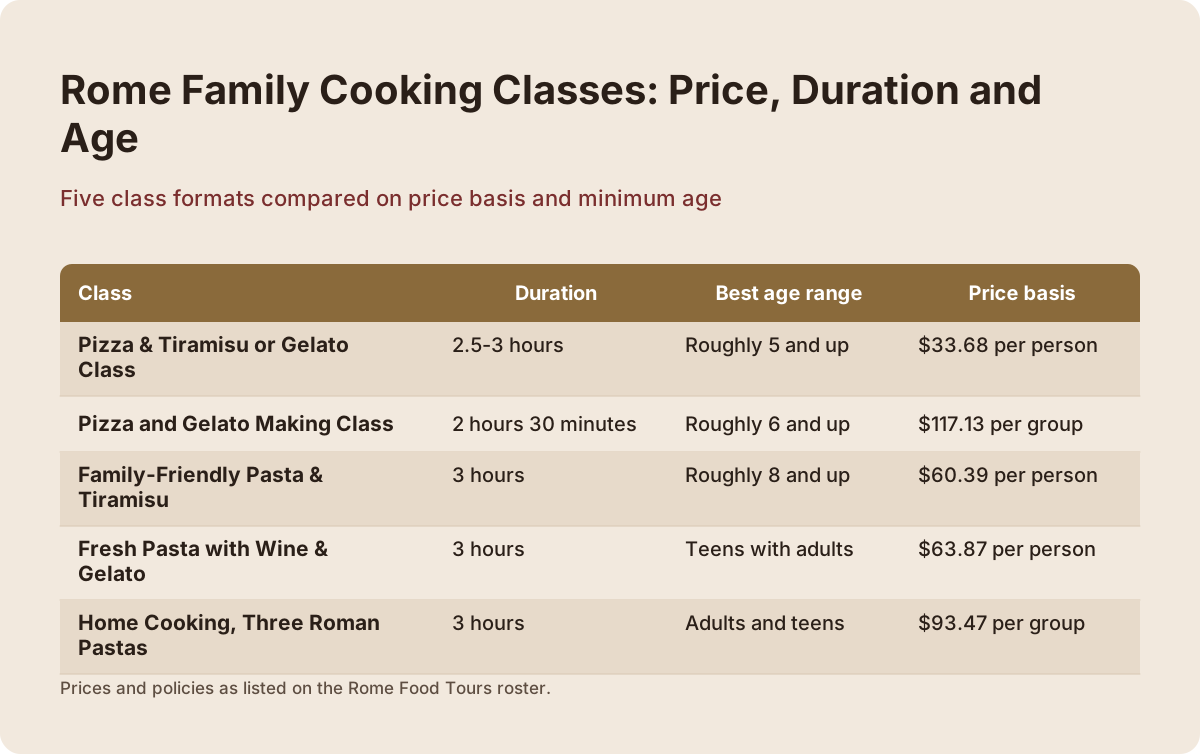
The roster's age spread, as described on the live listings, looks like this:
| Class | Format | Duration | Best age range | Price basis |
|---|---|---|---|---|
| Pizza & Tiramisu or Gelato Class | Pizza plus dessert, wine for adults | 2.5-3 hours | Roughly 5 and up | $33.68 per person |
| Pizza and Gelato Making Class | Small group, two dishes | 2 hours 30 minutes | Roughly 6 and up | $117.13 per group |
| Family-Friendly Pasta & Tiramisu | Two-in-one, family format | 3 hours | Roughly 8 and up | $60.39 per person |
| Fresh Pasta with Wine & Gelato | Adult-oriented pasta | 3 hours | Teens with adults | $63.87 per person |
| Home Cooking, Three Roman Pastas | Home kitchen, group price | 3 hours | Adults and teens | $93.47 per group |
The pattern to read from that table: the younger the child, the more the class should smell of pizza. Parents of under-sevens should filter to the first two rows and treat everything else as a teenage-and-up option. Parents of teenagers can ignore the age question almost entirely and choose on price and format.
How much does a family cooking class in Rome cost?
Family cooking classes in Rome range from $33.68 per person for the pizza and tiramisu class to $117.13 per group for the small-group pizza and gelato session, with the family pasta class at $60.39 per person in between. The pricing structure, per person versus per group, changes the total more than the headline figure does, so match the structure to your party size.
The per-person versus per-group distinction is where families save or overspend without noticing. A $117.13 group price for a family of four works out cheaper than four $33.68 per-person tickets, but a couple travelling with one child gets the opposite result. The rule of thumb: per-group pricing favours families of three or more, per-person pricing favours pairs. Both structures appear across the Rome roster, and the listing states which one applies.
What the price buys is fairly consistent across the city. Every class on this site's roster includes all ingredients, the instruction, the meal at the end, and in the adult-oriented versions a wine pairing while the food cooks. None of them charge extras on the day. The premium classes, such as the home-cooking course in Testaccio at $93.47 per group where a host teaches cacio e pepe, amatriciana and carbonara in a private kitchen, charge for intimacy rather than ingredients.
| Class | Price | Structure | Rating | Reviews |
|---|---|---|---|---|
| Pizza & Tiramisu or Gelato Class | $33.68 | Per person | 4.8 | 1,246 |
| Pizza and Gelato Making Class | $117.13 | Per group | 4.9 | 339 |
| Family-Friendly Pasta & Tiramisu | $60.39 | Per person | 4.9 | 263 |
| Home Cooking, Three Roman Pastas | $93.47 | Per group | 4.9 | 106 |
| Fresh Pasta, Wine & Gelato | $63.87 | Per person | 4.9 | 928 |
Families weighing a class against other paid activities should note the meal inclusion: a class that ends in a full dinner replaces a restaurant booking, so the effective cost is the ticket price minus the meal you would have bought anyway. For more on the general price landscape, see the guide to cooking classes in Rome.
Which Rome cooking classes work for couples as well as families?
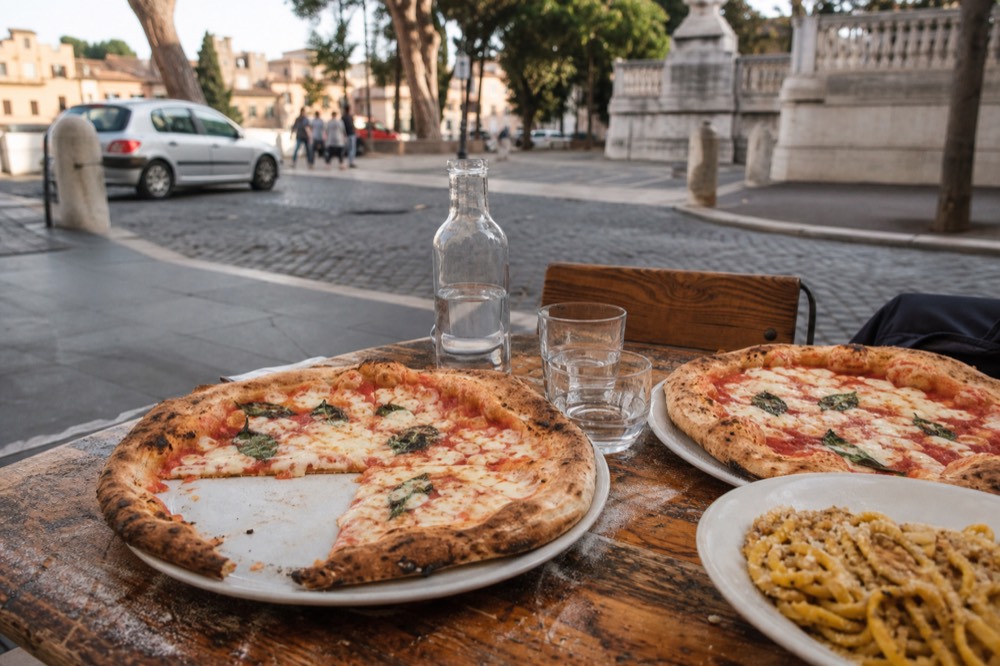
Several Rome classes share a long tail between the family and couples markets: the pizza and tiramisu class, the small-group pizza and gelato session and the fresh pasta courses all run with mixed adult and family bookings, because the formats need no adaptation. Couples without children should simply pick on price and intimacy, and the per-group classes double as date-night options.
The overlap exists because the formats are age-agnostic in their mechanics. Pizza dough does not care who is kneading it, and tiramisu assembly is identical whether the hands belong to a seven-year-old or a thirty-seven-year-old. Operators know this, and the same class often fills with families on afternoon slots and couples in evening ones. The Cooking Italy pizza and tiramisu class at $33.68 per person, with wine included for adults, is effectively two products at one price depending on the departure time.
Couples prioritising atmosphere over price have a clear upgrade path. The Carpe Diem family pasta and tiramisu class at $60.39 per person works equally well as a couples class, three hours, two dishes, a 4.9 rating from 263 reviews, and the small-group structure keeps the room calm. For a full rundown of the adult side of the roster, including the wine-forward evening options, the pasta making classes in Rome guide covers the formats couples book most.
The one genuine split in the market is the premium private tier. A private home-cooking session such as the Testaccio course at $93.47 per group is marketed to families and food-focused couples alike, and its per-group pricing makes it the rare class where adding a second couple lowers everyone's cost. The mainstream group classes never do that.
How do you choose and book the right family class?
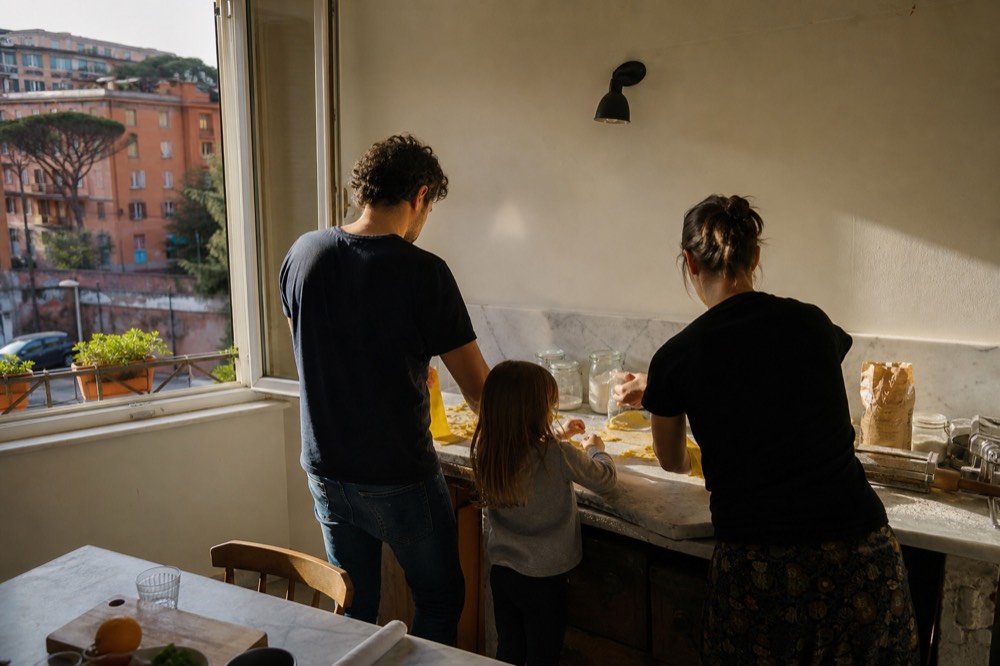
Choose on three filters in this order: the age policy, the price structure, and the dish format. Confirm the age minimum on the listing, decide whether per-person or per-group pricing suits your party size, then pick pizza for younger children and pasta for older ones. Book at least a few days ahead for weekend slots, and prefer listings with free cancellation.
The booking itself is low-risk compared with most travel purchases. The mainstream Rome classes run multiple departures a day through peak season, and the operators' listings show live availability. Weekend and holiday slots fill first, especially the small-group formats with capped numbers, so families travelling in summer or over Italian holidays should reserve before locking in the rest of the day's plan.
Cancellation terms deserve a glance, not a study. Most of the roster's group classes allow free cancellation up to a day or two before the session, and the listing states the exact window. That leniency matters for families more than for other travellers, because children get sick and plans slip, and a class booked with free cancellation is one that can be moved without a phone call.
A simple checklist covers everything a family needs to decide:
| Question | Where to check | Why it matters |
|---|---|---|
| Age minimum for children | The operator's live listing | The one hard rule that can void a booking |
| Per person or per group price | The listing's price line | Changes the total by 30% or more for a family of four |
| Individual stations for kids | Listing details or a message to the operator | Determines whether children do or watch |
| Class length | The listing's duration | Under-8s rarely last past 2.5 hours |
| Meal included at the end | The listing's inclusions | Lets you skip a separate dinner booking |
| Cancellation window | The listing's policy | Families need flexibility more than couples |
One last planning note: location. The central classes cluster near the Pantheon, Campo de' Fiori and Corso del Rinascimento, all easy to reach from most central hotels, while the Testaccio home-cooking courses sit in a more residential quarter that pairs naturally with a street food and markets walk. Families who want the class and the neighbourhood should build the day around both.
What should parents expect on the day of the class?
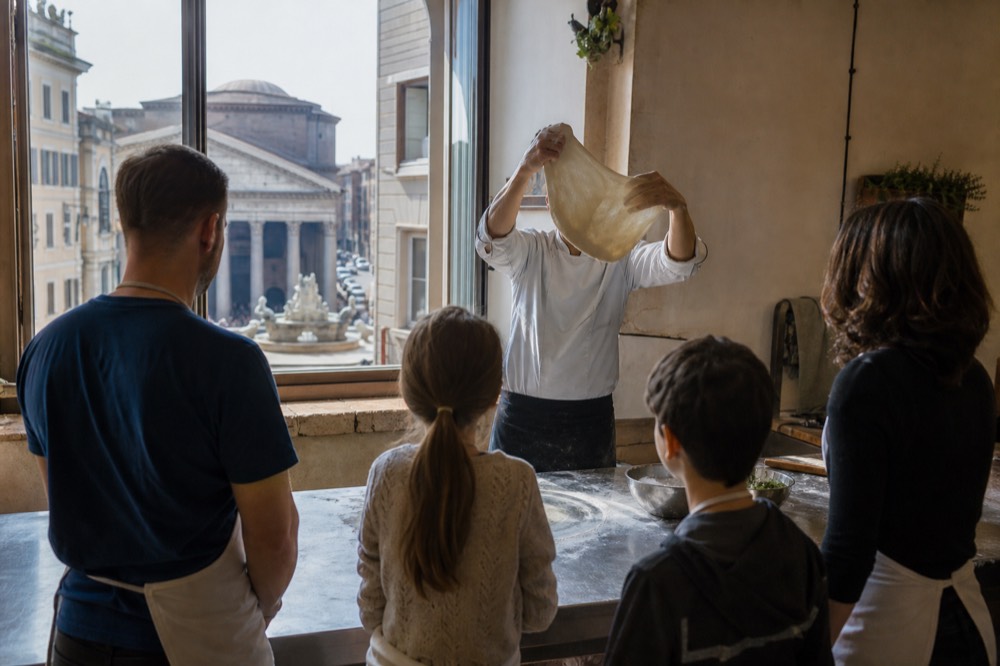
Expect a 2.5 to 3 hour session that starts with a short demonstration, moves to hands-on work at your own bench, and ends with the group eating everything it made, usually with wine for the adults. Arrive ten minutes early, wear something that can take a flour handprint, and do not plan dinner afterwards, because the class is dinner.
The typical session opens with the instructor laying out ingredients and showing one full technique cycle, dough first, then sauce or topping, then the dessert component. Children are handed their own portion almost immediately, which is deliberate: the demonstration phase is where young attention is lost, and good family-format instructors compress it to a few minutes. From there the class is continuous doing, with the instructor circulating rather than lecturing.
The eating phase is the part families underestimate. A class of eight people produces eight pizzas, a tray of tiramisu and a round of gelato, and the table at the end is a full meal with seconds available. Children who have been working for two hours arrive at that table genuinely hungry, which is exactly the design. Adults get the included wine during this phase, and in the family formats the pour is modest and optional.
Practicalities are minimal. Aprons, equipment and ingredients are provided. Closed shoes are sensible around ovens. Cameras are welcome everywhere, and the flour-dusted child holding their first pizza is the photo most families come home with. The only genuine failure mode is arriving late: these classes start on time because the dough schedule depends on it, and a late family misses the demonstration that the rest of the session builds on.
For anyone still deciding whether a class is the right use of a Roman afternoon at all, the site's piece on whether a food tour or class is worth it in Rome works through the value question with real numbers.
Where does a family class fit in a Rome trip?
A cooking class fits best as a late-afternoon anchor on a day two or three of the trip, once the jet lag has cleared, because most sessions end with a full dinner and free up the rest of the day. Families typically pair it with a morning market or a sightseeing block, and the class replaces the evening restaurant booking entirely.
The timing logic is straightforward. Sessions starting in the mid to late afternoon finish as dinner, which makes the class a two-for-one: an activity and the evening meal in one block. That frees the morning for the Colosseum or the Vatican, when both energy and crowd conditions are at their best, and it removes the nightly negotiation over where to eat, a negotiation that travelling families know all too well.
The neighbourhood pairing matters more than the class itself. A class near the Pantheon or Corso del Rinascimento sits inside the walkable historic core, so the walk back to a central hotel is short and past gelato shops, a predictable post-class demand. A Testaccio class pairs with the market and the Monte Testaccio hill for a full food-focused day in the city's most genuinely food-obsessed quarter. Rome's official tourism portal describes Testaccio as the rione built around the old slaughterhouse, and the cooking culture that grew from it still defines the district's trattorias and home kitchens, a background worth a few minutes of reading on Roma Capitale's own food pages.
Families with a second cooking-adjacent day available could do worse than the UNESCO framing. The inscription of Italian cuisine, documented by the Italian culture ministry, has made these classes part of a bigger story, and children old enough to understand that they are learning a heritage-listed tradition take the session more seriously. It is a rare case where the marketing line and the fact coincide.
Rome Food Tours keeps this guide's class details, prices and age policies current on each tour page, and the roster above covers every family-suitable format in the city. If the decision has come down to two or three candidates, the comparison table in the cost section is the fastest way to settle it.
The questions parents ask most cluster around ages, stations, price and format, and the short answers are consistent: pizza formats for younger children, individual stations in the small-group classes, and a price structure that rewards matching the class to your party size. The details below give the full picture for each.
Common questions about family cooking classes in Rome
What is the best cooking class in Rome for families with young children?
For children under eight, a pizza and gelato or pizza and tiramisu format is the best fit. The Cooking Italy pizza and tiramisu class at $33.68 per person and the Inrome Cooking pizza and gelato class at $117.13 per group are the two most-booked family options, both around 2.5 hours with a 4.8 or 4.9 rating. Pizza dough needs no fine motor control and the results arrive fast.
Do children get their own station in Rome cooking classes?
Yes, in the small-group and family formats that parents book most. Children get their own dough, their own workstation and their own finished dish. Larger budget classes sometimes seat a child with a parent at a shared bench, so if individual stations matter to you, confirm the detail on the operator's listing before booking.
What is the minimum age for a cooking class in Rome?
There is no city-wide rule; each operator sets its own policy. Pizza and gelato classes generally accept children from around five or six, pasta classes typically expect eight and up, and wine-inclusive premium courses may be adults-only. The age figure on the operator's live listing is the one that governs your booking.
How much does a family cooking class in Rome cost?
Prices run from $33.68 per person for the pizza and tiramisu class to $117.13 per group for the small-group pizza and gelato session, with the family pasta and tiramisu class at $60.39 per person in between. Per-group pricing favours families of three or more; per-person pricing favours smaller parties. Multiply the per-person rate by your party size to get your total.
Is a pasta class or a pizza class better for kids in Rome?
Pizza, for younger children, without much doubt. Pizza dough forgives clumsy hands, needs no rolling machine and bakes within the class. Fresh pasta requires kneading, resting and even rolling, which suits children of about eight or nine and up, and teenagers often enjoy the precision. Under-eights do better with pizza; over-tens can go either way.
Can couples take the same cooking classes as families in Rome?
Yes. The pizza and tiramisu class, the small-group pizza and gelato session and the fresh pasta courses all run with mixed adult and family bookings, because the formats need no adaptation. Couples should simply choose on price structure and group size, and evening departures skew adult.