what are some hidden gems in rome?
A food-first guide to Rome's overlooked neighbourhoods, markets and counters, from Testaccio's amphora hill to the Jewish Ghetto's back streets, each tied to a real tour stop.
what are some hidden gems in rome?
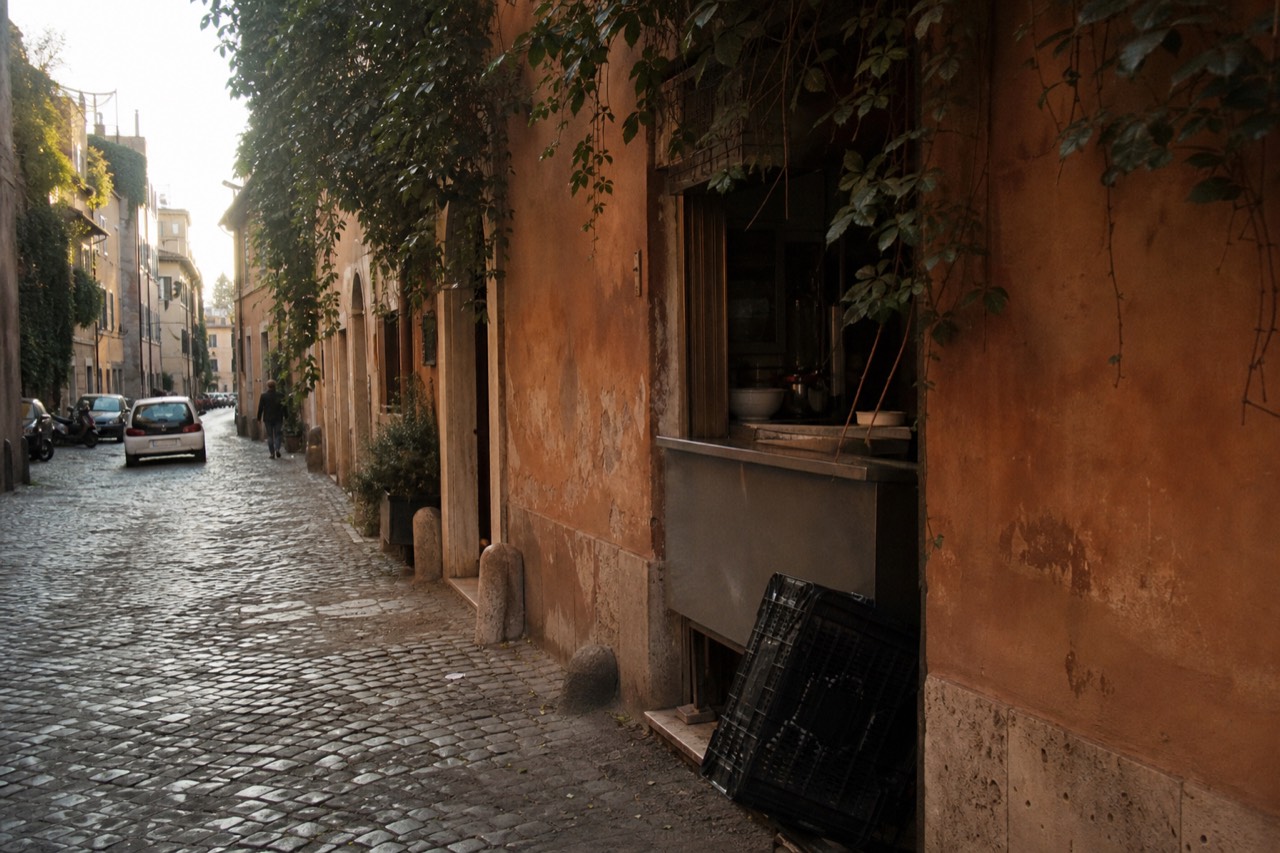
The hidden gems worth chasing in Rome are food neighbourhoods, not monuments: Testaccio with its amphora hill and ex-slaughterhouse, the Jewish Ghetto's rebuilt back streets, Trastevere's residential lanes away from the movida, and working markets like Esquilino, Monti and Trionfale. Each one sits within a short walk of a major sight, and each is a regular stop on a guided food walk, which is the fastest way in.
The question usually gets answered with fountains and viewpoints. That answer is fine, but it misses what Rome actually does best. This city hides its cooking the way other cities hide their viewpoints: in a district built around a slaughterhouse, in a market hall where Bangladeshi spice stalls sit next to Lazio farm cheese, in a bar that reopened after 45 days of maintenance and promptly filled up with locals again. The gems below are chosen on one rule: you can eat at every one of them.
Rome recorded 22.9 million visitor arrivals in 2025, and the overwhelming majority of those visits stayed inside the triangle of Pantheon, Trevi and the Vatican. Step outside that triangle for twenty minutes and the city changes character completely. The streets get quieter, the menus get shorter, and the dishes stop being translated for visitors.
A practical note on how to use this page: each gem below is tied to a neighbourhood you can walk, and to a tour that already stops there. If you would rather connect several of them in one afternoon without planning the routes yourself, a cart-based tour does that job.
Why Testaccio is the one district visitors regret missing
Testaccio is Rome's old slaughterhouse district, and it is where the city's working-class cooking was invented. The ex-Mattatoio, built between 1888 and 1891 and closed as a slaughterhouse in July 1975, still stands, Monte Testaccio is an artificial hill made of ancient amphora fragments, and the neighbourhood market now opens on Friday evenings until 22:00. The quinto quarto dishes on its menus came from the workers who took the offcuts home.
Start with the hill, because there is nothing else like it in Europe. Monte Testaccio is a mound of broken clay, roughly a kilometre around, built from the amphorae that carried olive oil into ancient Rome. The oil came mostly from Baetica, modern Andalusia, and because oil residue spoiled, the containers could not be reused. So they were stacked, bound with lime and left. The Sovrintendenza Capitolina dates the accumulation from the Augustan period to the middle of the 3rd century AD, and many fragments still carry the exporter's name painted on them.
The slaughterhouse is the second half of the story. Roma Capitale's own tourism portal records that tripe, oxtail, coratella and pajata belong to the "quinto quarto", the least prized part of the animal, eaten by the poorest families and above all by the Mattatoio's workers, who topped up their wages with the offcuts left from the better cuts. That is the origin of the Roman cooking you now order in trattorias: it was literally the byproduct economy of this one district. Trippa alla romana is still, by tradition, a Saturday lunch dish here.
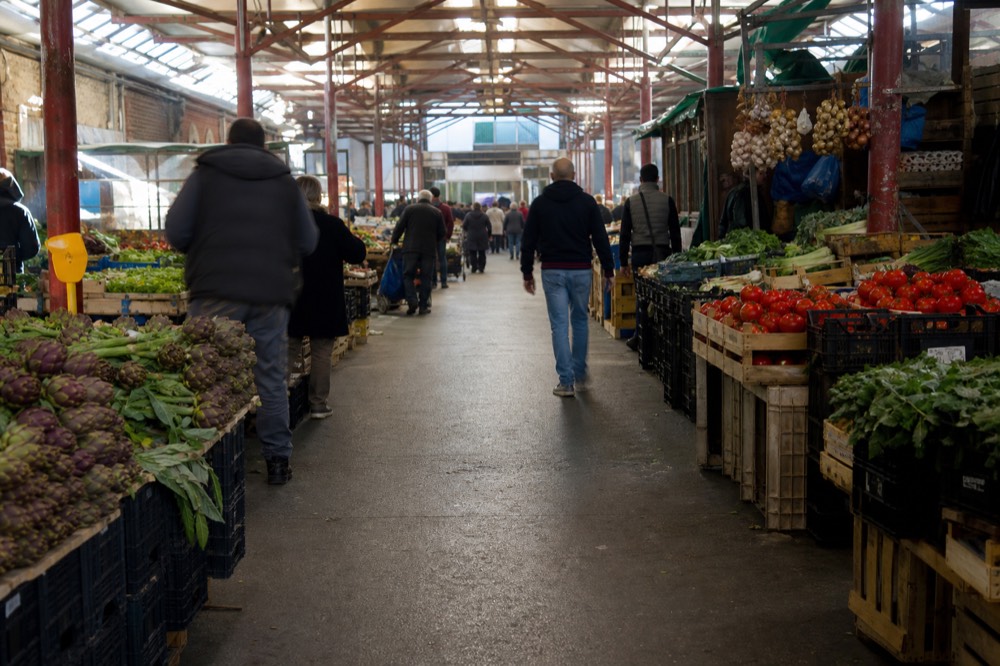
The modern layer matters too. Mercato di Testaccio runs Monday to Saturday, roughly 7am to mid-afternoon, and since March 2026 it has stayed open on Friday evenings until 22:00, an agreement between the operators, the concession holder and local institutions. The market sits above an excavated ancient Roman warehouse that still holds hundreds of amphorae, though visits to the archaeological area are temporarily suspended for refurbishment works, so do not plan a trip around going underground. The full neighbourhood picture, including which tours stop here, is in our Testaccio food tours guide.
The Jewish Ghetto's back streets and the food that survived
The Roman Ghetto lasted from 1555 to 1870, walled into a flood-prone bank of the Tiber, and its cooking outlived the walls. Today the quarter spans about four blocks around Via del Portico d'Ottavia, and Roma Capitale names carciofi alla giudia, baccala filetti and ricotta crostata with visciole jam as its living specialities. The streets themselves were demolished and rebuilt after 1885, so the gem is the food, not the buildings.
Pope Paul IV created the ghetto with the bull "Cum Nimis Absurdis" on 14 July 1555, and the Jewish Community of Rome records that it was a fenced zone with two gates, where residents had to sell their houses, pay rent and wear a yellow sign. It was among the oldest ghettos in the world, second only to Venice's, and it closed definitively only with the end of the Papal State in 1870. The demolition of the unhealthy quarter was decided in 1885, and the neighbourhood was rebuilt above the level of the river.
What the visitor finds now is a compact eating district that most people cross in ten minutes on the way to somewhere else. Slow down. The fried artichoke, carciofo alla giudia, is the dish everyone photographs, and Roma Capitale's tourism portal lists it alongside filetti di baccala and tortino di aliciotti e indivia as giudaico-romana specialities. One honest caution: the dish's famous 16th-century origin story is not documented by any institutional source, so treat it as a living speciality of the quarter rather than a dated history.
The practical gem here is timing. The quarter's small restaurants fill at Roman dinner hours, which start late, and thin out in the mid-afternoon when the sightseeing crowds pass through. A guided walk through the quarter, with the fried artichoke and the kosher bakery stops built in, is covered in our Jewish Ghetto food tours guide.
The ghetto also connects to the wider food map better than visitors expect. It sits a few minutes from Campo de' Fiori, whose market traces back to the vignarole, the women who came in daily from the countryside with herbs and vegetables, and by 1869 it was already the center of that trade. A route that links the ghetto's counters to Campo de' Fiori's stalls is one of the best two-hour food walks in the city.
Trastevere beyond the nightlife: the residential lanes that still cook
Trastevere's hidden side is everything one street back from the movida. The neighbourhood market at Piazza San Cosimato has run since the early 20th century with seasonal produce like puntarelle and broad beans, Bar San Calisto reopened in February 2026 after maintenance, and new openings keep arriving: a sustainable gelateria in Via Benedetta, a reopened Seu Pizza, and tasting menus at Osteria della Trippa. The gem is the west side, away from Piazza di Santa Maria.
Rione XIII is the largest rione in Rome, and its name comes from the Latin trans Tiberim, beyond the Tiber, relative to the ancient city on the other bank. Most visitors see perhaps a tenth of it. The streets around Piazza San Cosimato are residential, and the market there is the neighbourhood's kitchen: Roma Capitale describes stalls carrying mainly food with a clear preference for local produce, seasonally puntarelle, broccoli, misticanza, artichokes and broad beans, plus offal, fish from the coast and traditional cheeses.
The openings are worth tracking, because they show where the neighbourhood is heading. Eugenio Morrone opened the sustainable gelateria Un Gelato a Roma in Via Benedetta in February 2026. Seu Pizza reopened after renovation on Via Angelo Bargoni at the end of October 2025. Osteria della Trippa introduced Trippa Tasting and Viterbo Tasting menus after its April 2026 restyling, which is a good sign: offal, the old Testaccio inheritance, being served as a tasting menu in Trastevere.
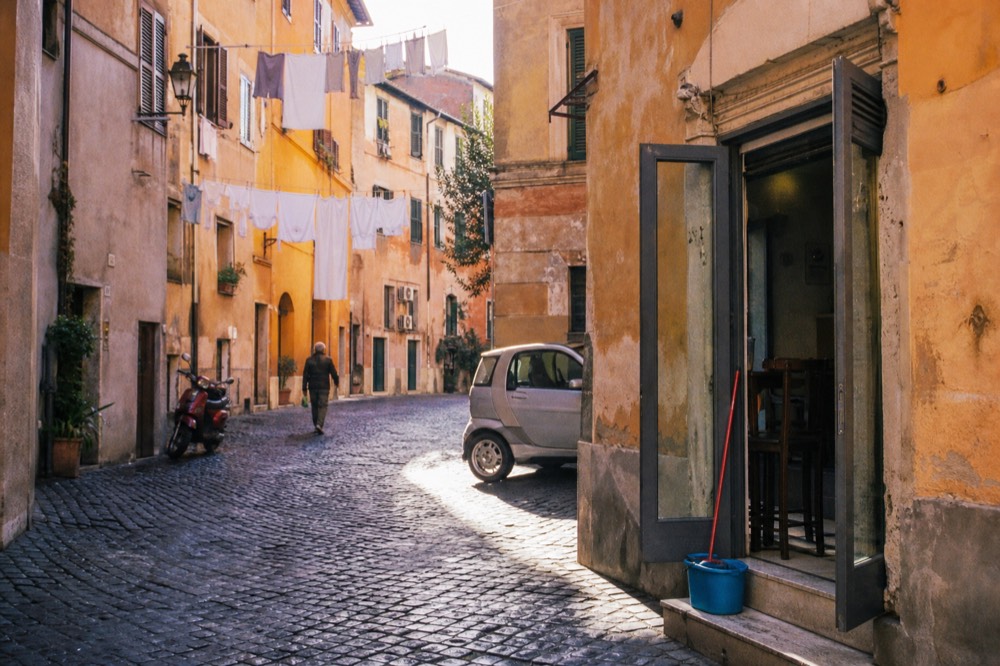
One thing to know before an evening here: the city renewed its anti-malamovida ordinance in January 2026, extending a night-time takeaway alcohol ban in the nightlife zones until 11 October 2026, and police controls in the district are real. That affects street drinking after 22:00, not sitting at a table inside a trattoria. The practical takeaway is simple: eat in the residential lanes, and the neighbourhood gives you its best side. If you want the evening version with a guide who knows which door to knock on, the Trastevere food tours guide covers the options, including the small-group and hidden-gems formats.
The premium end of the neighbourhood also deserves the word gem. The Trastevere luxury tour runs four hours with free-flowing fine wine from $147.89 per person, rated 5.0 across 3,492 reviews, and it starts at Piazza Trilussa, which puts you on the correct side of the district from the first minute. For a visitor who has already done a standard walk, that is the upgrade that finds the streets a first-timer never reaches.
The markets tourists walk past: Esquilino, Monti and Trionfale
Rome has 70 official neighbourhood markets, 30 covered and 40 open-air, and visitors see almost none of them. Nuovo Mercato Esquilino is the city's most multi-ethnic market, split across two former barracks with different hours. Mercato Monti on Via Baccina has 17 stalls including a fresh-pasta workshop. Mercato Trionfale near the Vatican has around 270 stalls, and Mercato Prati, built in 1928, sits on a shopping artery most tourists cross without looking down.
The Esquilino market is the one that surprises people most. Roma Capitale describes it as the city's most multi-ethnic market, with Italian, Chinese, Indian, halal, Romanian, Bengali and Senegalese products, spices and many kinds of rice. It occupies two separate former barracks buildings: the food half on Via Filippo Turati with 133 stalls, and the clothing half on Via Principe Amedeo with 54. They keep different hours, so check which half you actually want before setting out.
Monti is the small one, and small is the point. Built in 1933 and restored in 1993, the covered market on Via Baccina has a butcher, a fishmonger, a greengrocer, a fresh-pasta workshop and an artisan stall, and it is a short walk from the Forum yet feels like a different city. Trionfale, by contrast, is the heavyweight: around 270 stalls on Via Andrea Doria, selling fresh and dried fruit, cereals, fresh fish and baccala, cured meats, cheeses, porchetta, honey and jams. It is the market to combine with a Vatican morning, and the Roma Capitale markets page is the official source for the full list.
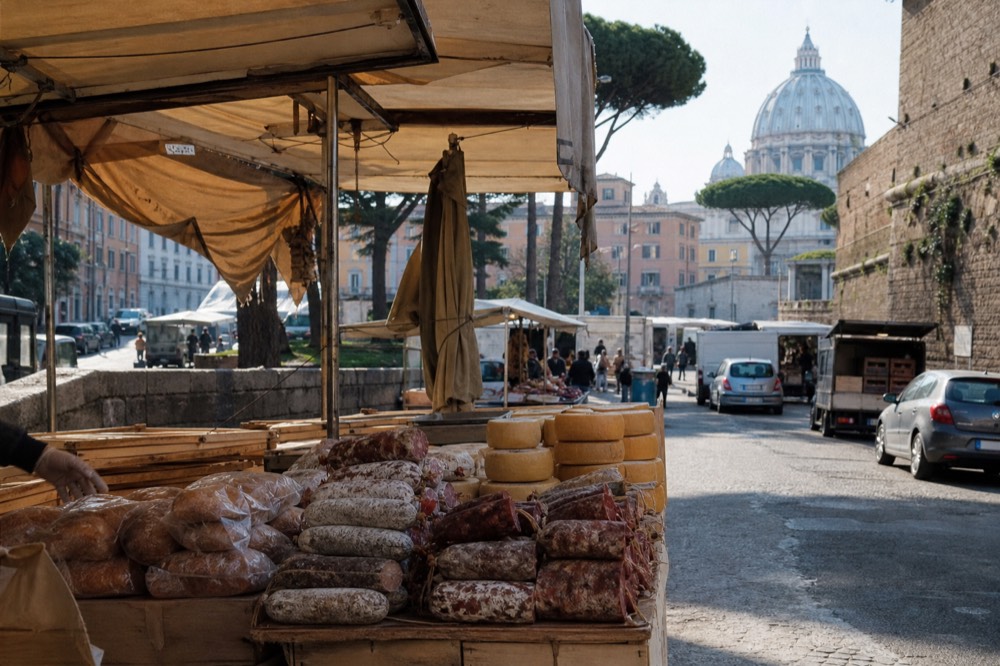
One more that almost no visitor finds: the farmers' market at Garbatella, Via Passino 22, where Lazio farms sell their own produce directly, open every Saturday and Sunday with tastings. It is the only market on the official tourism page whose opening days are stated on the page itself, which tells you how unusual a direct-sale market is inside the city. The wider picture, including which guided walks work market stalls into their routes, is in our street food markets guide.
How to string the gems together without exhausting yourself
The honest planning answer is that the gems are scattered, and walking all of them in one day is a mistake. Testaccio, the Ghetto, Trastevere's west side and the Vatican-side markets sit in different corners of the center. A cart-based tour connects several in four hours; a single neighbourhood walk done properly beats three done in a rush; and the ZTL traffic rules mean any vehicle tour needs a permitted driver, which licensed operators have.
Rome's center is small on the map and tiring on the feet, because the cobblestones and the hills do the counting, not the kilometres. The city's limited traffic zones make driving yourself a poor idea: the daytime ZTL covers the historic center on weekday daytime hours, and Trastevere's night ZTL runs from 21:30 to 3:00 on Fridays and Saturdays, plus Wednesdays and Thursdays from May to October. Taxis and licensed hire cars with drivers are exempt, which is exactly what a cart tour uses.
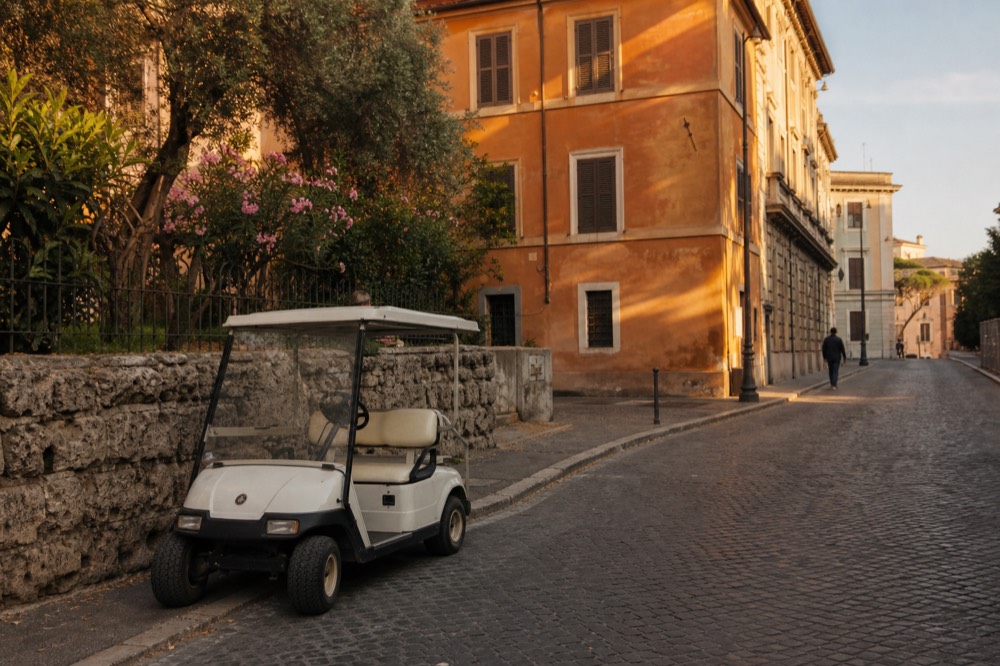
The VIP Golf Cart Food Tour is the practical answer for a first visit that wants the gems without the route planning. It runs four hours, is priced per group from $191.67 with the price varying by group size, is rated 4.9 across 268 reviews, and includes pasta and gelato stops with an operator who drives the ZTLs legally. It meets in front of the church at Piazza di San Francesco d'Assisi, on the Trastevere side of the river.
If you would rather walk, pick one district per day and commit to it. A morning at Trionfale followed by the Vatican, an afternoon in the Ghetto followed by dinner in Testaccio, a slow Sunday at the Garbatella farmers' market: that is three days of Rome that most visitors never see, and none of it requires a reservation weeks ahead. The planning ranges are forgiving, and the Testaccio market's own info page publishes its current hours directly.
For a full comparison of formats, from evening walks to private guides, the walking food tours guide and the private food tours guide break down what each one reaches and what it costs. The site itself, Rome Food Tours, keeps the full roster with live prices.
A quick-reference map of the gems
The five gems that repay the detour are Testaccio, the Jewish Ghetto, Trastevere west of Piazza San Cosimato, the Esquilino and Trionfale markets, and the Garbatella farmers' market. All five are reachable on foot or by a short transit hop from the center, all five feed you well, and each pairs naturally with one half-day of conventional sightseeing.
| Hidden gem | Nearest famous sight | What to eat there | Best time |
|---|---|---|---|
| Testaccio and Monte Testaccio | Pyramid of Cestius, reopened after restoration | Quinto quarto dishes, trippa alla romana, market street food | Friday evening, market open until 22:00 |
| Jewish Ghetto back streets | Largo di Torre Argentina, Pantheon area | Carciofo alla giudia, filetti di baccala, ricotta crostata | Mid-afternoon or Roman dinner hour |
| Trastevere west of San Cosimato | Piazza di Santa Maria in Trastevere | Puntarelle in season, gelato from Via Benedetta, pizza | Early evening, before the movida |
| Mercato Trionfale | Vatican Museums | Porchetta, cheeses, fresh fish, baccala | Morning, Tue or Fri when open until 19:00 |
| Garbatella farmers' market | Ostiense and the Gasometer | Direct-sale Lazio farm produce, tastings | Saturday or Sunday only |
The pattern in that table is deliberate: every gem sits next to something you were already going to see. That is the real definition of a hidden gem in Rome, not a place nobody has heard of, but a place the crowd walks past on the way to the thing they came for. The Pyramid of Cestius itself, reopened to the public in September 2026 after three years of restoration, is becoming exactly that kind of stop.
The short answers: Testaccio for the quinto quarto cooking and the amphora hill, the Jewish Ghetto for carciofo alla giudia and baccala, Trastevere's residential west side for the market and the new openings, and the Esquilino, Monti, Trionfale and Garbatella markets for the produce. Every one of these sits a short walk from a major sight, and a guided food walk or a cart-based tour reaches them without the route planning.
Common questions about hidden gems in Rome
what are some hidden gems in rome?
The food-first answer: Testaccio's slaughterhouse district and amphora hill, the Jewish Ghetto's four blocks around Via del Portico d'Ottavia, Trastevere west of Piazza San Cosimato, and the working markets at Esquilino, Monti, Trionfale and Garbatella. Each is a short walk from a major sight, and each is a regular stop on a guided food walk.
Is Testaccio worth visiting for food?
Yes. It is the district where Rome's quinto quarto cooking was invented, around the Mattatoio slaughterhouse built between 1888 and 1891, and its trattorias still serve trippa alla romana as a traditional Saturday lunch dish. The neighbourhood market now opens on Friday evenings until 22:00.
What should you eat in the Jewish Ghetto?
Roma Capitale names carciofo alla giudia, filetti di baccala, tortino di aliciotti e indivia and crostata with visciole jam and ricotta as the quarter's giudaico-romana specialities. The fried artichoke is the signature dish, though its 16th-century origin story is not documented by any institutional source.
Which Rome market is best for visitors?
It depends on the neighbourhood. Trionfale near the Vatican has around 270 stalls including porchetta and cheeses, Esquilino is the most multi-ethnic, Monti is a small 17-stall hall with a fresh-pasta workshop, and the Garbatella farmers' market sells Lazio farm produce directly on Saturdays and Sundays.
Can a food tour reach the hidden gems?
Yes, and it is often the fastest way. Cart-based tours connect scattered neighbourhoods legally through the ZTL traffic zones, and walking formats focused on Testaccio, the Ghetto or Trastevere reach the residential lanes a first-time visitor would not find alone. The tours listed on this page cover all of these formats.
When is the best time of day to explore Trastevere?
Early evening, before the nightlife builds. The anti-malamovida ordinance restricts night-time takeaway alcohol sales in the district, and the residential lanes west of Piazza San Cosimato are at their best at dinner hour, when the neighbourhood market has closed but the trattorias are filling up.